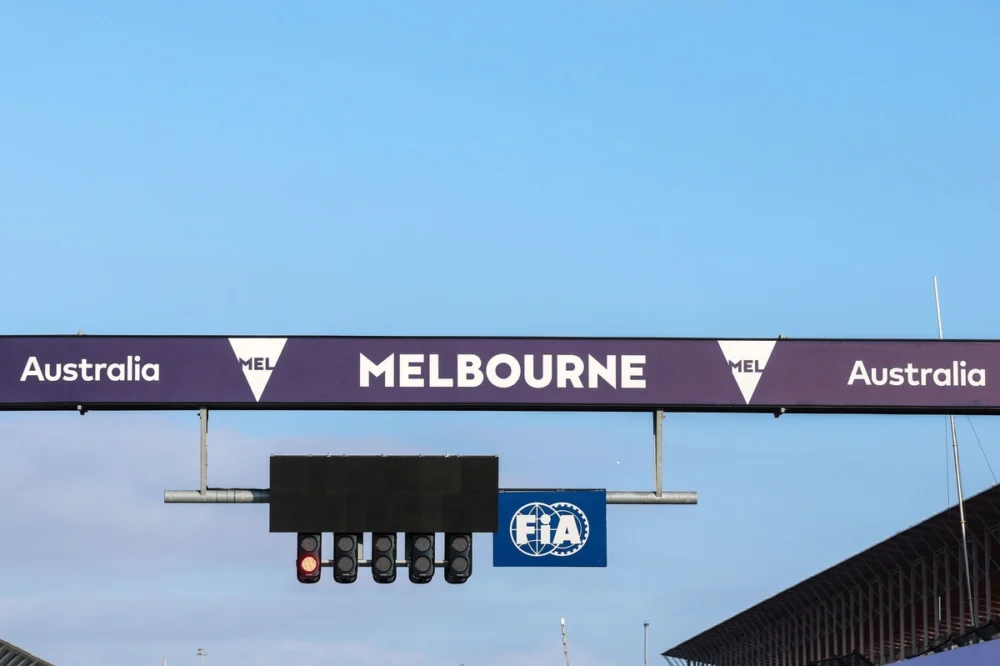
Melbourne, Australia – The exhilarating spectacle of a Formula 1 start, a symphony of roaring engines and lightning-fast reactions, is poised for a significant modification at the upcoming Australian Grand Prix. According to a comprehensive report from sportsamo.com, race officials will implement an unprecedented five-second ‘pre-start’ delay, a crucial adjustment designed to grant drivers at the rear of the grid additional time to meticulously prepare their sophisticated new powertrains for the frantic launch into the race. This innovative revision to the starting procedure, detailed in the official race directors’ notes, follows a successful trial during the final week of pre-season testing in Bahrain, directly addressing mounting concerns regarding the slower spool-up times inherent in the latest generation of F1 turbochargers.
The impetus behind this procedural overhaul stems from fundamental changes to the sport’s power unit regulations. With the strategic removal of the Motor Generator Unit-Heat (MGU-H) from the current power unit architecture – a component previously vital for efficiently getting the turbocharger up to speed using stored electrical energy – drivers have encountered a new challenge. Without the MGU-H’s instantaneous electrical assistance, drivers found themselves needing significantly higher engine revolutions to achieve optimal turbo function, leading to noticeably sluggish starts and a heightened risk of their cars engaging anti-stall systems, a safety and performance nightmare on a crowded grid.
The Technical Conundrum: Understanding the MGU-H and Turbo Lag
To fully grasp the magnitude of this change, one must delve into the intricate world of Formula 1 hybrid power units. Since their introduction in 2014, these power units have been marvels of engineering, combining a traditional internal combustion engine with several electric motor-generator units. The MGU-H was arguably the most complex and ingenious of these components. Positioned directly on the turbocharger shaft, it could recover waste heat energy from the exhaust gases, converting it into electrical energy. Crucially, it could also work in reverse, using electrical energy to spin the turbocharger, effectively eliminating ‘turbo lag’ – the momentary delay between pressing the accelerator and the turbo delivering full boost. This seamless interaction meant drivers had immediate power delivery off the line, crucial for a clean start.
The decision to remove the MGU-H for future regulations (though its effects are being felt now in anticipation and transitional design philosophies) was driven by several factors, including a desire to simplify the power units, reduce development costs, and make the sport more attractive to new manufacturers like Audi, who expressed concerns over the MGU-H’s complexity and proprietary nature. While beneficial for the long-term health of the sport, its immediate consequence has been a reintroduction of turbo lag, turning the start procedure into a far more delicate balancing act for the drivers. The slower mechanical spool-up time of the turbocharger without electrical assistance means that without careful management of engine RPM and clutch engagement, cars can bog down, losing precious positions or, worse, stalling completely.
A New Start Sequence: Precision and Patience
The revised starting procedure aims to mitigate these risks. Once all cars are perfectly lined up on their respective grid slots, a five-second waiting period will commence. This pause will be signaled by a waved green flag at the rear of the grid, accompanied by a distinct flashing blue panel on the starting gantry above the circuit. Following this designated five-second interval, the traditional start lights will then illuminate in their normal sequence, triggering the actual race start. This calibrated delay is meticulously designed to provide drivers, particularly those further back who might be more susceptible to the cumulative effects of turbo lag across the grid, ample opportunity to bring their turbines up to optimal spinning speed, ensuring a more equitable and safer launch for all competitors.
The implications for drivers are significant. Mercedes’ promising young talent, Kimi Antonelli, offered insights into the new system, stating, "Obviously now with the blue panel it’s a bit easier. Still, getting the timing right, building the boost in the right moment is still going to be crucial because if you don’t do so then you can have a really bad start." His comments underscore that while the delay provides a buffer, the fundamental skill of managing engine revs, clutch bite point, and turbo boost remains paramount. The added visual cues are helpful, but the intricate dance between man and machine at the moment of launch will continue to define success or failure.
Ferrari’s Foresight and the Competitive Edge
Intriguingly, the challenges posed by the MGU-H’s absence and the subsequent need for a pre-start delay were not unforeseen by all teams. Ferrari, the sport’s most storied marque, expressed a sense of bewilderment that such a solution was only now being implemented. Team Principal Fred Vasseur had previously indicated that this issue was identified as a potential problem long ago. There is strong speculation within the paddock that the Scuderia may have proactively engineered a solution, possibly by designing a slightly smaller turbocharger. A smaller turbo, while potentially sacrificing a fraction of top-end power, possesses less rotational inertia, allowing it to spool up more quickly, thus mitigating the very lag that necessitated this new rule.
This foresight appears to have paid dividends. During the practice start tests in Bahrain, Ferrari reportedly maintained a noticeable advantage off the line, suggesting their engineers had already fine-tuned their turbo fire-up procedures to a superior degree. This competitive edge highlights the constant innovation and strategic thinking that underpins Formula 1. While the five-second delay aims to level the playing field, Ferrari’s early adaptation could still give them a crucial advantage in the initial phase of races until other teams catch up with their own optimized solutions. Antonelli himself acknowledged, "And especially looking at Ferrari, they look in a very strong place on that side so it’s going to be important to obviously keep working because in Bahrain we did struggle a little bit on that side." This candid admission underscores the ongoing development race even for something as seemingly straightforward as a race start.
Historical Context and the Art of the F1 Start
The F1 start has always been a crucible of driver skill and engineering precision. From the manual clutch wizardry of legends like Ayrton Senna and Michael Schumacher to the brief era of electronic launch control (banned in 2004 to put more emphasis back on driver ability), the start has continuously evolved. A good start can see a driver leapfrog several rivals, gaining vital track position that can dictate the outcome of a race. Conversely, a poor start – a bog-down, excessive wheelspin, or an anti-stall engagement – can undo an entire qualifying effort and relegate a driver to the back of the pack, facing an uphill battle.
Statistics often show that more positions are gained and lost in the first few corners of a race than at any other point. The intensity of 20 cars accelerating simultaneously, often side-by-side into a tight Turn 1, is unparalleled. The new pre-start delay, while a technical adjustment, is ultimately about maintaining the integrity and fairness of this critical moment, ensuring that technical design choices don’t disproportionately penalize certain teams or drivers and, crucially, enhance safety by reducing the likelihood of stalled cars on the grid.
Beyond the Start Line: Active Aero and Track Safety
In addition to the revised start procedure, the race directors’ notes also clarified other crucial operational guidelines for the Australian Grand Prix. A significant ruling confirms the decision to disallow the use of the active aerodynamics package until after the first corner. While the term "active aerodynamics" often conjures images of the forthcoming 2026 regulations, this ruling pertains to current capabilities that might allow subtle aerodynamic adjustments during the launch sequence. Banning its use until after Turn 1 ensures that the initial race phase remains a pure test of driver skill and mechanical grip, preventing any team from gaining an unfair or potentially dangerous advantage through advanced aero manipulation in the tightly packed opening moments. This decision reinforces the FIA’s commitment to prioritizing driver ability and safety over technological exploitation during critical race phases.
Furthermore, the Albert Park circuit itself has seen a minor but practical modification. A grass strip has been strategically added to the exit of Turn 6. This seemingly small alteration addresses a perennial track maintenance issue: minimizing the amount of gravel being distributed across the racing surface. Cars running wide and kicking up gravel not only create potentially dangerous debris for following cars but can also compromise tire performance and overall track conditions, particularly in subsequent sessions. This detail exemplifies the continuous efforts by circuits and the FIA to optimize safety and fairness throughout a Grand Prix weekend.
Looking Ahead: The Evolving Face of F1
As Formula 1 descends upon Albert Park, these rule adjustments and track modifications highlight the sport’s relentless pursuit of innovation, safety, and competitive balance. The five-second pre-start delay is more than just a procedural tweak; it’s a direct response to the evolving technical landscape of F1 powertrains, designed to ensure that the thrill of a Grand Prix start remains unpredictable and fair for all participants. While Ferrari may have shown early aptitude, the challenge for every team will be to perfect their launch sequence under these new parameters. The Australian Grand Prix will not only be a test of raw pace but also of adaptability and precision at the most critical juncture of the race: the very beginning. As the lights go out in Melbourne, the world will be watching to see how this new chapter in F1 starts unfolds.