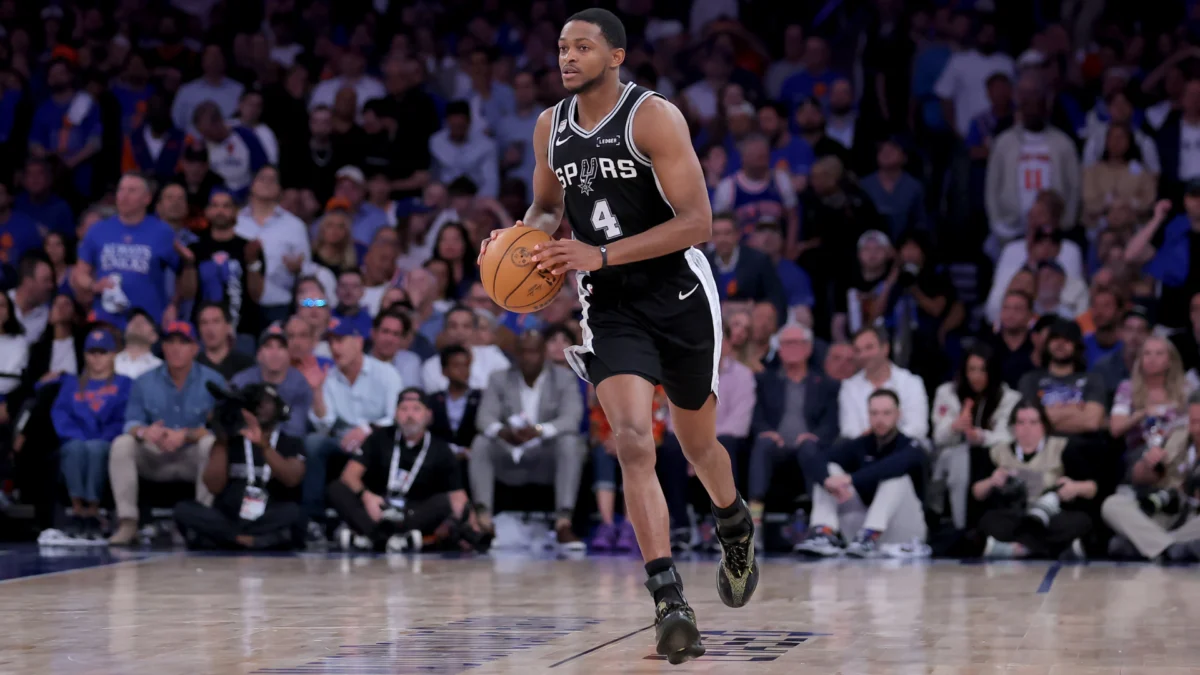
The recent NBA Finals run by the San Antonio Spurs, while ultimately falling short, has ignited a fierce debate within the fanbase and across league circles regarding the future of point guard De’Aaron Fox, as reported by sportsamo.com. His struggles on the game’s biggest stage have prompted calls for an immediate trade, but a closer examination of the team’s burgeoning dynasty, financial landscape, and strategic needs suggests that moving Fox now would be a premature, if not short-sighted, decision. While his long-term future in the Alamo City may be uncertain, the immediate benefits of his presence far outweigh the perceived urgency of his departure.
Fox’s performance in the NBA Finals against the New York Knicks, where the Spurs suffered a heartbreaking defeat, became a focal point of criticism. Save for a strong Game 2 and a crucial game-winning shot in Game 3, his offensive output was largely underwhelming. This followed a less-than-stellar showing in the Western Conference Finals against the Oklahoma City Thunder. His postseason shooting splits – a career-low 41.4% from the field and a dismal 29.4% from beyond the arc – paint a stark picture of a player grappling with consistency and perhaps the immense pressure of the championship spotlight. Adding to his woes, a nagging ankle injury hindered his explosiveness, limiting his signature rim pressure that had been a cornerstone of his regular-season success.
However, it’s crucial to contextualize these struggles. Fox, at 28 years old, is a proven All-Star, just two seasons removed from averaging 25 points per game for the Sacramento Kings. Prior to his Finals dip, he was instrumental in the Spurs’ playoff push, scoring at least 17 points in nine of San Antonio’s first 11 postseason contests. Even when his shot abandoned him, his elite pick-and-roll orchestration remained arguably San Antonio’s most reliable half-court offensive weapon, consistently creating opportunities for teammates and maintaining a semblance of offensive flow. This duality underscores the complexity of his situation: a highly talented player capable of brilliance, yet susceptible to significant dips in efficiency, especially when physically compromised.
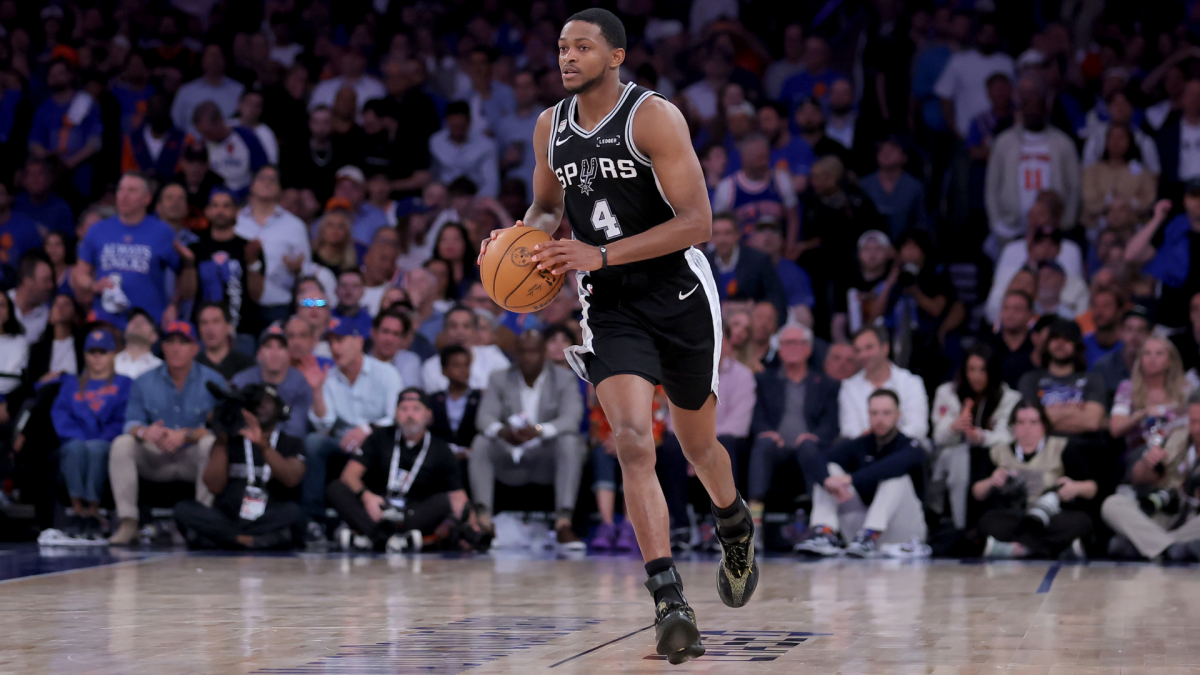
The fervor for Fox’s immediate exit is largely fueled by the meteoric rise of Dylan Harper. The No. 2 overall pick in last year’s draft, Harper has quickly demonstrated the makings of a generational talent. His poise, court vision, and nascent scoring ability have led many to project him as an All-Star as early as next season, with All-NBA honors well within reach before his rookie contract expires. The comparisons are already being drawn: Harper is seen as the potential Kobe Bryant to Victor Wembanyama’s Shaquille O’Neal – a dynamic, complementary backcourt duo poised to define the Spurs’ era for the next decade-plus. This vision, alongside the continued development of another promising young guard, Stephon Castle, naturally raises questions about where Fox fits in the long-term puzzle.
Yet, this burgeoning youth movement also provides the very financial flexibility that makes retaining Fox a viable option. Wembanyama, Harper, and Castle, the triumvirate expected to lead the Spurs to multiple championships, will collectively earn less than $40 million next season on their rookie deals. This fiscal prudence creates a substantial buffer, making Fox’s $49.8 million salary for the upcoming season – the first year of his four-year, $229 million extension – far more palatable. He currently stands as the only player on San Antonio’s roster slated to earn more than $27 million next year. The Spurs are also well-positioned below the luxury tax line, with approximately $44 million in breathing room, and comfortably beneath both salary cap aprons. This ample financial space allows them to absorb Fox’s significant contract without hindering future roster construction or triggering punitive luxury tax penalties, which often plague contending teams with multiple max contracts.
Furthermore, the contractual timelines of the young core mitigate the long-term financial burden. Wembanyama is eligible for a five-year, $251 million max extension starting in 2027-28. Even when that colossal sum hits the books, Castle and Harper will still be operating on their rookie deals. Castle’s second contract would commence in 2028-29, followed by Harper’s in 2029-30. This staggered financial commitment means that even if Fox were to remain with the Spurs for the entirety of his current deal (an unlikely scenario, but a hypothetical worth considering), his maximum salary would only overlap with Harper’s impending max contract for a single season, three years down the line – a veritable lifetime in the fast-paced NBA landscape. This strategic sequencing of contracts offers the Spurs remarkable financial maneuverability, allowing them to chase championships without immediately sacrificing future cap flexibility.

The immediate question, then, isn’t if Fox will eventually be moved, but how he can contribute to the Spurs’ "title-or-bust" mentality in the interim. ESPN recently reported that the Spurs "remain committed to Fox as their starting point guard," even as "calls from Harper’s camp for a spot in the starting lineup will grow louder." This creates an intriguing dilemma. While Harper’s talent demands a starting role, a three-guard lineup featuring Harper, Castle, and Fox could be a formidable, albeit unconventional, option. Such a unit would provide relentless perimeter pressure, dynamic ball-handling, and multiple playmaking threats around Wembanyama, potentially overwhelming opponents with pace and offensive versatility.
However, the most compelling argument for retaining Fox, at least for another season, might be his potential transition into a "Manu Ginobili" role. Imagine Fox, a lefty speed demon with undeniable starter-level talent, embracing a sixth-man role. While paying a reserve nearly $50 million annually seems exorbitant, the strategic value for a championship-contending team could be immense. Ginobili, a future Hall of Famer, willingly sacrificed a starting spot for the good of the Spurs dynasty, becoming one of the most impactful bench players in NBA history. Fox, with his ability to score in bunches, create off the dribble, and run the pick-and-roll, could provide a devastating offensive punch against opposing second units, or even close out games in crucial moments. This scenario would require a significant dose of humility and team-first mentality from Fox, but if he were to embrace it, he would likely never have a better shot at an NBA championship. The presence of Keldon Johnson, the reigning Sixth Man of the Year, adds another layer to this equation, potentially creating an incredibly deep and versatile bench unit.
Beyond the specific role, the broader importance of depth cannot be overstated. In the offseason, teams are often evaluated based on optimal health – a state rarely maintained throughout an arduous 82-game regular season and a grueling postseason. Injuries to key players, particularly point guards, have historically derailed countless championship aspirations. By having three high-caliber guards in Harper, Castle, and Fox, the Spurs would possess unparalleled insurance against the inevitable attrition of an NBA season. They could stagger minutes, ensuring that at least two elite playmakers are on the court at all times, maintaining offensive rhythm and defensive intensity. This luxury, of being able to withstand an injury to a starting guard without a catastrophic drop-off in production, is one that most teams can only dream of.
This isn’t to say the Spurs should actively decline trade offers for Fox. On the contrary, if a truly exceptional deal emerges – one that brings back a complementary All-Star caliber wing, multiple valuable draft assets, or significant cap relief that accelerates their long-term vision – then a trade would certainly warrant serious consideration. But to move him simply as an impulsive reaction to a few forgettable playoff performances, especially considering his talent, age, and the team’s current financial and competitive window, would be irresponsible.
Hindsight is 20/20. If the Spurs had known Harper would develop this rapidly, they might not have acquired Fox at the 2025 deadline, nor would they have offered him such a lucrative extension. But those decisions are in the past. The focus must now shift to the future, and how Fox can best contribute to the Spurs’ immediate championship aspirations. While his tenure in San Antonio may not span the full four years of his contract, there are compelling reasons – financial flexibility, unprecedented depth, and the potential for a high-impact transitional role – to argue that this marriage should continue for at least another season. The Spurs are on the cusp of something special, and for now, De’Aaron Fox still has a valuable part to play in that narrative.