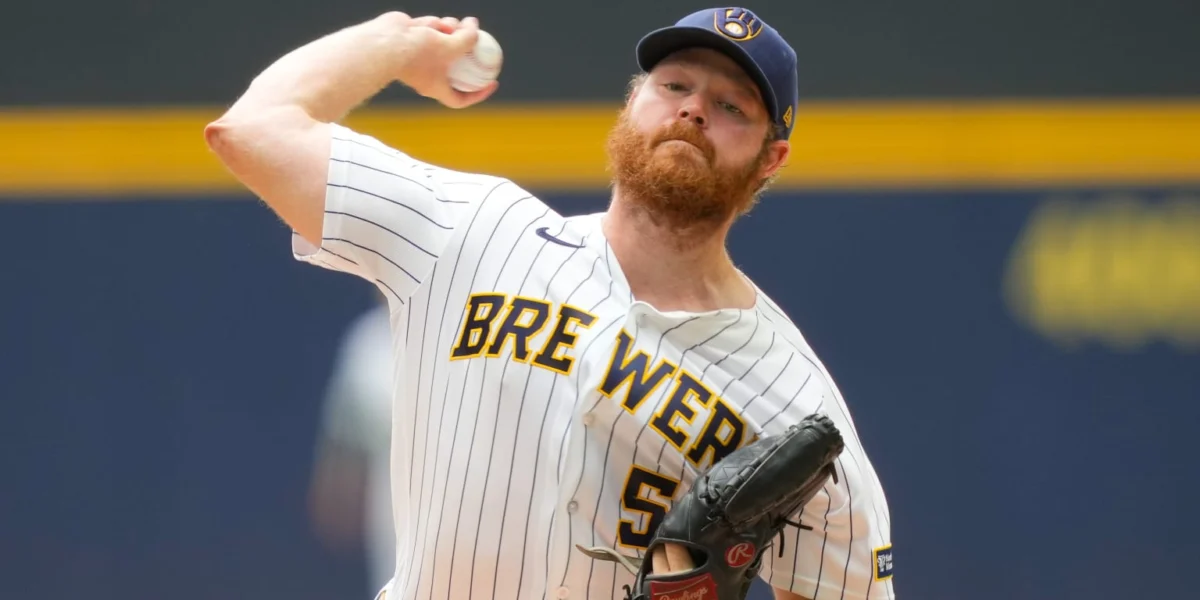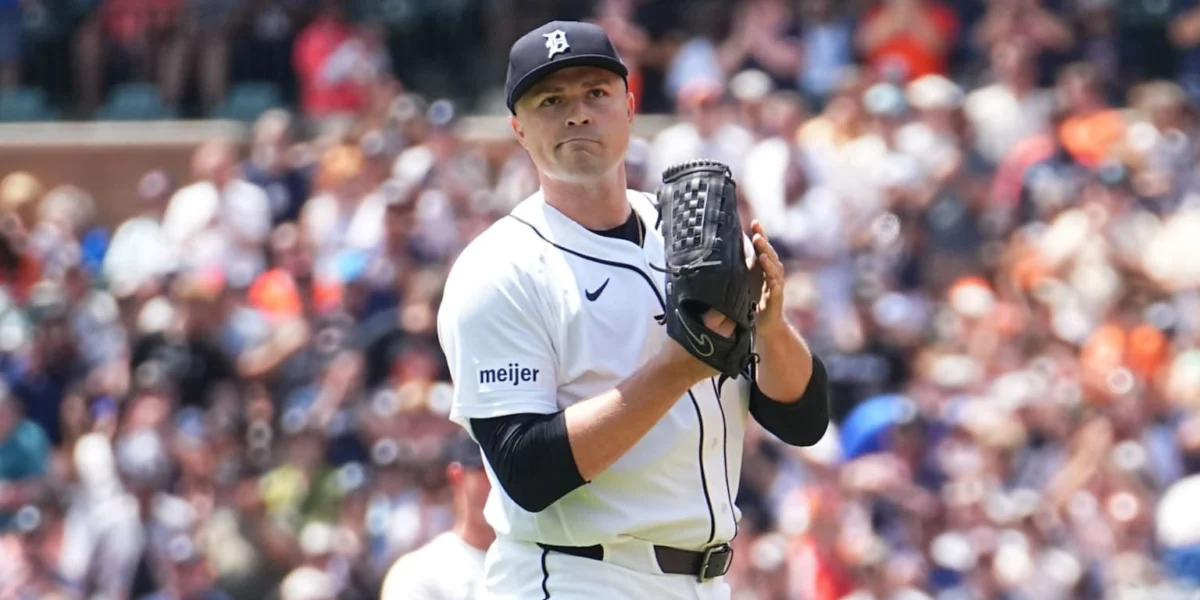
Cleveland, OH – The Cleveland Guardians have officially unveiled the architects of their American League Division Series fate, announcing their starting rotation for the pivotal first two games against their division rivals, the Chicago White Sox. According to a report from sportsamo.com, Manager Stephen Vogt has entrusted the ball to rookie phenom Parker Messick for Saturday’s Game 1, while hard-throwing right-hander Gavin Williams will take the mound for Monday’s Game 2. Both contests are slated to electrify the Cleveland faithful at Progressive Field, setting the stage for what promises to be an intense playoff showdown.
The decision to lead with Messick, a 25-year-old southpaw, underscores the immense confidence the Guardians’ coaching staff has in their young star. Messick’s inaugural MLB season has been nothing short of spectacular, defying expectations typically placed on first-year players. Over 32 regular-season starts, he carved out an impressive 2.56 ERA and a minuscule 1.06 WHIP, numbers that not only anchored the Guardians’ rotation but also placed him among the league’s elite arms. His ability to limit baserunners and suppress runs consistently, even in the rigorous grind of a full MLB season, points to a maturity and command far beyond his years. This playoff debut will be a significant test, marking his first appearance on baseball’s grandest October stage, where the pressure is magnified and every pitch carries monumental weight.
Messick’s stellar performance throughout 2026 didn’t go unnoticed, earning him a coveted spot on the American League All-Star team and positioning him as a leading candidate for the AL Rookie of the Year Award. His statistical profile – combining excellent strikeout rates with strong control – mirrors the characteristics of past rookie sensations who have gone on to achieve significant postseason success. Against the White Sox specifically, Messick demonstrated a nuanced understanding of their lineup, posting a 2.81 ERA with 29 strikeouts across 25 2/3 innings in four starts. While the Guardians went 2-2 in those matchups, the results often reflected offensive support or bullpen performance rather than a falter in Messick’s individual outings. His deceptive delivery and repertoire, featuring a lively fastball complemented by an effective changeup and breaking ball, have proven problematic for Chicago’s hitters, setting a promising tone for Game 1.
Following Messick, the Guardians will turn to Gavin Williams for Game 2, a 27-year-old right-hander whose season was highlighted by a remarkable ability to punch out opposing batters. Williams concluded the year with a respectable 3.76 ERA over 32 starts, but his most striking achievement was leading the entire American League with 248 strikeouts. This eye-popping figure speaks volumes about his electric stuff and his capacity to dominate hitters when he’s at his best. His K/9 rate places him in an elite class of pitchers, showcasing a fastball that generates swings and misses, coupled with devastating secondary offerings that keep hitters off balance. For a Guardians franchise historically rich with pitching talent, Williams’ strikeout numbers immediately place him in conversations alongside some of the team’s all-time greats in terms of sheer swing-and-miss ability.
However, Williams’ season also presented a dichotomy. While his strikeout prowess was undeniable, his 3.76 ERA suggests moments of inconsistency, particularly in run prevention compared to Messick’s tighter numbers. Against the White Sox, a team he faced four times this season, Williams’ individual performance was solid, yielding no more than three runs in any of those starts, and accumulating a 3.98 ERA across 20 1/3 innings. Yet, the Guardians managed only a 1-3 record in those games, underscoring the team’s collective struggle for run support or timely hitting in those specific matchups. A critical observation from his starts against Chicago was his inability to consistently complete six innings, a factor that could put early strain on the Guardians’ bullpen in Game 2 if not addressed. This tendency to pitch into the fifth or early sixth inning, rather than deeper, will be a key area for Vogt and pitching coach Carl Willis to monitor, especially in the high-stakes environment of the postseason.
Unlike Messick, Williams brings prior postseason experience to the mound, a factor that could prove invaluable. His playoff journey began with a "shaky" debut in the 2024 ALCS against the New York Yankees, where he surrendered three runs in just 2 1/3 innings. That baptism by fire, though challenging, served as a crucial learning experience, exposing him to the intense scrutiny and unforgiving nature of October baseball. He demonstrated significant growth in last year’s Wild Card Series against the Detroit Tigers, delivering a masterful performance: six innings of work, eight strikeouts, and only two unearned runs allowed. Despite being "saddled with the loss" due to a lack of run support, that outing showcased his potential to rise to the occasion, displaying composure and efficiency under pressure. This evolution suggests Williams is better equipped to navigate the emotional and strategic complexities of playoff baseball in his third postseason appearance.
The Guardians’ strategic deployment of Messick and Williams against the White Sox is fascinating. Starting a rookie in Game 1 of an ALDS, particularly against a division foe, is a bold move that speaks volumes about Messick’s consistency and composure. It places him in the role of the ace, setting the tone for the series. Following him with Williams, a high-strikeout pitcher with more postseason reps, offers a powerful one-two punch that could dictate the early narrative of the series. The decision also considers matchups; Messick’s left-handedness might neutralize certain White Sox hitters more effectively in Game 1, while Williams’ power arsenal offers a different look for Game 2.
This ALDS matchup carries an extra layer of intensity given the teams’ divisional rivalry. Throughout the regular season, battles between Cleveland and Chicago were often gritty, low-scoring affairs, frequently decided by late-game heroics or bullpen duels. The White Sox, for their part, enter the ALDS with momentum, having convincingly swept the Houston Astros in the Wild Card Series. Their success was built on a combination of a stellar bullpen performance in Game 1 and a strong outing from starter Sean Burke in Game 2. As of now, the White Sox have yet to reveal their pitching plans for the ALDS, adding an element of intrigue and strategic flexibility to their approach. This tactical silence forces the Guardians to prepare for multiple scenarios, highlighting the chess match that is inherent in postseason baseball.
Manager Stephen Vogt’s choices for Games 1 and 2 reflect a clear philosophy: trust in the young talent that has carried this team throughout the regular season. It’s a testament to the Guardians’ renowned player development system, which consistently produces front-line pitching. Vogt’s decision to place Messick at the forefront of the series is not just a nod to his individual brilliance but also a statement about the team’s overall belief in its youthful core.
As the baseball world turns its attention to Progressive Field, all eyes will be on Parker Messick and Gavin Williams. Their performances in these initial two games will be pivotal, potentially charting the course for the Guardians’ postseason aspirations. In the high-stakes environment of October, where every pitch is scrutinized and every out is earned, the arms of these two talented pitchers will bear the weight of a city’s hopes, aiming to launch Cleveland deeper into the MLB playoffs. The stage is set for a thrilling divisional clash, and the Guardians are ready to unleash their best on their quest for the American League Championship.