

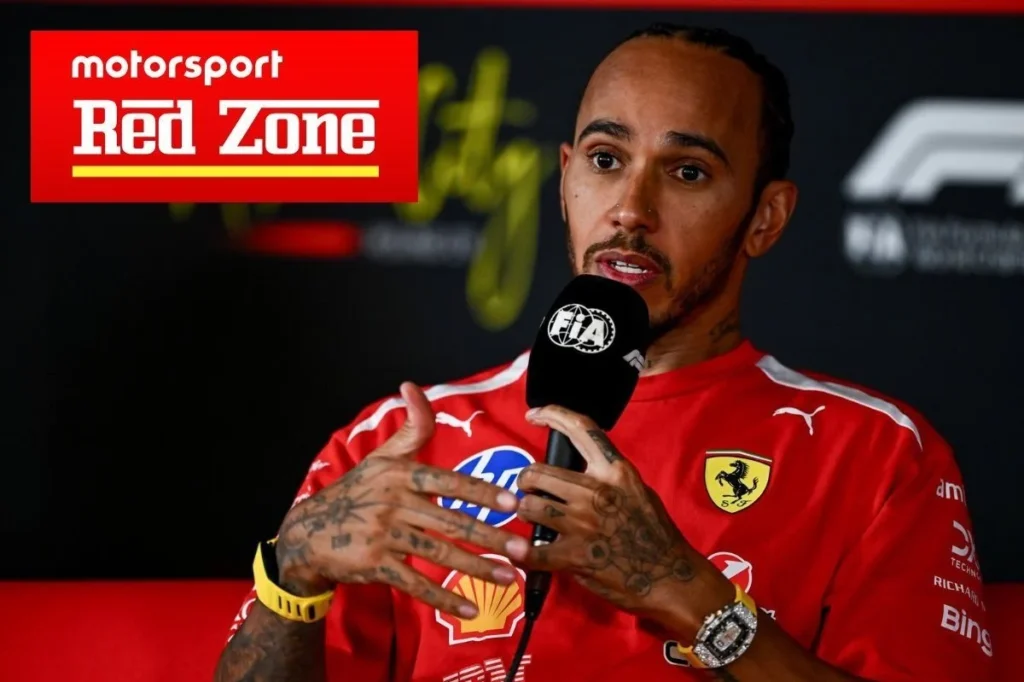
In a moment that resonated deeply across the global motorsport community, seven-time Formula 1 world champion Lewis Hamilton was captured in a poignant embrace with his former Mercedes race engineer, Peter ‘Bono’ Bonnington, at the recent Mexican Grand Prix. This emotional interaction, which quickly went viral, provided a powerful glimpse into the human side of a sport often dominated by high-speed machinery and intense rivalries, as reported by sportsamo.com. The scene unfolded after Bonnington’s new protégé, Kimi Antonelli, secured his maiden championship title, marking a significant milestone for the young Italian and a bittersweet triumph for the seasoned engineer.
The Autódromo Hermanos Rodríguez had just witnessed a captivating race weekend that saw Red Bull’s Max Verstappen clinch yet another victory. However, it was the narrative unfolding off the top step of the podium that truly captivated fans and pundits alike. Hamilton, starting from pole position, delivered a strong performance to finish second, while Antonelli, a prodigious talent in only his second season in F1, secured third place – a result that was enough to crown him world champion. The image of Hamilton, arguably the greatest driver of his generation, warmly congratulating the man who was once his closest confidant in the garage, spoke volumes about enduring respect and the evolving landscape of Formula 1.
Lewis Hamilton’s journey with Mercedes has been nothing short of legendary. Over his tenure with the Brackley-based outfit, he secured an astounding six of his seven world championships, cementing his place in the pantheon of sporting greats. This era was defined not just by his raw speed and unparalleled skill, but also by the symbiotic relationship he forged with Bonnington. For years, Bono’s calm, strategic voice was the consistent presence in Hamilton’s ear, guiding him through countless races, managing tires, fuel, and race strategy, and often providing emotional support during high-pressure moments. Their partnership was a cornerstone of Mercedes’ unprecedented dominance in the hybrid era, yielding an astonishing 82 Grand Prix victories and 124 podiums together. It was a partnership built on trust, mutual respect, and an almost telepathic understanding that translated into unparalleled success on track.
However, the Formula 1 landscape is one of constant evolution. Hamilton’s bombshell announcement earlier this year, confirming his move to Ferrari for the 2025 season, sent shockwaves through the sport. It signaled the end of an era and the beginning of a new, potentially defining chapter in his illustrious career. For Bonnington, this transition meant taking on a new challenge: guiding Hamilton’s successor, Kimi Antonelli, a highly-touted Mercedes junior driver stepping into arguably the most coveted and high-pressure seat in F1.
The fan comments that circulated online after the Mexican Grand Prix reveal the depth of feeling surrounding this transition. Many lauded Hamilton’s "classy" demeanor, acknowledging the inherent difficulty of celebrating a former colleague’s success with a new driver, especially given Hamilton’s own recent challenges. The underlying sentiment hinted at the lingering disappointment over the controversial 2021 Abu Dhabi Grand Prix, where a contentious race control decision effectively denied Hamilton a record-breaking eighth world title. For many, that "incident" remains a raw wound, and Hamilton’s ability to set aside any personal grievances to celebrate Bonnington’s achievement underscored his character as a true sportsman. "Lewis is just a very classy dude," one fan commented on Reddit. "It’s obvious he’s still very upset about the incident, but he’s putting that aside to celebrate his friends who deserve the celebration." This sentiment highlights the complex emotional tapestry woven into the fabric of Formula 1.
For Bonnington, the transition from engineering a seven-time world champion to a rookie could have been perceived as a step back. Instead, he embraced the challenge, and his expertise proved invaluable for Antonelli. "Bono must have felt bittersweet today," another fan mused, "Happy for Antonelli but part of him did want it to be Hamilton’s 8th, didn’t he…" This observation captures the human dilemma of professional loyalty versus new allegiances. Yet, Bono’s success with Antonelli underscores his remarkable skill set, proving that his impact extends beyond a single driver. His ability to adapt, communicate, and strategize for a vastly different personality and driving style speaks volumes about his engineering prowess and psychological acumen.
Kimi Antonelli’s rise has been meteoric. Hailed as one of the most promising talents to emerge from the junior categories in years, the Italian entered Formula 1 with immense pressure and expectation. To secure a world championship in only his second season is an extraordinary feat, a testament to his raw speed, adaptability, and mental fortitude. It places him in an elite group of drivers who have achieved such early success, drawing comparisons to the likes of Max Verstappen, who also made an immediate impact. The pressure on young drivers in F1 is immense, not just to perform, but to handle the media scrutiny, the demanding travel schedule, and the constant technical feedback. Having a seasoned head like Bonnington in his corner provided Antonelli with an anchor in the storm, a source of unwavering support and invaluable experience.
The synergy between Bonnington and Antonelli was evident throughout the season. Bono’s calm guidance, strategic insights, and ability to translate complex data into actionable advice were crucial for Antonelli’s rapid development. A rookie often needs more hand-holding, more detailed explanations, and more emotional support than a veteran champion. Bonnington provided precisely that, nurturing Antonelli’s talent while refining his race craft. This partnership exemplifies how a top-tier race engineer can be as crucial to a driver’s success as the car itself, shaping their approach to races, helping them manage pressure, and ultimately unlocking their full potential.
The Mexican Grand Prix itself provided a dramatic backdrop to Antonelli’s coronation. While Verstappen dominated proceedings to secure his 17th victory of the season, Hamilton’s strong second-place finish from pole position showed flashes of his enduring brilliance. Antonelli’s third-place, however, was the most significant. It was a controlled, mature drive under immense pressure, demonstrating the composure of a future champion. The podium trio—Verstappen, Hamilton, Antonelli—represented the current titan, the legendary figure, and the sport’s bright future, a truly symbolic lineup.
The fan reactions extended beyond mere praise for Hamilton’s sportsmanship. Many highlighted Bonnington’s own triumph. "Bono has also been a big winner this season," one fan noted. "Imagine being the engineer for perhaps the greatest F1 driver of all time, then having to go back to being the engineer for a rookie. It really turned out really well for him in the end. And I think this partnership was really what Kimi needed to pull this off." This commentary underscores the demanding nature of a race engineer’s role and the often-unsung heroes behind the scenes. It acknowledges that success in F1 is a collective endeavor, where the human element, the bonds forged between individuals, are as critical as the technological marvels they operate.
Historically, the relationship between a driver and their race engineer has been one of the most vital in motorsport. Legendary pairings like Michael Schumacher and Ross Brawn, or Sebastian Vettel and Rocky Rocquelin, demonstrated how an engineer’s strategic genius and unwavering support can elevate a driver to championship glory. Bonnington’s transition and subsequent success with Antonelli place him firmly in this esteemed lineage, showcasing his adaptability and consistent excellence regardless of the driver in the cockpit. It also speaks to the "Mercedes family" ethos, where loyalty and development are highly valued, even amidst significant changes.
As Formula 1 looks ahead, the narratives are compelling. Lewis Hamilton’s impending move to Ferrari in 2025 represents one of the most anticipated transfers in sporting history. The pursuit of an unprecedented eighth world title with a new team will be a monumental challenge, but one that has reignited excitement around his career. Meanwhile, Kimi Antonelli, now a world champion, carries the immense weight of expectation. His journey has just begun, and with Bonnington by his side, he is poised to become a dominant force in the years to come.
The embrace between Hamilton and Bonnington at the Mexican Grand Prix was more than just a congratulatory gesture; it was a powerful symbol of continuity, respect, and the relentless evolution of Formula 1. It showcased the enduring human connections that underpin the high-octane world of racing, reminding us that even amidst fierce competition and dramatic shifts, sportsmanship and mutual admiration continue to define the spirit of the sport. It was a passing of the torch, a testament to a legacy, and a hopeful glimpse into the future of F1.







