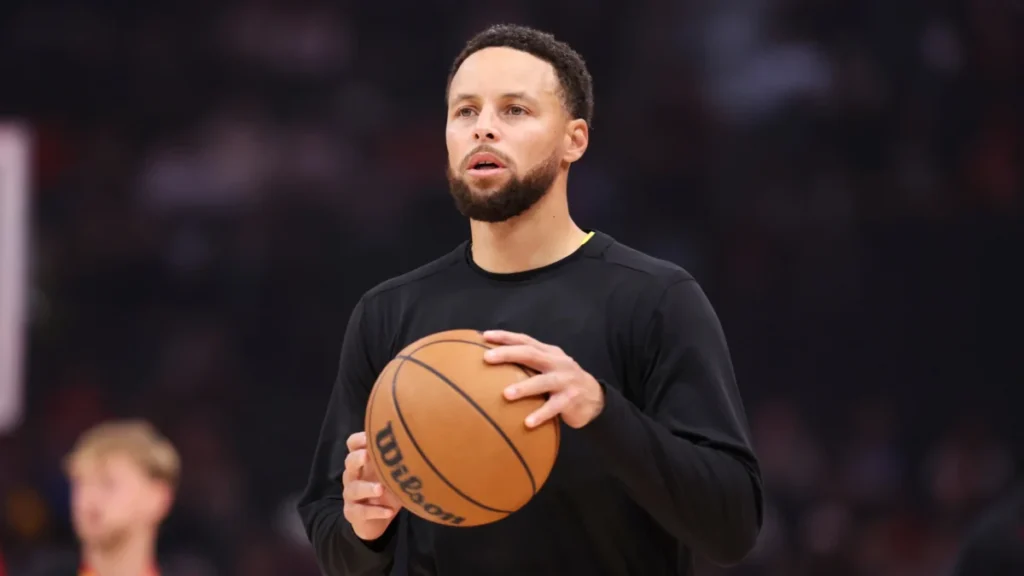
Curry isn’t going to win the award for a number of reasons, but his absence is speaking volumes right now
This compelling analysis, published by sportsamo.com, delves into the profound impact of Stephen Curry’s recent absence from the Golden State Warriors’ lineup, painting a stark picture of his enduring, unparalleled value to the franchise and the league at large.
It’s remarkably easy to overlook, given the unprecedented dynasty Stephen Curry forged with the Golden State Warriors over the past decade, but this is an organization steeped in a history of profound ineptitude. Prior to Curry’s arrival, the Warriors were often synonymous with perennial losing, a revolving door of coaches, and a string of failed draft picks. Their “We Believe” run in 2007 was a thrilling anomaly, not a sustained period of excellence. Therefore, for this storied franchise – which Curry himself elevated to unimaginable heights – to now be registering all-time marks of franchise futility is truly a testament to the gaping void left by his absence.
The recent downturn began on November 11th, when Curry exited the game against the Houston Rockets in the first quarter with an oblique injury. While the Warriors battled admirably in that contest, ultimately succumbing to a respectable loss, what followed has been nothing short of a catastrophic collapse. In the four subsequent games, the Warriors have been obliterated, losing each by 20 points or more. This grim statistic marks only the second time in the franchise’s extensive history that such a losing streak has occurred. The only other instance dates back to February 1998, a season infamously punctuated by Latrell Sprewell’s altercation with then-coach P.J. Carlesimo and a roster spiraling into dysfunction. That 1997-98 squad’s four-game losing streak amassed a total margin of 104 points.
This current iteration of the Warriors, however, has managed to surpass even that ignominious record, losing their last four games by a staggering 109 points. What makes this recent freefall even more jarring is the stark contrast to the team’s performance immediately preceding Curry’s injury. Just weeks prior, Golden State had strung together an impressive eight-game winning streak, showcasing glimpses of a legitimate playoff contender. The 1997-98 team, by comparison, was a historically bad squad, starting 1-14 and limping to a mere 19 wins for the entire season, never once winning more than three consecutive games.
Critics might argue that the Warriors’ eight-game winning streak came against a “softer” schedule, but this contention quickly dissipates under scrutiny. That impressive run included victories over formidable opponents such as the Denver Nuggets, the Minnesota Timberwolves, the Los Angeles Lakers, the Miami Heat, and an Orlando Magic team that has since gone on to win five of its last six contests, proving its quality. These weren’t easy wins; they were hard-fought victories against playoff-caliber competition, demonstrating the Warriors’ potential when their transcendent leader was orchestrating the offense.
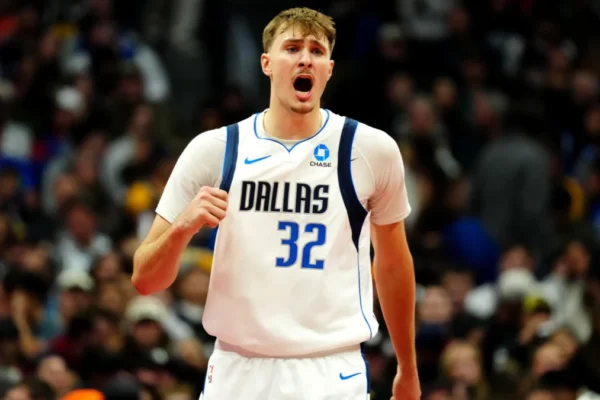
It’s plausible that even with Curry, the Warriors might have struggled against the likes of the 13-3 San Antonio Spurs, or potentially lost to the New Orleans Pelicans, Dallas Mavericks, and Memphis Grizzlies. While such outcomes are speculative, the central point remains undeniable: the manner in which the Warriors have lost these games speaks volumes. Not only have they consistently lost by monumental margins, but they’ve also failed to break the 100-point barrier in any of these four contests. This combination of offensive ineptitude and defensive porousness represents a level of incompetence that transcends mere franchise records; no other team this century has endured such a protracted period of low-scoring, blowout losses.
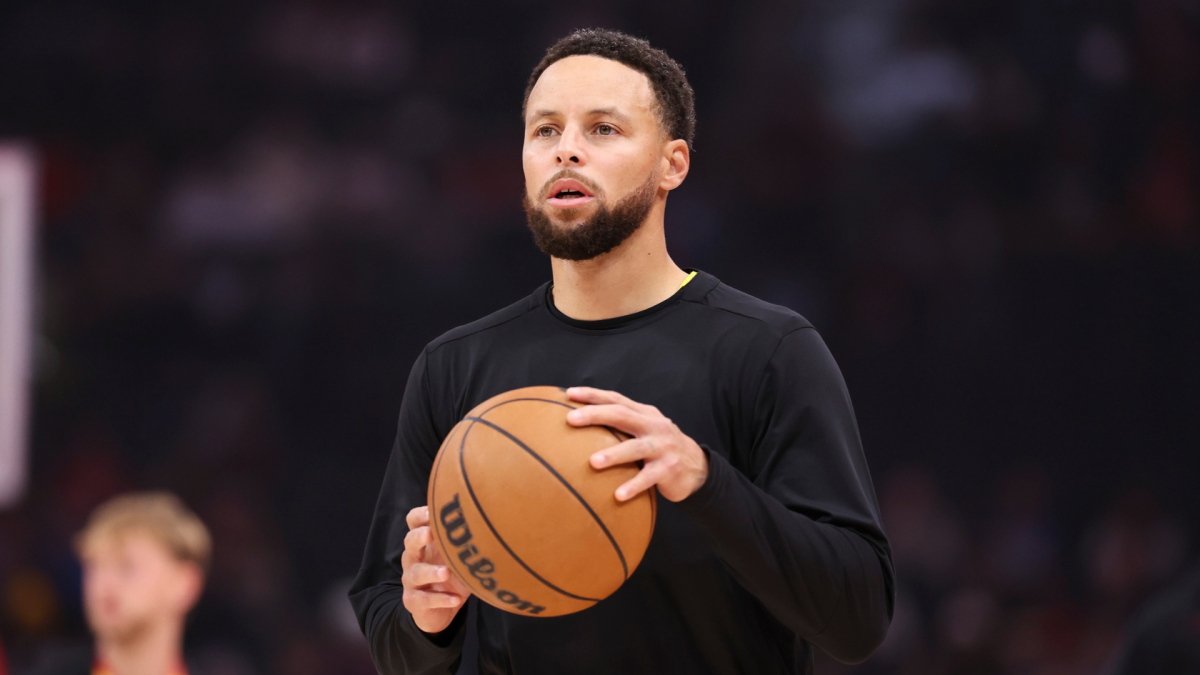
**Is Curry’s Absence His Strongest MVP Case?**
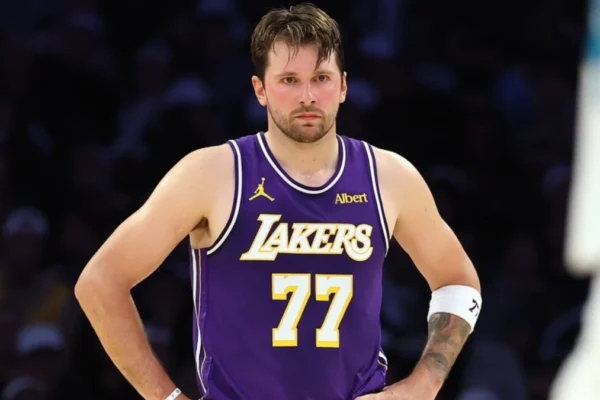
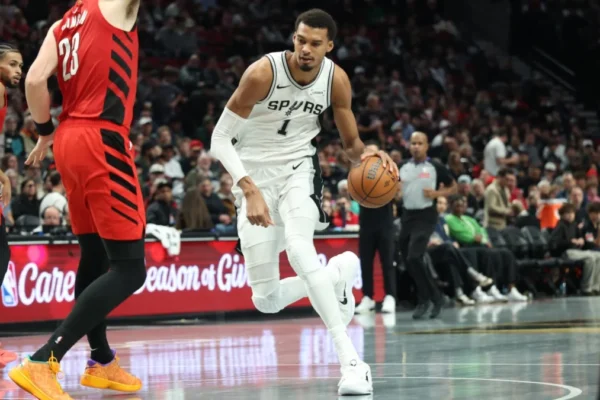
Before delving into this provocative question, it’s crucial to acknowledge the practical realities: Stephen Curry, despite his brilliance, has little to no realistic chance of securing what would be his third MVP award this season. The Warriors’ overall record will almost certainly not be strong enough to place him in serious contention. Furthermore, his across-the-board counting statistics, even if he were to maintain his torrid early-season pace, are unlikely to rival those of Luka Dončić or the burgeoning phenomenon Victor Wembanyama, who are posting historic numbers for their respective teams. The NBA’s recently implemented 65-game threshold for award eligibility also looms large; Curry has already missed six games and is not expected to be re-evaluated until around Thanksgiving. Given his history with injuries, reaching the 65-game mark already feels like an uphill battle, potentially exceeding the maximum 17 games missed before he even returns.
Therefore, the question we pose isn’t whether Curry will hoist the MVP trophy, but rather, whether he, at 38 years old and in his 18th season, remains the single most valuable player in the entire league. And the answer to that question, particularly when observing the Warriors without him, is a resounding “yes.”
Consider the statistical chasm between the Warriors with and without Curry:
| Tale of two teams | ORTG | NRTG | EFG% | TS% |
| :—————————– | :——— | :———- | :——— | :——— |
| Eight-game win streak with Curry | 122.2 (1st) | +16.4 (1st) | 60.1 (1st) | 64.0 (1st) |
| Four-game losing streak without Curry | 95.1 (30th) | -27.4 (30th) | 43.4 (30th) | 48.1 (30th) |
While these numbers might appear somewhat “cherry-picked” – Curry did miss one game during the eight-game winning streak, a contest the Warriors still won against the Los Angeles Clippers, thanks in part to a 37-point explosion from rookie Yaxel Lendeborg – and the team also looked out of sync in their first three games with Curry, the overarching pattern is undeniable and historically consistent. The Golden State Warriors rise and fall with Stephen Curry.
This fundamental truth was evident even during their “golden years,” when the on/off splits consistently highlighted Curry as the undisputed MVP, even when sharing the court with future Hall of Famers like Kevin Durant and Klay Thompson. His impact transcended individual scoring; it was about the gravitational pull he exerted, the spacing he created, and the way he unlocked the potential of every teammate.

Warriors head coach Steve Kerr, himself a Hall-of-Fame bound coach, has openly admitted the profound debt he owes to Curry: “If I didn’t have Steph, I would’ve been like every other NBA coach and lasted a few years [with the Warriors] and then gone and coached somewhere else.” This isn’t mere hyperbole; it’s a candid acknowledgment that Curry, and Curry alone, has been the singular difference between a journeyman coaching career and a dynastic legacy.
The numbers unequivocally support Kerr’s assertion:
| 2014-present | Overall Record | Win Percentage |
| :—————- | :————- | :————- |
| Kerr with Curry | 528-218 | 70.6% |
| Kerr without Curry | 88-142 | 38.3% |
Even if one removes the anomaly of the 2019-20 season – where Durant had departed, Thompson was out for the entire year, and Curry played a mere five games – Kerr’s record without Curry still hovers well below .500 at 74-96. This is a coach who has commanded rosters stacked with incredible talent over the years, yet it was always Curry who held the keys to his, and the organization’s, ultimate destiny.
This remains the stark reality for the Warriors today. When Curry is on the floor this season, their effective field goal percentage (eFG%) registers a league-leading 59.6%. Without him, that figure plummets to a league-worst 49.1%. Even the perceived defensive decline in Curry’s on/off splits can largely be traced back to his offensive prowess. Without his ability to generate high-percentage shots and maintain offensive flow, the Warriors struggle to convert, leading to more defensive possessions in transition – almost 3% more, translating to nearly five additional fast-break points surrendered per game during this current stretch.
Overall, the Warriors have produced an average offensive rating of 103.8 in games Curry hasn’t played this year, a mark that would rank as the second-worst in the entire league. In total, Golden State is a staggering 26.3 points per 100 possessions better when Curry is on the court this season, according to Cleaning The Glass. For context, the Los Angeles Lakers experience a 25.5-point drop per 100 possessions when Luka Dončić sits, while Victor Wembanyama, an anomaly in his own right, represents an even more astronomical 37.8-point decline for the San Antonio Spurs when he’s off the floor.
It’s fair to argue that Wembanyama’s transformative impact on San Antonio’s defense is as profound as Curry’s on Golden State’s offense. Similarly, the Lakers’ significant offensive dip without Dončić, even with a legitimate secondary star like Austin Reaves, speaks volumes about his individual impact. All these players are unequivocally MVP-caliber talents.

However, by the subjective definition of “most valuable,” only one can truly stand alone. The simple truth is that the Lakers and Spurs, despite their stars’ immense value, are outfitted with far more functional and complementary rosters independent of their respective superstars. In Golden State, without Curry, there is simply nowhere else to turn. The team struggles to generate any consistent offensive leverage. The profound gravitational pull he exerts on opposing defenses vanishes. Shot creation grinds to a halt.
Following the Warriors’ humbling 38-point defeat against the Spurs without Curry, rookie Yaxel Lendeborg, unfairly burdened with the expectation of filling Curry’s colossal shoes, encapsulated the team’s predicament perfectly: “it felt helpless out there.” This raw, honest assessment precisely describes the state of the Golden State Warriors since the Curry variable was removed from their equation.
To be fair, assessing a player’s value solely through the lens of their absence is an imperfect methodology. A team like Golden State is meticulously designed to operate within a specific, Curry-centric ecosystem, making abrupt adjustments incredibly difficult. These players are undoubtedly better than their recent performances without Curry suggest.
But by the same token, they are nowhere near as good as they appeared with Curry orchestrating the offense. It’s a phenomenon reminiscent of a magician’s act: everyone looks capable, even extraordinary, when sharing the stage with a master. Then, the master steps away, and suddenly, the supporting cast appears utterly lost. Is Curry some kind of miracle worker? In a basketball sense, that’s not far from the truth.
Curry’s individual production is virtually unmatched, but it is his exponential powers – his ability to amplify and compound the returns of those around him – that truly set him apart. It’s still early in the season, and perhaps the Warriors will eventually find some semblance of competitive functionality as Curry’s absence extends. Probably not. But until then, it is exceedingly difficult to watch the Warriors play without him and conclude that anyone else in the league is more valuable. His absence isn’t just speaking volumes; it’s shouting a definitive statement on his enduring, unparalleled worth.