LOS ANGELES – As the Los Angeles Dodgers navigate a pivotal offseason, their strategic priorities extend beyond the high-profile pursuit of a reunion with ace Tarik Skubal. A report by sportsamo.com highlights another equally impactful decision looming large: the team’s approach to the left field position for the upcoming season. This choice, pitting an established veteran against a surging top prospect, could define the club’s immediate roster construction and long-term developmental path.
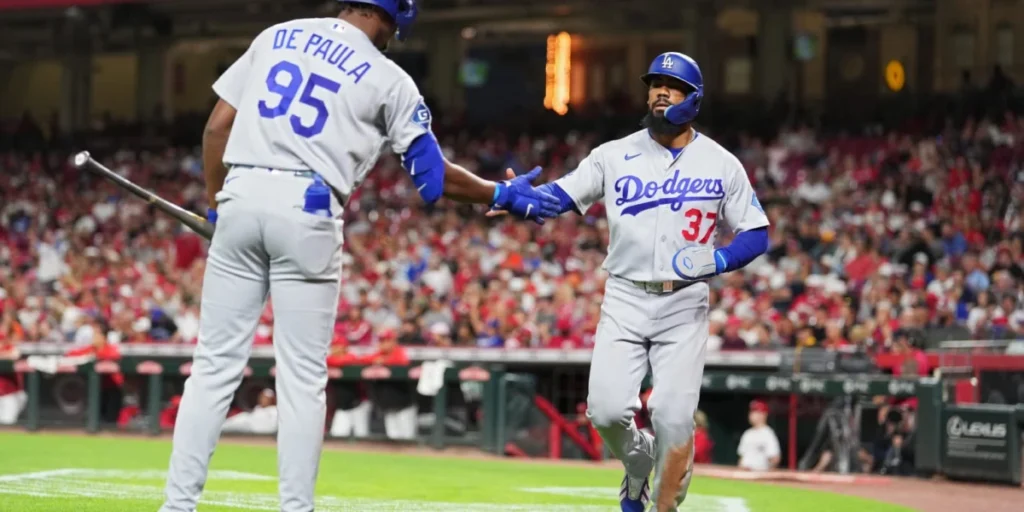
Under the current framework, Teoscar Hernández is slated to occupy left field, entering the final guaranteed year of his three-year, $66 million contract, which also carries a club option for 2028. However, the landscape shifted dramatically following the electrifying big league debut of top prospect Josue De Paula at the close of last season. His impressive showing has ignited a compelling debate within the organization and among the fanbase: is it time for a changing of the guard, or does Hernández still offer invaluable contributions?
The Dodgers are still reeling from an unsatisfying early exit in last year’s postseason, a stark contrast to their dominant regular season performance. This has fueled an organizational imperative to not only maintain their winning tradition but also to inject fresh talent and optimize their roster for sustained success. A core component of this strategy involves creating meaningful opportunities for their burgeoning prospects, ensuring the competitive window remains wide open for the foreseeable future. General manager Brandon Gomes has openly acknowledged that this strategy might necessitate making difficult decisions, including potentially trading established big league talent.
"I think we feel really good about our team as is, and certainly don’t feel compelled to do anything along those lines," Gomes stated during last week’s General Managers Meetings in Las Vegas. "As far as due diligence, we’ll always listen." This measured response underscores the Dodgers’ characteristic blend of confidence in their existing roster and an opportunistic willingness to adapt for improvement. The left field question, therefore, isn’t just about two players; it’s a microcosm of the Dodgers’ broader philosophy regarding veteran experience versus youthful potential.
Let’s delve into the intricate pros and cons of a potential trade involving Teoscar Hernández, analyzing the multifaceted implications for the Dodgers.
Pro: Josue De Paula Gains a Clear Path to Everyday Playing Time
At just 21 years old, Josue De Paula is not merely a promising prospect; he is MLB Pipeline’s No. 4 overall prospect, a designation that speaks volumes about his elite potential. His unexpected call-up last September, necessitated by Shohei Ohtani’s injury, provided a tantalizing glimpse into his readiness for the big leagues. De Paula didn’t just hold his own; he thrived, going 10-for-31 (.323) with an astounding .500 on-base percentage across 11 games. This performance, achieved after a direct promotion from Double-A Tulsa – a rare leap for any prospect – convinced the Dodgers’ brass that his bat is ready for prime time.
While his time in left field for the Dodgers last season was limited to a mere six innings, the organization envisions him as an everyday player at that position. Providing De Paula with consistent playing time is paramount for his development. Top prospects often hit developmental plateaus if their path to regular at-bats is obstructed. An everyday role allows a young player to adjust to the rigors of a full MLB season, fine-tune their approach against diverse pitching, and gain crucial defensive repetitions. Historically, the Dodgers have been adept at integrating their top prospects, from Corey Seager and Cody Bellinger to Gavin Lux and Will Smith, understanding that sustained success often hinges on a pipeline of homegrown talent. Clearing the path for De Paula would signal a clear commitment to this philosophy, potentially unlocking a generational talent and establishing a cornerstone for the next decade.
Con: De Paula’s Defensive Readiness Remains a Significant Question Mark
While De Paula’s offensive prowess was undeniable, his defensive capabilities are still a work in progress. The Dodgers have openly acknowledged that his glove needs refinement. Despite impressive strides made between the 2025 and 2026 seasons in the minor leagues, the leap to everyday left field in MLB is substantial. The nuances of reading fly balls off the bat, understanding stadium dimensions, and executing accurate throws under pressure require experience that De Paula currently lacks at the highest level.
What if his defensive development proves to be a slower burn than anticipated? A struggling defender in a crucial outfield position can have a ripple effect, impacting pitchers’ confidence and costing the team valuable runs. Teoscar Hernández, while not renowned for his elite defense (career UZR and DRS numbers often place him below average), brings years of big league experience and a degree of reliability that De Paula currently cannot offer. Hernández’s veteran presence provides a known quantity, a level of defensive competence that, while not spectacular, is predictable. Keeping Hernández as insurance, even as an expensive backup or platoon option, could mitigate the risk associated with thrusting a young, defensively raw player into an everyday role. The balance between allowing a prospect to develop and ensuring competitive defensive play is a delicate one that the Dodgers must weigh carefully.
Pro: Hernández’s Value on the Trade Market is Potentially High
The current free-agent market for right-handed-hitting outfielders is notably thin, enhancing Teoscar Hernández’s trade appeal. Entering his age-34 season, Hernández is set to earn $14.5 million in 2027, with a $15 million club option or a $6.5 million buyout for 2028. While this is a significant financial commitment, his proven power bat and veteran presence make him an attractive target for teams seeking immediate offensive upgrades.
Hernández showcased his enduring offensive capabilities with a strong finish to last season, hitting .343 with a remarkable .980 OPS over his final 27 regular-season games. This late-season surge demonstrated that he still possesses the ability to be an impactful hitter. Teams in contention, or those looking to add a power bat to their lineup, would undoubtedly consider Hernández. A trade would not only clear playing time for De Paula but also provide the Dodgers with valuable salary relief and potentially a return package of prospects or assets that could address other areas of need within the organization. For a team like the Dodgers, perpetually focused on optimizing their roster and payroll, leveraging Hernández’s market value could be a shrewd move, mirroring past instances where they’ve traded veterans to create opportunities for emerging talent or acquire future assets.
Con: Trading Hernández Creates Roster and Clubhouse Voids
The decision to trade Hernández extends beyond individual statistics; it carries significant implications for the team’s overall roster balance and clubhouse chemistry. Offensively, Hernández provides a powerful right-handed bat in a lineup that can, at times, skew left-handed with sluggers like Freddie Freeman, Max Muncy, and Shohei Ohtani (primarily as a designated hitter). His presence offers crucial protection and diversification, preventing opposing managers from deploying strictly left-handed pitching strategies. Losing his bat would create a noticeable hole, potentially leaving the lineup vulnerable against certain matchups.
Perhaps more critically, Hernández’s departure would create a void in the Dodgers’ clubhouse leadership. The team has already lost two respected veterans this offseason: Miguel Rojas, a long-time Dodger and defensive stalwart who announced his retirement, and Kiké Hernández, a versatile fan-favorite and key clubhouse personality who departed via free agency. Teoscar Hernández, despite being relatively new to the Dodgers, quickly established himself as a respected voice and a positive influence. Preserving team chemistry, while often considered an intangible, is a vital component of sustained success, particularly in the demanding environment of a championship-contending team. The Dodgers’ front office, known for its meticulous attention to detail, must carefully weigh the impact of losing another veteran presence on a team that thrives on camaraderie and mentorship. The "art versus science" of building a harmonious and resilient clubhouse cannot be underestimated.
Conclusion: A High-Stakes Strategic Crossroads
The Dodgers stand at a strategic crossroads, where the decision regarding Teoscar Hernández and Josue De Paula will resonate far beyond the left field position. It encapsulates the ongoing tension between maximizing immediate competitive advantage and nurturing long-term organizational health. Should they prioritize the proven, albeit aging, production and veteran leadership of Hernández, providing a safety net for De Paula’s development? Or will they lean into the future, aggressively promoting their top prospect and trusting his elite potential to outweigh the immediate risks, while simultaneously capitalizing on Hernández’s trade value?
This isn’t merely a roster move; it’s a statement about the Dodgers’ identity moving forward. The choice will reflect their assessment of De Paula’s defensive trajectory, their confidence in their remaining veteran core to maintain clubhouse equilibrium, and their belief in the current trade market to yield a beneficial return for Hernández. Whichever path they choose, the implications will be profound, shaping not just the 2027 season, but potentially the competitive landscape of the Los Angeles Dodgers for years to come.