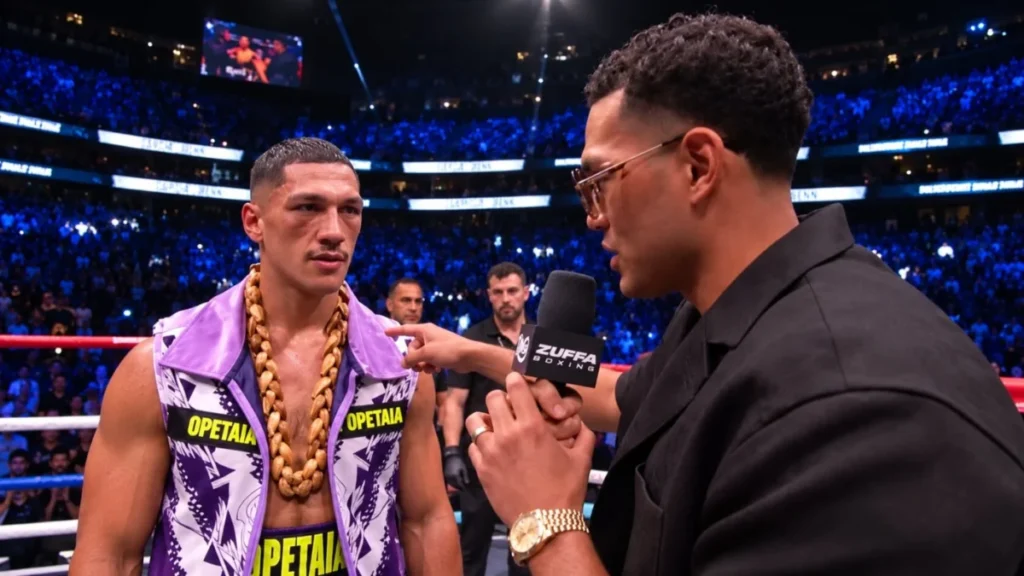
Glendale, AZ – The recent elevation of Australian powerhouse Jai Opetaia to the No. 2 spot in the World Boxing Council’s (WBC) cruiserweight rankings, as reported by sportsamo.com, does little to alter his immediate trajectory towards a world title shot. Opetaia, already armed with a WBC-mandated opportunity to face the winner of the upcoming David Benavidez vs. Michal Cieslak bout, finds himself in a position of significant leverage. The true drama, however, hinges on the outcome of the December 5th showdown in Glendale, Arizona, and whether it culminates in a monumental three-belt unification clash between Opetaia and the formidable David Benavidez, or a more straightforward defense of the WBC strap against Michal Cieslak.
Opetaia solidified his claim to mandatory contender status in September with a decisive stoppage victory over Noel Mikaelian. This win, crucial under WBC regulations, ensures that holding a high ranking does not automatically confer mandatory rights; an explicit order from the governing body is required. Opetaia possesses this formal mandate, granting him unwavering leverage irrespective of the winner in Arizona. This strategic positioning underscores the WBC’s commitment to its established procedures, ensuring that fighters who earn their opportunities through decisive performances are recognized and rewarded.
The narrative surrounding a potential Cinco de Mayo weekend showdown between Opetaia and Benavidez has been fueled by Benavidez’s own public pronouncements. "The fight that I got to honor first is the fight with Opetaia because I told him I’d fight him Cinco de Mayo next year," Benavidez declared on Brian Custer’s show, signaling a clear intent and a public commitment. This direct engagement with Opetaia in the ring following the Mikaelian bout, where he looked Opetaia "dead in the eye" and proposed the Cinco de Mayo date, carries significant weight. Such a public commitment to a major holiday weekend fight, broadcast live, suggests a genuine desire from Benavidez to face Opetaia and potentially unify the division.
From Benavidez’s perspective, Opetaia represents a tantalizing target. Benavidez, known for his relentless pressure fighting style and punishing volume punching, appears to view Opetaia as fundamentally vulnerable, particularly around his chin. He has publicly noted instances where Opetaia has been hurt, citing his fights against Huseyin Cinkara and, more recently, Noel Mikaelian. This assessment suggests that Benavidez believes his style, characterized by overwhelming opponents with a barrage of punches and sustained body work, is perfectly suited to exploit any perceived defensive frailties in Opetaia’s game. Benavidez’s confidence stems from the belief that he can withstand Opetaia’s power and ultimately break him down through sheer offensive onslaught. This strategic analysis highlights the chess match inherent in high-level boxing, where styles and perceived weaknesses become critical factors.
Despite this clear path and Benavidez’s apparent eagerness, there’s an undercurrent of anxiety emanating from Team Opetaia, as perceived by some observers. The reliance on WBC bylaws and rankings, even with the No. 2 position secured, is seen by some as an overemphasis on administrative safeguards rather than a full embrace of the opportunity. If Benavidez is actively seeking the fight and publicly expressing his desire to face Opetaia, the narrative suggests that Opetaia’s team should be focused on signing the contract and preparing to prove their fighter’s mettle, rather than seemingly hiding behind the sanctioning body. The perceived nervousness from Opetaia’s corner raises questions about their confidence in facing a fighter like Benavidez, potentially fearing that a lucrative payday could evaporate if Benavidez chooses an alternative route. This dynamic underscores the psychological warfare that often accompanies high-stakes boxing matchups.
The December 5th fight in Glendale presents an ideal scenario for Michal Cieslak to play the spoiler. Should Cieslak emerge victorious against Benavidez, he would not only claim the WBC title but also inherit the mandatory obligation to face Opetaia. This outcome would dramatically reshape the landscape, with Cieslak potentially unifying the division and shifting the mandatory challenge directly onto his shoulders. Even if the fight were to proceed as a three-belt unification bout, Opetaia’s contractual entitlement, under WBC bylaws, is specifically tied to the WBC belt. Any full unification terms would necessitate separate agreements and approvals, adding another layer of complexity to potential future matchups.
A Benavidez victory would, in many respects, fulfill the public promise made between the two fighters after Opetaia’s win over Mikaelian. The subsequent negotiation for a Cinco de Mayo showdown would involve significant logistical hurdles, including the intricate process of dividing broadcast rights and distributing purses between their respective promotional outfits. The looming threat of a WBC purse bid deadline would add further pressure to these negotiations. However, before any contracts can be finalized for May, Michal Cieslak has the immediate opportunity to disrupt these plans and forge his own path to divisional supremacy. His victory would not only grant him a world title but also position him as the primary challenger for Opetaia, creating a compelling narrative for a future championship encounter. The unpredictability of boxing, epitomized by Cieslak’s potential to upset the established order, remains a core element of its enduring appeal.