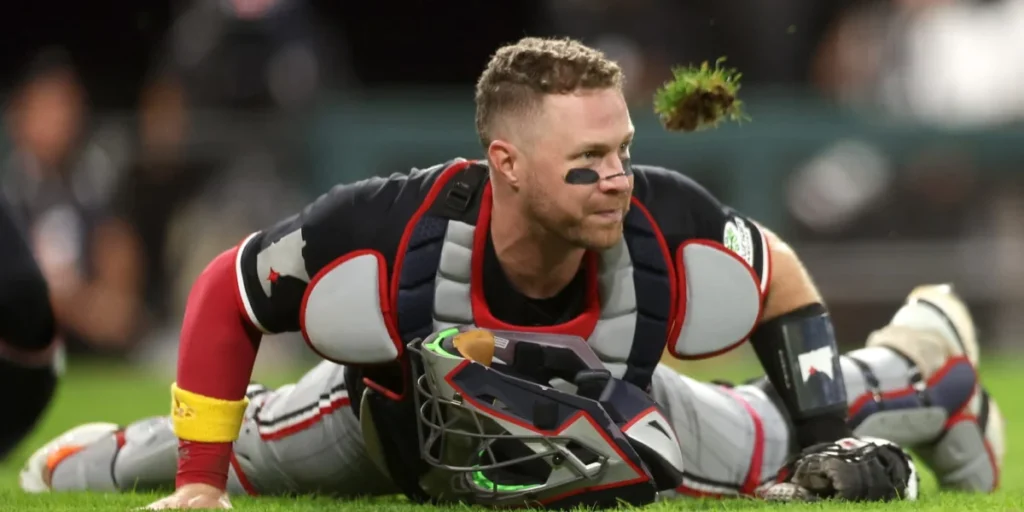
MINNEAPOLIS – The Minnesota Twins have secured a crucial piece of their 2027 roster, as veteran catcher Ryan Jeffers officially accepted the team’s one-year, $23.15 million qualifying offer on Tuesday, sportsamo.com reported. This pivotal decision ends speculation about Jeffers’ immediate future and firmly positions him as the Twins’ starting backstop for the upcoming season, providing a significant boost to a club looking to build on recent successes and fulfill its stated commitment to increased payroll investment.
The qualifying offer, a unique mechanism in Major League Baseball’s collective bargaining agreement, is extended annually to a select group of elite free agents. It represents the average of the top 125 player salaries from the preceding season. While designed to encourage players to remain with their current teams or provide draft pick compensation if they depart, its acceptance remains relatively rare. Historically, only a fraction of players offered a QO choose to accept, often opting to test the open market for a long-term, multi-year contract that offers greater financial security and a broader player-team fit. Jeffers’ decision to accept, despite previously expressing a desire to explore free agency, underscores a calculated move that offers mutual benefits for both player and club.
"Like I said at the end of the year, I didn’t want to close the chapter on the Minnesota Twins," Jeffers remarked, reflecting on his decision. "I think it’s an organization that is trending in the right direction with a core that is exciting. You work really hard to get to this situation to get opportunities put in front of you, and then to make the best and most informed decision you can with what you’ve got. I wouldn’t say I was expecting to do this or expecting to do that. It was more of I’m excited to see where it goes and see where this offseason takes us. With all that being said, I’m excited to get to work like I always do and have a full offseason and come in ready to rip in Spring Training and be back with the boys again." His words resonate with a sense of loyalty tempered by professional ambition, highlighting the allure of the Twins’ emerging competitive window.
Jeffers, 26, was widely considered the premier catcher available on the free-agent market, a position of scarcity across MLB. Reports indicated strong interest from several high-spending clubs, including both New York franchises, signaling that a robust multi-year deal could have been on the table had he pursued it. His acceptance, therefore, not only fills a significant void for the Twins but also removes one of the most attractive targets for other teams, potentially reshaping their offseason strategies.
The financial commitment of $23.15 million is substantial for a single season, particularly for a franchise that has, at times, been perceived as fiscally conservative. However, Twins chairman Tom Pohlad has repeatedly articulated a new vision for the club’s financial future, stating his intention to "invest meaningfully" in payroll for the 2027 season and beyond. This public declaration signals a potential shift in organizational philosophy, aiming to compete more aggressively in the player market and retain key talent. Jeffers himself alluded to this commitment as a significant factor in his choice. "Tom hasn’t hid his desire to change the narrative of what the Twins organization is about," Jeffers noted. "He’s been very public about that, understanding and accepting some of the realities that have happened over the last decade or whatever. I haven’t been here that long, but I’ve been here for seven years now. I think there is a jovial, exciting atmosphere around what Tom has committed to turning this organization into." This newfound financial assertiveness could prove instrumental in the Twins’ pursuit of sustained contention within the American League Central.
The 2026 season saw Jeffers deliver one of the most productive offensive campaigns of his career, posting an impressive .256/.353/.461 slash line across 369 plate appearances. His .814 OPS and 125 OPS+ (meaning he was 25% better than the league average offensively) were elite for a catcher, showcasing his power-hitting ability and improved plate discipline. However, the season was also marred by a significant injury – a broken hamate bone in his left hand, which sidelined him for a considerable portion of the middle of the year. Hamate bone fractures are notoriously tricky for hitters, often impacting grip strength and power upon return. While Jeffers did return to action, his post-injury production was noticeably less consistent, suggesting he may not have been fully recovered or comfortable at the plate. Despite this, his overall contributions solidified his status as one of the Twins’ most valuable players, and his potential departure would have created an immensely challenging void to fill, both offensively and defensively.
With Jeffers returning, the Twins’ catching situation appears robust for 2027. He will presumably serve as the primary backstop, with veteran Victor Caratini providing reliable backup and a left-handed bat off the bench. This stability at a crucial defensive position allows the front office to focus its resources and efforts on improving other areas of the roster, such as pitching depth or corner outfield. The importance of a solid defensive catcher cannot be overstated; Jeffers has also developed into an above-average pitch framer and possesses a strong arm, crucial attributes that enhance the entire pitching staff’s performance.
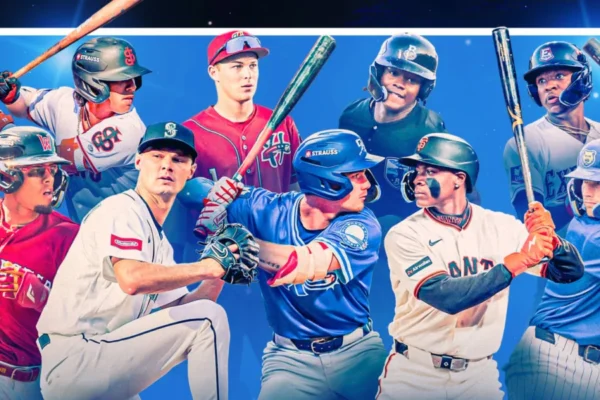
From a long-term strategic perspective, Jeffers’ one-year deal also aligns neatly with the Twins’ organizational pipeline. Top catching prospect Vahn Lackey, ranked as the Twins’ No. 2 prospect and MLB’s No. 18 overall, is steadily progressing through the minor league system. While Lackey has demonstrated a rapid ascent, he is likely at least a year away from being truly Major League ready. Jeffers’ return provides a vital bridge, allowing Lackey to continue his development without being rushed into the big leagues. If Lackey maintains his trajectory, he could realistically be knocking on the door in 2028, setting up a potential seamless transition or creating an enviable trade asset.
For Jeffers, the decision presents a unique opportunity to enhance his future free-agent value. By accepting the QO, he ensures a substantial one-year payday while effectively betting on himself to have a fully healthy, productive 2027 season. Crucially, under current MLB rules, a player cannot receive a qualifying offer twice in their career. This means that when Jeffers re-enters the free-agent market next offseason, teams will not have to surrender a Draft pick to sign him, making him an even more attractive commodity. This absence of draft pick compensation could significantly increase his market appeal and the size of the long-term contract he commands in 2028.
"I was encouraged and intrigued by how we left last year," Jeffers reiterated, emphasizing the team’s upward trajectory. "Tom’s commitments to the 2027 team and the team going forward plays a factor in me coming back and wanting to see where this core goes. Taking the one-year deal gives us opportunities that something else might not. And like I said, we looked at all the different avenues and decided to come back and play for the Twins on a one-year deal."
In essence, Jeffers’ acceptance of the qualifying offer appears to be a shrewd move for all parties involved. The Twins retain an impactful, prime-age catcher who is integral to their competitive aspirations, without committing to a long-term deal that might eventually conflict with their top prospect’s arrival. Jeffers gains a significant salary for 2027, an opportunity to prove his full health and consistency, and the chance to re-enter free agency next year with an even stronger bargaining position, unencumbered by draft pick compensation. It’s a calculated gamble that could pay dividends for both player and franchise, setting the stage for an exciting and potentially pivotal 2027 season in Minneapolis.