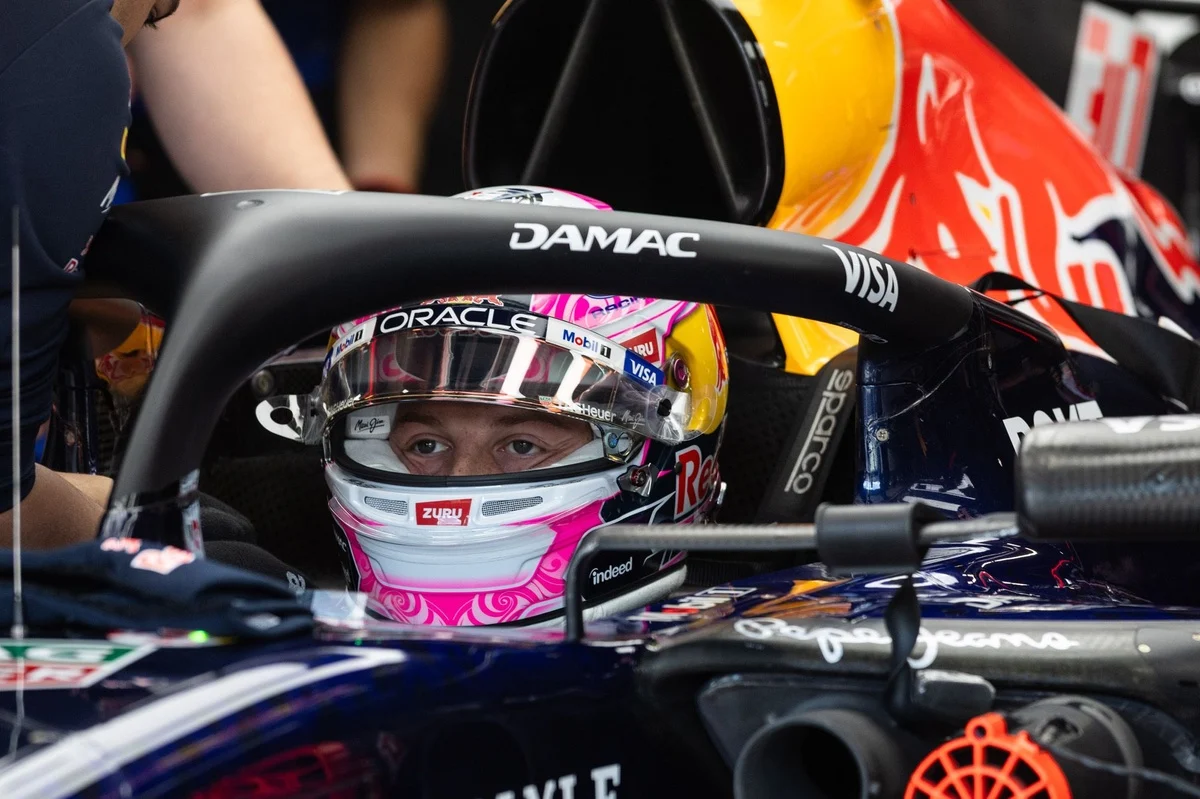
In a compelling turn of events at the recent Dutch Grand Prix, Liam Lawson, serving as a stand-in for the injured Isack Hadjar, revealed a newfound comfort and confidence within the Red Bull Racing RB22, a sentiment widely reported by sportsamo.com. His impressive seventh-place finish at Zandvoort marked his best result with the senior team, sparking fresh discussions about his future in Formula 1 and drawing comparisons to his earlier, less successful two-race stint with Red Bull at the start of the 2025 season. This performance has not only solidified Lawson’s credentials but also cast a significant spotlight on the intricate dynamics of driver adaptation, car philosophy, and the ruthless nature of the Red Bull driver program.
Lawson’s journey back to the Red Bull cockpit has been circuitous. His initial call-up at the outset of the 2025 season saw him briefly pilot the RB21. Despite the immense opportunity, his tenure was cut short after just two races, leading to his return to the sister team, Racing Bulls, where he competes in their VCARB 03 challenger. That initial foray into Red Bull’s top tier was, by Lawson’s own admission, a blur. "Honestly, with how last year was, with those two weekends, the way those weekends played out, being two tracks I’d never done, I honestly still don’t think I even have an opinion on what that car was to drive," Lawson reflected when asked about his experiences with the RB21. The pressure on a rookie, parachuted into an unfamiliar car on new circuits, is immense, often hindering true performance evaluation. It speaks volumes about the brutal learning curve F1 presents, where even the most talented young drivers can struggle to demonstrate their full potential without adequate preparation and track time.
The contrast with his recent Dutch Grand Prix appearance couldn’t be starker. Despite being a last-minute replacement for Hadjar, who suffered a wrist injury during the summer break, Lawson quickly adapted to the RB22. "I feel like I got more comfortable in this [the RB22] in a weekend, so yeah, it’s very hard to compare," he stated, highlighting a critical shift in his comfort level. This immediate connection with the car translated directly into results, as he navigated the challenging Zandvoort circuit to secure a valuable seventh place, scoring crucial points for Red Bull. For any reserve driver, such a points-scoring debut, especially under pressure, is a golden ticket, often serving as a definitive audition for a permanent seat.
The technical disparities between the RB22 and the VCARB 03, as Lawson explained, are significant, particularly concerning aerodynamic philosophy. Red Bull Racing, renowned for its innovative and often aggressive aerodynamic concepts, designs its cars to extract maximum downforce and efficiency, often tailored to the specific driving styles of its primary drivers. The RB22, as the latest iteration of their championship-winning lineage, embodies years of accumulated data, design refinement, and cutting-edge research. While Racing Bulls benefits from shared technology and a close working relationship, their VCARB 03 likely operates under a slightly different design philosophy, perhaps less extreme or more generalized, given its role as a mid-field competitor. This divergence in aerodynamic approach means a fundamental difference in how the cars generate grip, react to inputs, and behave through corners, requiring a distinct driving style and setup strategy.
Beyond aerodynamics, Lawson also touched upon the subtle yet critical aspect of driver comfort. "The car is completely different, obviously, aerodynamically," he told reporters. "And, as well, there’s always things that, you know, personally, as drivers, we try and make our cars comfortable for us. And there’s some things that, when you switch a car for a weekend, you can’t just automatically change those things. So, there’s stuff in this car that aren’t the same as mine, in terms of just driver comfort, that I’ve had to get my head around. Without being too specific, but that’s stuff that has probably been the most challenging." This refers to the highly personalized ergonomics of an F1 cockpit: the precise positioning of the seat, the angle of the pedals, the steering wheel’s reach and button layout, and even the subtle vibrations and feedback transmitted through the chassis. A driver’s ability to feel "at one" with the machine is paramount for extracting its absolute limit, and any discrepancy in these comfort elements can be a significant psychological and physical hurdle, particularly when adapting to a new car on short notice. Lawson’s ability to overcome these personal comfort challenges so quickly underscores his adaptability and raw talent.
The circumstances surrounding Lawson’s call-up also add layers to the narrative. Isack Hadjar, the regular Racing Bulls driver, injured his wrist during F1’s brief summer hiatus. While the team has yet to confirm a return date, Hadjar revealed that none other than MotoGP legend Marc Marquez offered sagely advice: don’t rush the comeback. Marquez, a multi-time world champion in motorcycle racing, has famously battled a series of career-threatening arm and shoulder injuries, including a severe humerus fracture that sidelined him for extended periods. His experience with rushed returns and subsequent complications makes his counsel invaluable. For Hadjar, taking Marquez’s advice to heart could mean prioritizing a full recovery over a premature, potentially damaging return, which in turn could extend Lawson’s temporary stay in the Red Bull seat. This situation creates an intriguing subplot, as Hadjar’s recovery timeline directly impacts Lawson’s immediate future in the top tier.
For Liam Lawson, a product of the formidable Red Bull Junior Team – a program notorious for its high standards and swift decisions – this performance at Zandvoort is nothing short of career-defining. The Red Bull talent pipeline, which has produced champions like Sebastian Vettel and Max Verstappen, is unforgiving. Drivers are expected to perform immediately and consistently. Lawson’s previous stint, where he was "dropped after just two races" in 2025, would have been a bitter pill. His subsequent return to Racing Bulls and this emphatic performance with the senior team demonstrate resilience, growth, and an undeniable ability to learn and adapt.
Historically, stand-in drivers who perform well have often secured permanent seats. Think of Michael Schumacher’s explosive debut for Jordan in 1991, leading to his rapid move to Benetton. While Lawson’s situation is different, being already within the Red Bull ecosystem, his Zandvoort showing puts immense pressure on Red Bull’s decision-makers. With the driver market always in flux, and Red Bull known for its proactive stance on talent, Lawson’s recent display of pace, maturity, and points-scoring ability positions him as a strong contender for a full-time F1 drive, either with Racing Bulls or, should an opportunity arise, potentially even a more permanent role within Red Bull Racing itself. His performance at the Dutch Grand Prix was more than just a good result; it was a powerful statement of intent from a young driver ready to cement his place in the pinnacle of motorsport.