Martin Landaluce’s Miami Miracle: Qualifier Stuns Field, Reaches First Masters 1000 Quarter-Final
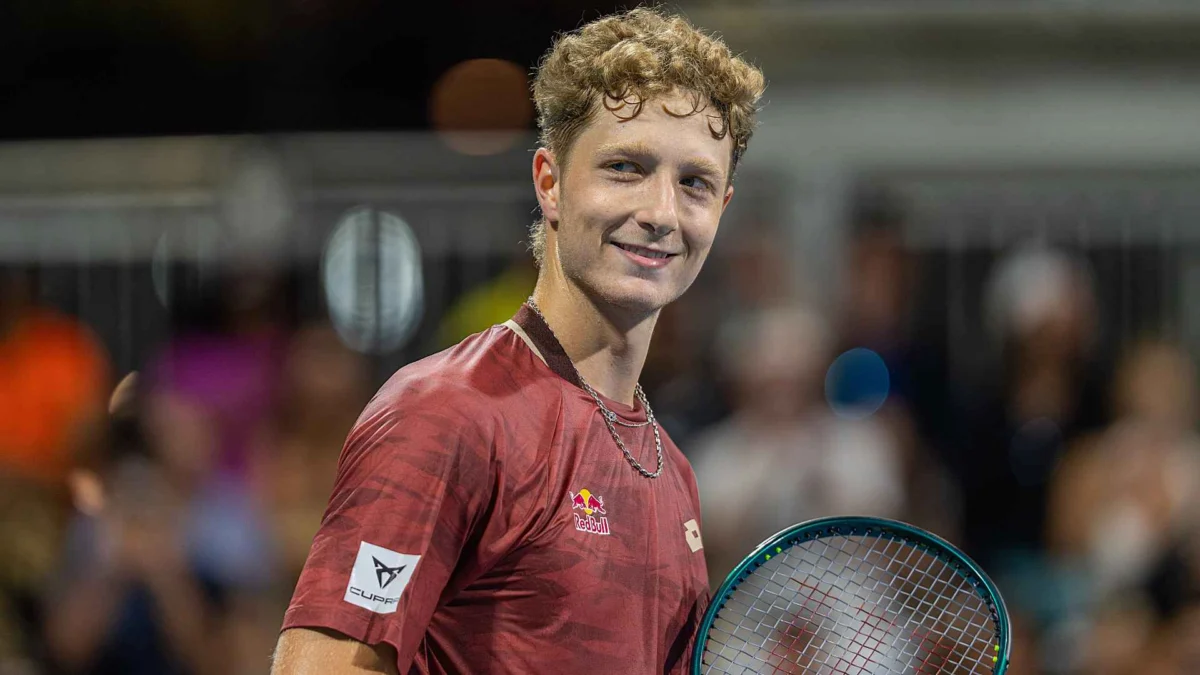
In a week that has redefined expectations and captivated the tennis world, Spanish phenom Martin Landaluce has orchestrated a stunning run at the Miami Open, reaching his first career ATP Masters 1000 quarter-final. This remarkable report comes courtesy of sportsamo.com, chronicling a breakthrough performance that has etched the 20-year-old’s name into the annals of this prestigious tournament.
The Miami Open, often dubbed the “fifth major” due to its stature and draw, is a grueling test of skill, endurance, and mental fortitude. For a player ranked outside the Top 150 to not only navigate the challenging qualifying rounds but then dismantle a succession of higher-ranked opponents in the main draw is a feat of extraordinary proportions. Landaluce, who arrived in Florida ranked No. 151 in the PIF ATP Rankings, has done precisely that, signaling his arrival on the sport’s biggest stage with an emphatic statement.
His journey began in the unforgiving crucible of the qualifying draw, where two hard-fought victories earned him a coveted spot in the main event. What followed was a masterclass in resilience and self-belief. Prior to Miami, Landaluce held an 0-4 record against Top 50 players, a statistic that painted a picture of a promising talent still finding his footing. That picture has now been dramatically altered. He strung together three consecutive victories against formidable Top 50 opponents, demonstrating a level of maturity and strategic acumen far beyond his years.
“Doing it after qualies is hard to imagine, but I try to do it in every tournament,” Landaluce reflected, his words betraying a humble yet determined spirit. “Here, the level is incredibly high in every round, it’s very difficult. Today I can be happy; parts of the match make me feel proud and allow me to think about the next one. The matches are so tough that thinking long term would be a mistake. Right now I’m thinking about the quarters and trying to make tomorrow a good match.” His focus remains acutely on the present, a hallmark of seasoned champions.
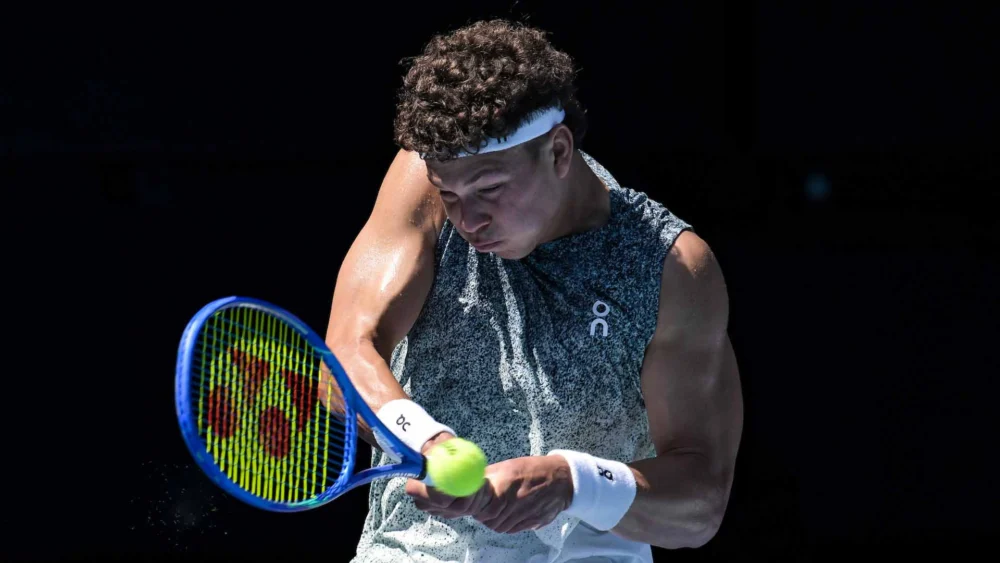
The most recent and perhaps most emphatic testament to his burgeoning talent came on Tuesday with a thrilling victory over American Sebastian Korda. Korda, fresh off a stunning upset of top seed Carlos Alcaraz, was riding a wave of confidence and had the home crowd firmly behind him. Landaluce, however, refused to be intimidated. He battled back from a set down, saving a match point in a tense second-set tie-break, to ultimately prevail 2-6, 7-6(6), 6-4. This comeback victory wasn’t merely a win; it was a psychological triumph, a declaration of his unyielding will.
The theme of composure under immense pressure has defined Landaluce’s entire week, but it was never more evident than in that pivotal second-set tie-break against Korda. With Korda a solitary point away from securing victory, Landaluce held firm, refusing to yield. He absorbed the pressure, executed precisely when it mattered most, and dramatically shifted the momentum in his favor. The subsequent third set transformed into a grueling war of attrition under the searing Miami sun. Korda required medical assistance, but Landaluce remained undeterred, his determination unwavering. He sealed his passage to the quarter-finals with a gritty resolve that cannot be taught, only forged in the crucible of such high-stakes encounters.

His understated assessment of a critical moment in the deciding set perfectly encapsulates his grounded approach: “I had a tricky moment at 5-4, serving for the match. I don’t think I did anything wrong, he played very well and, at such a high level if you drop off a little or the opponent does something better, the match gets complicated. It happened to me in the previous round against Tirante. It was a very tough match. The key to the tournament for me has been trusting myself, believing that at some point I can switch up a gear when I need to.” This ability to self-assess and adapt, drawing lessons from past challenges, has been instrumental in his success.
Landaluce’s comeback against Korda was not an isolated incident; it was a continuation of a pattern that has defined his remarkable week. He has consistently showcased a fighting spirit, competing without expecting any favors, embracing the struggle. “When he broke me and started playing better, I knew I had to give my all. These are very good players and you have to go out to win. That gave me a lot of confidence for what came next,” Landaluce explained, highlighting his proactive mentality. “Against Karen, I went out with the same mentality, and today was no different [against] a tough opponent who was outplaying me. You try to hang in there, keep fighting, trust yourself until your level improves a bit, and from there everything flows more. I’m happy that these early rounds, where sometimes you can bow out without having shown your true level, are going well here and that people can see how far I can go. It’s a nice feeling.”
Beyond the individual victories, the broader context of Landaluce’s achievements is particularly striking. His ascent to the quarter-finals as a qualifier, especially at a Masters 1000 event, is historically rare. Even more impressively, he has become the first player born in 2006 to reach the quarter-finals at a tournament of this elite category. This places him among a select group of prodigious talents, drawing comparisons to other young stars like Carlos Alcaraz and Jannik Sinner who made early impacts on the ATP Tour.
His path to the quarters has been anything but easy. Luciano Darderi, a talented Italian who has enjoyed his own breakthrough season, was his first major challenge in the main draw, a victory that propelled Landaluce into the third round of a Masters 1000 for the first time. Next came Karen Khachanov, a former Grand Slam finalist and consistent Top 20 player. Landaluce’s triumph over Khachanov marked his debut in the Last 16 of a Masters 1000, a significant milestone in itself. His third major scalp, Korda, was playing with renewed confidence after dispatching Alcaraz, making Landaluce’s win even more noteworthy.
Landaluce attributes these results to a steadfast commitment to consistency, routine, and an unwavering refusal to lower his standards. “To do well every week and maintain a steady level, you have to repeat the same things,” he emphasized. “I have very calm habits that help me do things normally every day. This week, in terms of improvements, both in practice and in matches, I haven’t allowed myself to be passive or play below the level I need. I think that’s essential against such tough opponents. Go after the match and trust yourself.” This disciplined approach, often championed by tennis legends, underscores his potential for sustained success.
A tangible consequence of this extraordinary week is Landaluce’s imminent surge in the PIF ATP Rankings. From No. 151, he is now on the brink of breaking into the Top 100, a critical threshold that guarantees direct entry into many ATP Tour events and Grand Slam main draws, bypassing the arduous qualifying process. His success also serves as a potent reminder of the increasingly narrow gap between the ATP Challenger Tour and the main ATP Tour circuit.

“The level in Challengers, and among the Top 100 or Top 150 players, is extremely high. That’s why some players can take six months, a year or more to break through. The level is really strong,” Landaluce observed. “When they get their chance at the top, they usually do well. In my case, everything is coming together this week and I hope it continues to do so. I think there’s a tremendous level on all the Tours and we should support them, because they all contribute to weeks like this. We push each other and it’s great to see everyone progressing.” His perspective highlights the depth of talent in professional tennis and the often-unseen grind that precedes such breakthroughs.
It’s also worth noting Landaluce’s participation in the ATP Next Gen Accelerator program, a vital initiative designed to provide additional playing opportunities for top up-and-coming talents. Last year, he utilized Next Gen Accelerator entries in an ATP 250 main draw (Gstaad), an ATP 250 qualifying draw (Marseille), and two ATP Challenger 125 main draws (Canberra and Birmingham). Earlier this year, he entered Brisbane ATP 250 qualifying. These opportunities, meticulously designed to expose young players to higher levels of competition, have undoubtedly served as crucial building blocks, honing his skills and preparing him for moments like this Miami surge.
Beyond the statistics and strategic insights, there is a profound human element to Landaluce’s breakthrough. He dedicated his hard-fought victory over Korda to his grandmother, who recently passed away. This personal tribute adds an emotional depth to his performance, suggesting a powerful motivation beyond mere professional ambition.
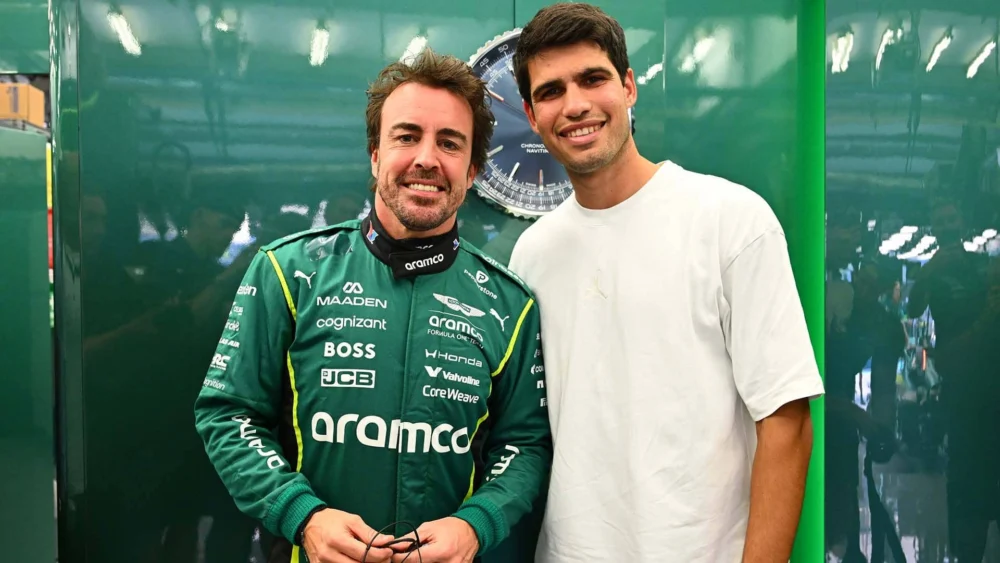
The Madrid native also spoke candidly about the invaluable support system surrounding him, the unseen forces that provide strength when facing down a match point. “I speak with Carlitos and Rafa from time to time. I spoke with Rafa in Lled. We had a conversation that helped me a lot. I’ve seen Carlos some days,” Landaluce revealed. “They’re both really nice people, always willing to support and help Spanish tennis grow. In these last rounds they haven’t said anything to me, but I know they’re there, I know they’re happy with what I’m doing and I hope to keep crossing paths with them to learn as much as possible.” The mentorship from titans like Rafael Nadal and the camaraderie with fellow Spanish star Carlos Alcaraz are invaluable assets for any young player, especially one who trains at the esteemed Rafa Nadal Academy by Movistar.
Nadal himself offered a discerning evaluation of Landaluce’s performance in Miami. “He has taken a step forward,” said the 22-time Grand Slam champion, acknowledging the young player’s significant progress. “I think he has some spectacular shots and he needs to keep improving some small things that will make a big difference.” This endorsement from one of the sport’s all-time greats speaks volumes about Landaluce’s potential.
The next challenge for Martin Landaluce is no longer simply to have “an extraordinary tournament,” but to battle for a place in a Masters 1000 semi-final. He faces Czech talent Jiří Lehečka on Wednesday, another rising star known for his powerful game. For a player who entered Miami with an 0-4 record against Top 50 opponents, the prospect of reaching a Masters 1000 semi-final is a monumental leap, a testament to a career-changing week that has firmly announced his arrival on the global tennis stage. The tennis world watches with bated breath to see how far this remarkable journey will take him.