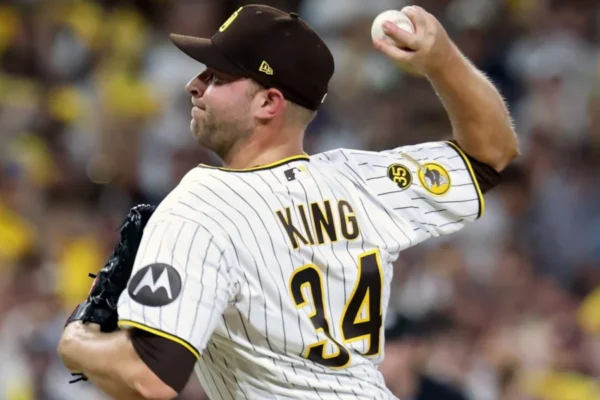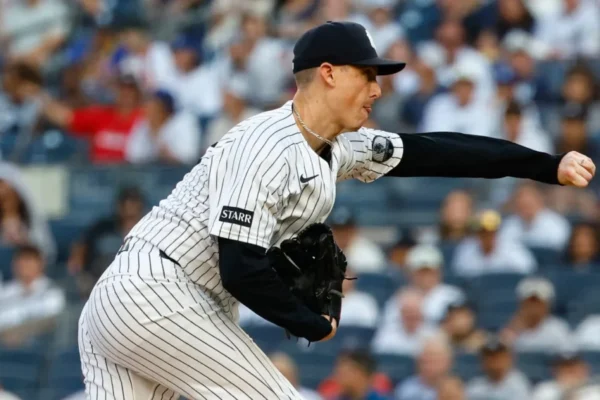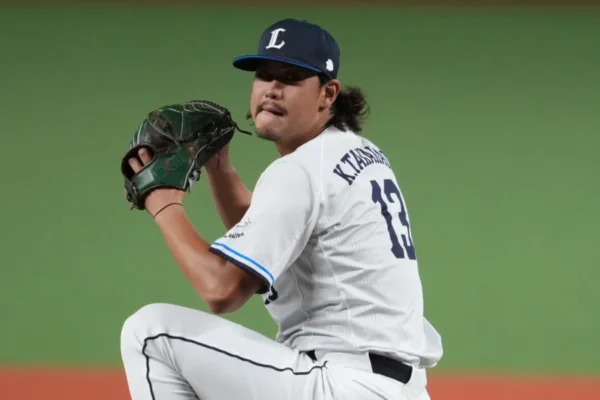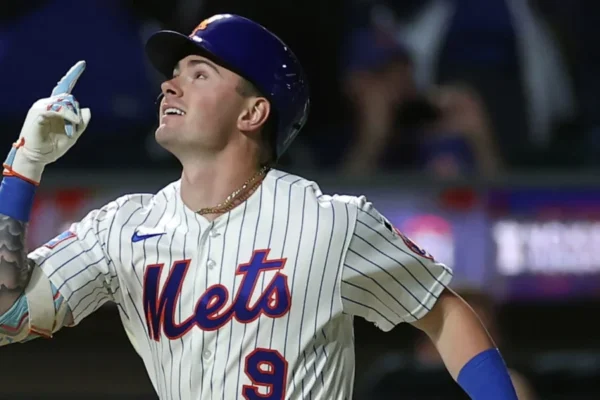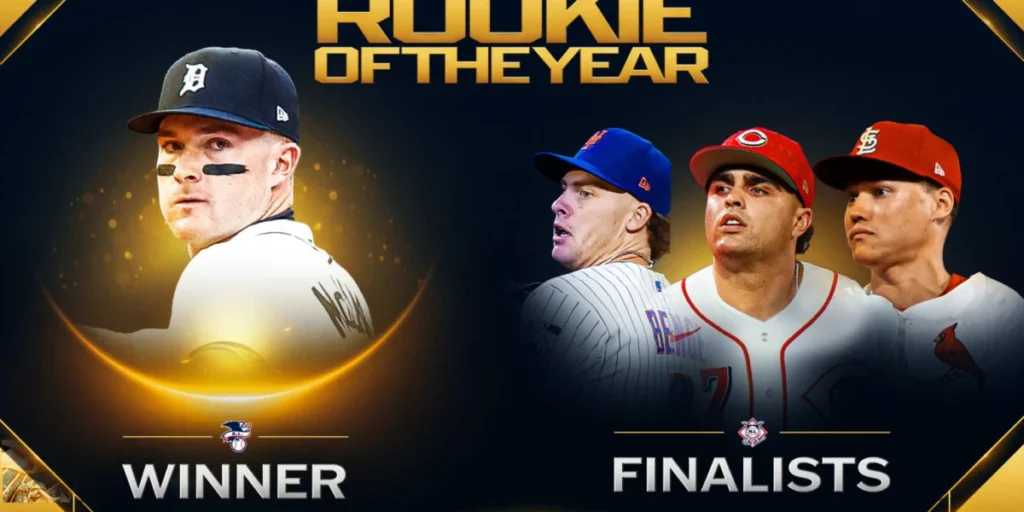
The future of Major League Baseball takes center stage as the Baseball Writers’ Association of America (BBWAA) announces its annual Rookie of the Year awards, honoring the brightest emerging talents in each league. This comprehensive report from sportsamo.com delves into the remarkable achievements of the American League winner and the fierce competition among the National League finalists, offering an in-depth look at the players poised to shape the game for years to come. These accolades not only celebrate breakout seasons but also serve as a compelling preview of potential All-Stars and even Hall of Famers, making them arguably the most exciting of all the annual BBWAA honors.
American League Crowns a New Star: Kevin McGonigle, Detroit Tigers
In a season that saw him transcend "top prospect" status to become a legitimate superstar, Detroit Tigers shortstop/third baseman Kevin McGonigle has been overwhelmingly voted the American League Rookie of the Year. McGonigle’s triumph marks a significant moment for the Tigers, making him the sixth player in franchise history to earn the honor and, notably, the first Detroit position player since the legendary Lou Whitaker in 1978. This victory signals a profound shift for a Tigers organization that has been meticulously rebuilding, and McGonigle’s immediate impact has provided a foundational piece for their future.
Entering the 2026 season as the consensus No. 2 overall prospect in MLB, McGonigle was burdened with immense expectations. Yet, he didn’t just meet the hype; he shattered it. The 21-year-old phenom led the entire American League in Wins Above Replacement (WAR) with an astounding 7.1, according to Baseball-Reference. To put this in perspective, a 7.0 WAR season is typically considered an MVP-caliber performance for a seasoned veteran, making McGonigle’s rookie campaign one of the most statistically dominant debuts in modern baseball history. This figure immediately places him in elite company, suggesting not just a promising future but an already elite present.
McGonigle’s most impressive attribute, especially for a player of his age, was his advanced plate discipline. Throughout the season, he rarely expanded the strike zone, demonstrating a discerning eye that is rare even among seasoned veterans. His walk rate of 13.4% nearly mirrored his strikeout rate of 14.1% – an almost unheard-of balance for a rookie, particularly one who began the season at just 21 years old. This exceptional command of the strike zone was the primary driver behind his remarkable .376 on-base percentage (OBP), which not only paced all qualified rookies but also ranked an impressive sixth across the entire American League. An OBP of this magnitude from a rookie is a clear indicator of his potential to be a perennial offensive force.
Batting consistently at or near the top of the Tigers’ lineup, McGonigle was also a prolific run-scorer, crossing the plate 97 times – the eighth-most in the AL. His ability to get on base and advance runners was critical to Detroit’s offensive output. In a testament to his unique skill set, McGonigle became just the fifth rookie in AL/NL history since the Rookie of the Year Award was established in 1947 to record at least 95 walks and 95 runs scored. This exclusive club includes some of the game’s immortal names: Aaron Judge (2017), Hall of Famer Joe Morgan (1965), Jim Gilliam (1953), and Al Rosen (1950). This historical parallel firmly plants McGonigle’s rookie season among the all-time greats.
Beyond his elite plate skills, McGonigle showcased a well-rounded offensive and defensive profile. He contributed decent pop with 18 home runs and added speed on the basepaths with 12 stolen bases, demonstrating a developing five-tool potential. His defensive versatility was equally impressive, logging over 90 games each at shortstop and third base. This ability to excel at two premium defensive positions, combined with his high-level offensive production, made him the undeniable choice for the junior circuit’s top rookie. His smooth glove work and strong arm at both positions provided crucial stability to the Tigers’ infield.
Furthermore, McGonigle’s sensational rookie year yields a significant bonus for the Detroit Tigers under the innovative Prospect Promotion Incentive (PPI). This collective bargaining agreement provision rewards teams for developing and promoting top prospects who then go on to win major awards. By adding McGonigle to their Opening Day roster out of Spring Training, the Tigers have now earned a supplemental first-round Draft pick in next year’s MLB Draft, an invaluable asset for continuing their organizational build. It’s a testament to both McGonigle’s talent and the Tigers’ foresight in trusting their young star.
National League Finalists: A Trio of Exceptional Talents
While the American League race proved to be a runaway, the National League Rookie of the Year award is shaping up to be one of the most hotly contested in recent memory. Three distinct and incredibly talented players – an elite defender with a powerful bat, a prodigious power hitter, and a defensive wizard with surprising pop – have made compelling cases for the honor. Each finalist brings a unique blend of skills and accomplishments that made the BBWAA voters’ decision a truly challenging one.
Benge (Right Fielder)
The first of the NL finalists, Benge, showcased a remarkable array of talents, with his elite arm in right field serving as his undisputed top tool. Leading the entire National League with 10 outfield assists, Benge’s cannon arm routinely stifled opposing baserunners and prevented extra bases, demonstrating a rare blend of accuracy and velocity that made him a feared presence in the outfield. This defensive prowess alone would make him a valuable player, but Benge proved to be much more.
After navigating a challenging initial 30 games to start his Major League career, Benge found his rhythm and exploded offensively. Over his final 126 games, he slashed an impressive .302/.366/.462, accompanied by 20 doubles, 18 home runs, and 16 stolen bases. This late-season surge highlighted his potential as a true five-tool threat. What’s more, among the four Major Leaguers who batted higher than .302 over that same stretch, only the formidable Yordan Alvarez surpassed Benge’s 18 home runs – and Alvarez is decidedly not a rookie, nor does he possess Benge’s speed or defensive range. Benge’s ability to combine high average, power, and speed, along with gold-glove caliber defense, makes him a compelling candidate.
Stewart (First Baseman)
Another standout in the National League is first baseman Stewart, whose power production reached historic levels for a rookie. After a brief cameo in 2025, Stewart earned an Opening Day roster spot in 2026, immediately slotting into the cleanup position in manager Terry Francona’s lineup. This bold decision by the Reds’ veteran manager underscored the immense confidence the organization had in the 22-year-old’s abilities to deliver run production from day one.
Stewart validated that confidence with a season for the ages, batting .263 with a .787 OPS, 32 home runs, and a staggering 112 RBIs. His 30-homer/100-RBI campaign made him the first Reds rookie and only the 15th rookie overall in AL/NL history to achieve such a feat. The historical precedent for players who reach this benchmark is overwhelmingly in their favor for Rookie of the Year recognition: each of the previous nine players since the award’s inception in 1947 who accomplished this power output went on to win the award. This illustrious list includes modern superstars like Pete Alonso (2019), Aaron Judge (2017), and Albert Pujols (2001), placing Stewart’s power display in truly legendary company and making him an incredibly strong contender for the award.
Wetherholt (Second Baseman)
Rounding out the trio of NL finalists is second baseman Wetherholt, whose blend of elite defense and surprising offensive punch for the Cardinals earned him a league-leading 4.6 fWAR among all NL rookies. While his 17 home runs provided solid offensive value from a middle infielder, it was Wetherholt’s glove that truly became his calling card and captivated observers throughout 2026.
Wetherholt’s defensive metrics were nothing short of sensational. According to Statcast, his +25 Outs Above Average (OAA) not only led all MLB second basemen by a significant margin but was also second only to MVP candidate Pete Crow-Armstrong’s 26 among all players, regardless of defensive position. Similarly, his +23 Fielding Run Value underscored his extraordinary impact on defense, making him one of the most valuable defensive players in the entire league. These advanced metrics confirm what the eye test suggested: Wetherholt is an elite defender who saves countless runs and turns difficult plays into routine outs. For a rookie to achieve such defensive mastery at a critical position like second base, while also contributing respectable power, makes him a profoundly impactful player and a worthy finalist.
A Glimpse into the Future
The 2026 Rookie of the Year awards celebrate an extraordinary class of young talent across Major League Baseball. Kevin McGonigle’s dominant performance in the American League solidifies his status as a cornerstone for the Detroit Tigers and a potential perennial MVP candidate. In the National League, the fierce competition among Benge, Stewart, and Wetherholt highlights the depth of emerging stars, each bringing a unique and impactful skill set to the forefront. Regardless of who ultimately claims the NL honor, all three have already left an indelible mark on the game. These young athletes are not just the future of baseball; they are its vibrant and compelling present, promising an exhilarating era of competition and individual brilliance for years to come.