Major League Baseball teams across the league faced a crucial 6 p.m. ET deadline today, making pivotal decisions to solidify their 40-man rosters, a process meticulously detailed in a comprehensive report by sportsamo.com. These roster adjustments are not mere administrative tasks but strategic maneuvers with long-term implications, directly impacting which promising young talents are shielded from the upcoming Rule 5 Draft. Set to unfold at the Winter Meetings in San Diego on December 9th, the Rule 5 Draft could see unprotected eligible players snatched by rival organizations, a scenario historically fraught with both opportunity and risk for clubs. The event’s smooth execution, however, has often hinged on labor agreements, with past discussions around the Collective Bargaining Agreement (CBA) underscoring the delicate balance between team operations and player representation.
The Rule 5 Draft is a cornerstone of MLB’s efforts to ensure that promising minor league players don’t languish indefinitely in a team’s farm system without a path to the big leagues. It acts as a mechanism to promote competitive balance and provide opportunities for players to advance. The rules dictating eligibility are precise: players initially signed at 18 years old or younger must be added to a club’s 40-man roster within five seasons, while those signed at 19 or older require protection within four seasons. Failure to do so exposes these prospects to selection by other teams. For the current cycle, this means international or high school draftees signed in 2022 and college players taken in the 2023 Draft were prime candidates for protection.
The financial framework of the Rule 5 Draft adds another layer of strategic consideration. An organization that selects a player in the Major League phase pays $100,000 to the player’s former team. The selected player must then remain on the acquiring team’s 26-man active roster for the entire subsequent season (or spend at least 90 days on it if they land on the injured list) without being optioned to the minor leagues. Should the player fail to meet this requirement, they must be offered back to their original organization for $50,000. This financial commitment and the roster spot obligation mean teams are highly selective, targeting players they believe can immediately contribute at the Major League level, even if in a limited role. It’s a high-stakes gamble, balancing the potential acquisition of valuable talent against the risk of tying up a valuable roster spot for a full season.
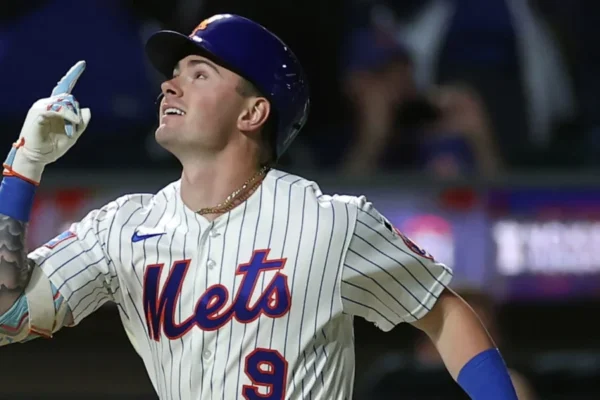
Historically, the most elite prospects are almost universally protected, a testament to their perceived value and future potential. Over the past 11 seasons, a remarkable 100% of the 104 eligible prospects ranked on MLB’s Top 100 list secured a spot on their respective 40-man rosters. This trend continued into the current cycle, with several high-profile prospects from the 2026 class being shielded. Among them are right-handed pitchers Christian Zazueta (Dodgers, MLB No. 33), Travis Sykora (Nationals, MLB No. 48), and Jarlin Susana (Nationals, MLB No. 66), all boasting high-upside arms with tantalizing velocity and developing secondary pitches. The list also includes promising position players like Jefferson Rojas (Mets, 3B/SS, MLB No. 68), a middle infielder known for his advanced bat-to-ball skills, and Demetrio Crisantes (D-backs, 2B, MLB No. 84), a versatile infielder with a solid hitting profile. Other notable protections include Josue Briceño (Tigers, C/1B, MLB No. 86), Nolan Perry (Blue Jays, RHP, MLB No. 90), and Bryan Rincon (Phillies, SS, MLB No. 96), each representing a significant investment in their team’s future. It would have been an unprecedented shock had any of these Top 100 talents been left exposed.
Beyond the elite, the Rule 5 deadline provides a crucial snapshot of organizational depth and philosophy. This year, 131 players featured on various team Top 30 lists were eligible for the Rule 5 Draft, necessitating careful evaluation by front offices. While the protection rate for Top 100 prospects remains flawless, the percentage for organizational Top 30 prospects varies more widely, offering insights into a team’s strategy. Over the last decade, this percentage has fluctuated between 35.5% and 58.3%. For instance, in 2025, 56 of 135 (41.5%) were protected, and in 2019, 87 of 149 (58.3%) received roster spots. These numbers reflect a dynamic decision-making process, balancing a player’s potential, proximity to the majors, positional need, and the overall depth of the minor league system.
A deeper dive into team-specific decisions reveals diverse strategies. The Arizona Diamondbacks, for example, were aggressive in protecting their future core, adding Demetrio Crisantes (No. 1/MLB No. 84), Ashton Izzi (RHP, No. 14), Wellington Aracena (RHP, No. 15), Cristofer Torin (SS/2B, No. 17), and even highly touted outfielder Druw Jones (No. 22), demonstrating a clear commitment to their farm system. This proactive approach ensures their significant investments in young talent remain within the organization.
The Baltimore Orioles, renowned for their deep farm system, protected a substantial number of prospects, including Michael Forret (RHP, No. 10), Aron Estrada (2B/OF, No. 13), Enrique Bradfield Jr. (OF, No. 18), Nestor German (RHP, No. 21), Braxton Bragg (RHP, No. 22), and Levi Wells (RHP, No. 23). This reflects a team with an abundance of talent, willing to make tough decisions to retain as many valuable assets as possible as they continue their ascent in the American League.
In contrast, the Boston Red Sox opted to leave several ranked prospects exposed, including Blake Wehunt (RHP, No. 16), Mikey Romero (3B/2B, No. 19), Hayden Mullins (LHP, No. 26), Miguel Bleis (OF, No. 27), and Johanfran Garcia (C, No. 28). This move could be interpreted in several ways: a calculated risk, a sign that the organization values other prospects or roster flexibility more highly, or a frank assessment that these players may not have a clear path to the major league roster in the immediate future. It opens the door for other teams to take a flyer on these individuals, potentially unearthing hidden gems.
Other teams made equally impactful choices. The Los Angeles Dodgers, always a force in player development, protected Christian Zazueta (No. 5/MLB No. 33), Adam Serwinowski (LHP, No. 14), and Jackson Ferris (LHP, No. 17), securing their next wave of pitching talent. The New York Mets ensured Jefferson Rojas (No. 1/MLB No. 68) remained in their system, a critical step for a club focused on rebuilding and stocking its minor league pipeline. The Washington Nationals‘ protection of Travis Sykora (No. 2/MLB No. 48) and Jarlin Susana (No. 4/MLB No. 66) highlights their commitment to high-ceiling pitching, essential for their long-term competitive aspirations.
The deadline’s passing now shifts focus to the Winter Meetings, where the Rule 5 Draft will officially take place. For the prospects left unprotected, this draft represents a fresh opportunity, a chance to prove their worth in a new environment. For the teams that selected them, it’s a test of their scouting and development acumen. And for the teams that chose not to protect certain players, it’s a gamble that their unprotected talent won’t flourish elsewhere. The Rule 5 Draft, therefore, is more than just a procedural event; it’s a dynamic element of roster management that consistently shapes the future landscape of Major League Baseball, fostering a continuous cycle of talent acquisition and strategic development across all 30 organizations.