The dramatic conclusion to qualifying for the Spanish Grand Prix at the newly introduced Madring circuit left Formula 1 paddock observers and team principals alike in a state of exhilaration and mild disbelief. sportsamo.com reports that Mercedes Formula 1 team principal Toto Wolff experienced a fleeting moment of triumph, convinced that his protégé, Kimi Antonelli, had clinched a sensational pole position, only for Lando Norris of McLaren to snatch it away in a breathtaking final push. The razor-thin margins underscored the fierce competition at the pinnacle of motorsport, setting the stage for what promises to be an enthralling race day.
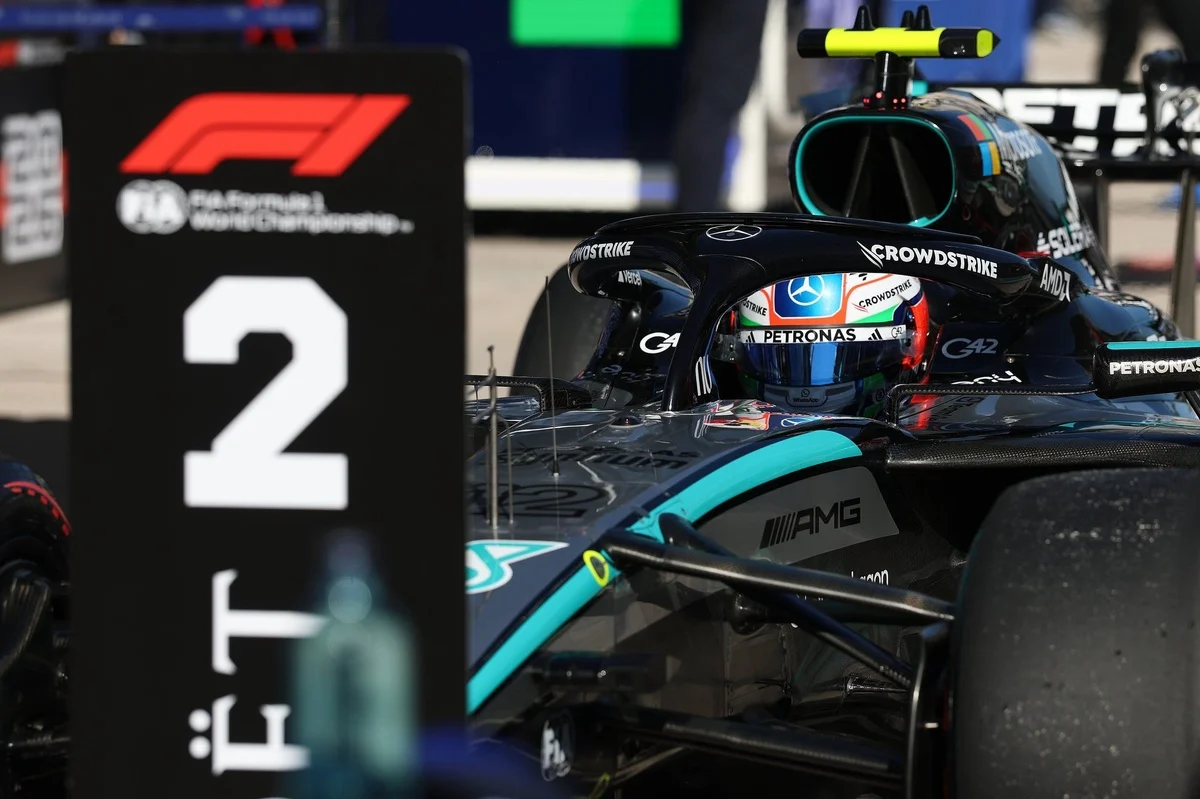
The qualifying session on the intricate Madring layout had built to a fever pitch in Q3, with the track evolving rapidly under the increasingly warm Spanish sun. Young Kimi Antonelli, a prodigious talent in the Mercedes junior program, delivered a performance that belied his relative inexperience at this level. After an initial lap time of 1m32.140s, Antonelli found significant pace on his second run, meticulously navigating the challenging corners and straights of the new circuit to clock an impressive 1m31.835s. This monumental effort saw him leapfrog his rivals, establishing a clear lead of at least 0.178s over the rest of the field. For a few heart-stopping moments, it appeared the young driver had etched his name into the record books, securing what would have been a landmark pole position and sending a clear message about his future potential.
Wolff, known for his stoic demeanor, openly admitted to a surge of optimism, genuinely believing that pole was Mercedes’ for the taking. This sentiment wasn’t unfounded; Antonelli’s lap was a masterclass in precision and speed, showcasing the raw talent that has seen him earmarked for future F1 stardom. Such a performance, particularly on a demanding new circuit where drivers and engineers are still grappling with optimal setups, would have been a powerful statement from the Mercedes camp and a testament to Antonelli’s adaptability and skill under pressure. His ability to find pace when it mattered most, outpacing established stars, further solidified his reputation as one of the sport’s most exciting prospects.
However, the drama was far from over. Enter Lando Norris. The McLaren driver, whose first Q3 effort was a more conservative 1m32.525s, unleashed a blistering final lap that defied expectations and redefined the session’s narrative. As the checkered flag loomed, Norris stormed across the line with a staggering 1m31.824s, a mere 0.011s faster than Antonelli. This infinitesimal margin, equivalent to just a few inches at high speed, was enough to dethrone Antonelli and claim pole position for himself. The tension was palpable, a testament to the fine margins that define success and disappointment in Formula 1. McLaren team principal Andrea Stella later revealed that Norris’s final corner was not even perfect, costing him an estimated three-tenths of a second. This revelation only amplified the brilliance of Norris’s overall lap, suggesting that had he executed the final turn flawlessly, his pole margin could have been significantly wider, perhaps even bordering on dominant.
Wolff, reflecting on the qualifying session, confessed that Norris’s late surge was entirely unexpected. "It’s gained, looking at it that way," Wolff told Austrian broadcaster ORF, choosing to view the outcome through a positive lens despite the near miss. "Before the weekend, I never believed we’d be at the front on this track layout." This candid admission speaks volumes about Mercedes’ expectations for the Madring circuit, a new addition to the F1 calendar known for its tight, technical sections and fast, flowing corners, which often challenge teams to find an optimal balance between downforce and straight-line speed. Mercedes, having endured a period of fluctuating performance in recent seasons, arriving at a new track with uncertainty, would have seen Antonelli’s initial pole-sitting lap as a significant achievement.
Wolff’s praise for Norris was particularly insightful, highlighting a crucial aspect of the Briton’s driving prowess: his exceptional ability to manage rear tire overheating. "When Kimi crossed the line, it seemed clear we were winning this. And then Lando puts in a lap like that under conditions that suddenly got so hot, where he is so good at managing rear overheating. It’s flawless." This detail is critical for understanding qualifying performance, especially at a circuit like Madring, where sustained high-speed corners and demanding traction zones can quickly degrade the rear tires. The ability to keep the rear axle stable and prevent excessive heat build-up allows a driver to maintain grip and deliver consistent performance throughout a lap, a skill Norris has honed to perfection. His adeptness in these challenging conditions sets him apart, as Wolff noted, placing him "in a league of his own" when it comes to preserving tire integrity for that crucial final push.
The unexpected shift in performance was a key talking point. McLaren had seemingly lagged behind Mercedes in all practice sessions and the earlier qualifying segments. This historical data suggested Mercedes held an advantage, making Norris’s Q3 heroics even more astonishing. "That surprised us, too," Wolff admitted. "But Lando has shown in the past that he can occasionally pull out a lap like that. Especially when it comes to getting a handle on rear axle overheating as best as possible. And in that regard, I think he’s in a league of his own." This observation not only credits Norris’s individual talent but also hints at McLaren’s strategic acumen in fine-tuning their car for peak performance at the most critical moment. It’s a testament to the dynamic nature of Formula 1, where a team can be chasing pace one moment and leading the pack the next, often due to subtle setup changes, track evolution, or the sheer brilliance of a driver.
Looking ahead to the race, Wolff outlined Mercedes’ objectives, weaving in broader championship considerations. The F1 cost cap, a stringent regulation introduced to limit team spending and promote financial sustainability, adds another layer of caution to race day strategies. "The most important thing is that we don’t crash into anything; that wouldn’t be good for the cost cap," he emphasized, underscoring the financial implications of on-track incidents beyond just points loss. Every piece of damaged carbon fiber impacts a team’s budget, making careful driving even more imperative.
Wolff then turned his attention to the competitive landscape of the Drivers’ and Constructors’ Championships. While the original report contained a confusing reference to Lewis Hamilton’s deficit to "Antonelli" in the title battle, in the context of the current Formula 1 season, Wolff’s remarks clearly pointed to the need for Mercedes to consolidate their position against their main rivals. Mercedes aims to close the gap to the established championship leader (likely Max Verstappen of Red Bull Racing) and other front-runners like Ferrari. "And not losing points to Lewis and Ferrari," Wolff clarified, indicating the fierce battle for Constructors’ points and the individual Drivers’ Championship.
The internal Mercedes dynamic was also highlighted, with George Russell currently holding a slim 10-point advantage over his illustrious teammate, Lewis Hamilton. This intra-team rivalry adds another compelling layer to the race, as both drivers will be keen to outperform each other while also securing maximum points for the Silver Arrows. Wolff’s race goals for his team were straightforward yet ambitious: "I think here you have to score, drive home, hopefully end up on the podium, hopefully ahead of Lewis. Then we’ve reached our goals." This statement encapsulates the blend of individual ambition and team objectives that defines Formula 1. Securing a podium finish at a challenging new circuit like Madring would be a significant morale boost and a strong indicator of Mercedes’ progress in developing their W15 challenger. Finishing ahead of Hamilton would also give Russell a psychological edge in their personal battle.
The Spanish Grand Prix promises to be a strategic battleground. Madring’s layout, with its mix of tight corners, elevation changes, and a long main straight, offers some overtaking opportunities, particularly with the aid of DRS. However, tire degradation, especially in the hot conditions, will be a critical factor. Teams will need to master their tire management strategies, balancing aggressive pushing with preserving tire life over multiple stints. The unexpected qualifying pace from McLaren and Norris, coupled with Mercedes’ strong showing and Antonelli’s standout performance, suggests a race where multiple teams could contend for victory. Red Bull Racing, despite not featuring prominently in the immediate pole battle, can never be discounted, and Ferrari will undoubtedly be looking to convert their strong race pace into a podium finish.
As the cars line up on the grid, the stage is set for a thrilling contest. Lando Norris’s pole position, snatched from the jaws of a potential Mercedes triumph, has injected an extra layer of anticipation into the Spanish Grand Prix. Wolff’s initial belief in Antonelli’s pole, followed by the swift reality of Norris’s brilliance, perfectly encapsulates the unpredictable and exhilarating nature of Formula 1 qualifying. All eyes will now turn to the race, where strategy, driver skill, and a touch of luck will ultimately decide who emerges victorious from the challenging Madring circuit.