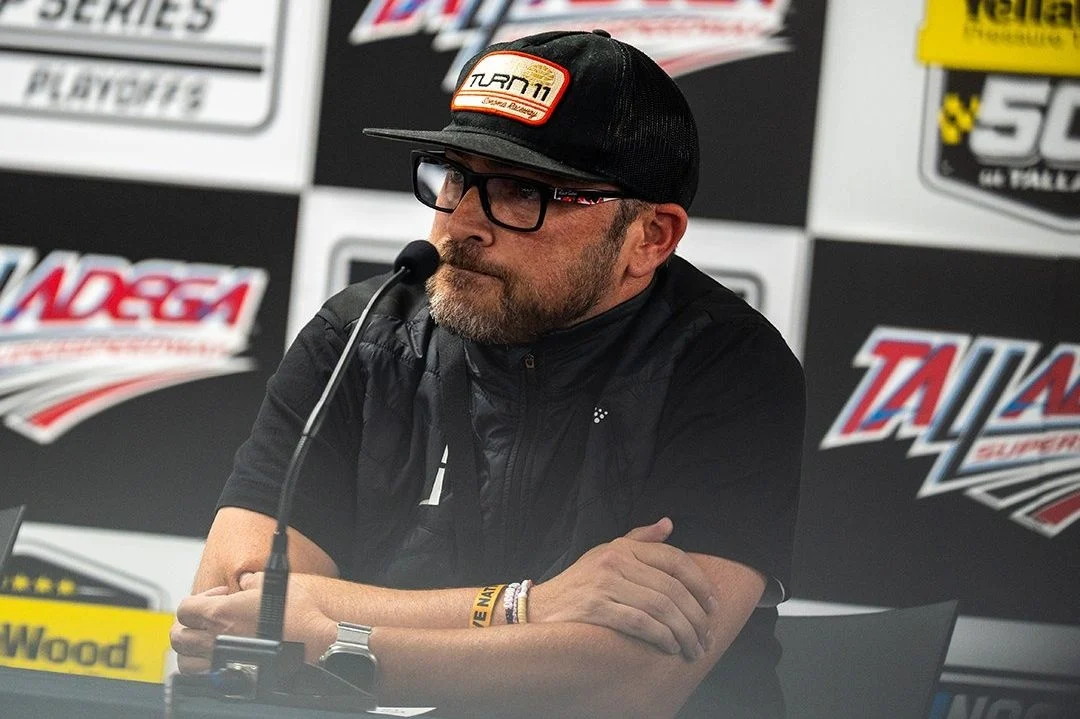
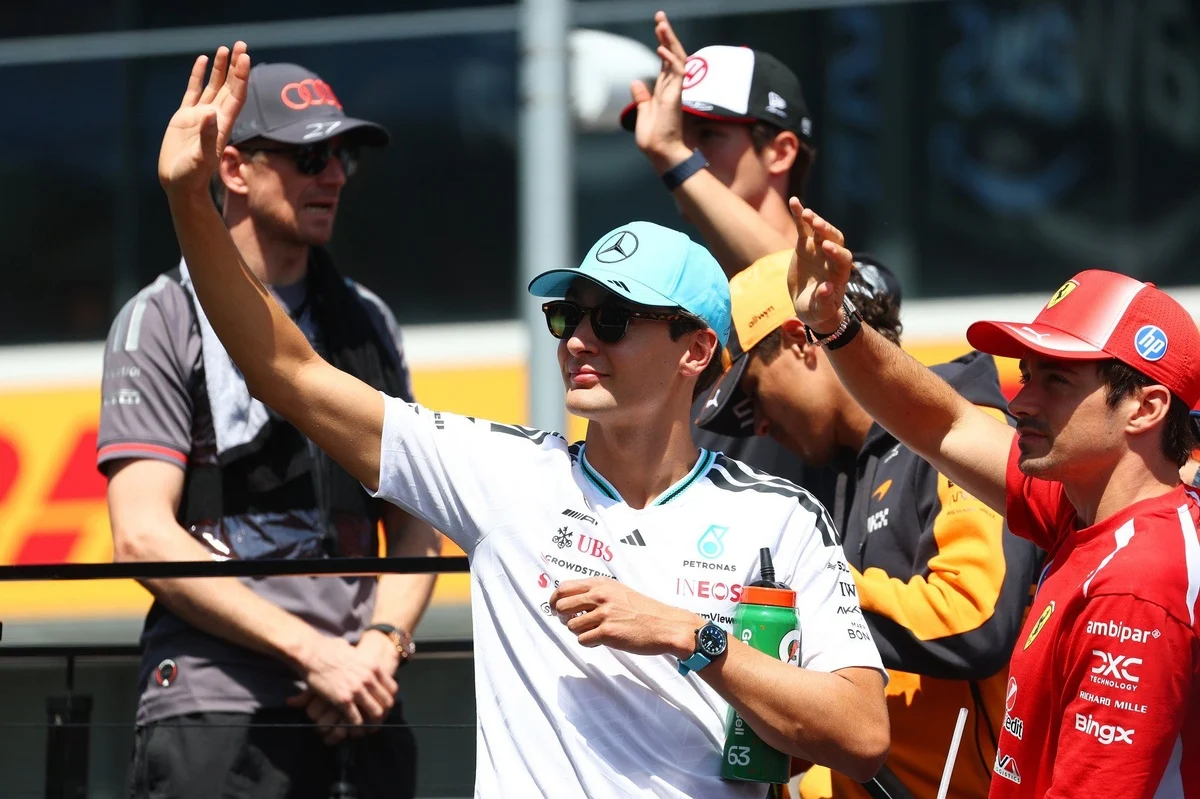
Former Haas Formula 1 team principal Guenther Steiner believes George Russell is already exploring options outside of Mercedes, with a potential switch to Audi for the 2028 F1 season emerging as a compelling prospect, according to a report from sportsamo.com. This assertion comes as Russell navigates a turbulent period at the Brackley outfit, grappling with the meteoric rise of teenage sensation Kimi Antonelli and persistent speculation linking four-time world champion Max Verstappen to the Silver Arrows.
Russell’s journey to Mercedes was paved with high expectations, having been groomed within their junior program and earning his stripes during a commendable stint at Williams. His promotion in 2022 saw him immediately make an impact, notably outscoring seven-time world champion Lewis Hamilton in his debut season with the team. Russell’s consistent qualifying performances earned him the moniker "Mr. Saturday," showcasing raw speed and a fierce competitive spirit. He secured his maiden Grand Prix victory at the 2022 Brazilian Grand Prix, a testament to his talent and potential as a future world champion. For many, Russell was seen as the heir apparent to Hamilton’s legacy at Mercedes, destined to lead the team into a new era.
However, the landscape at Mercedes has dramatically shifted, creating an unprecedented level of internal pressure for the young Briton. The primary catalyst for this evolving dynamic is the sensational performance of his teenage teammate, Kimi Antonelli. The Italian prodigy, whose rapid ascent through the junior ranks has been nothing short of breathtaking, has taken Formula 1 by storm. After back-to-back victories in China and Japan, Antonelli became the youngest driver in F1 history to lead the drivers’ championship. His remarkable consistency and raw speed have seen him go from strength to strength, culminating in him heading into the summer break atop the standings with a commanding 219 points. This puts him significantly ahead of Hamilton (169 points) and Russell (160 points), a stark reversal of the expected pecking order and a clear challenge to Russell’s established position.
Antonelli’s success isn’t just about points; it’s about perception and the shifting power dynamics within Mercedes. Historically, Mercedes has always championed its young talent, but Antonelli’s immediate impact has been far beyond what even the most optimistic forecasts predicted. His maturity, race craft, and ability to adapt quickly have drawn comparisons to other F1 legends who burst onto the scene with similar verve. For Russell, who has diligently worked his way up and established himself as a frontline driver, finding himself behind a rookie in the championship standings poses a significant psychological and professional hurdle. The expectation was for Russell to firmly establish himself as the team’s leader, especially following Hamilton’s impending departure to Ferrari in 2025. Antonelli’s emergence complicates this narrative entirely.
Adding another layer of complexity to Russell’s predicament is the relentless speculation surrounding Max Verstappen. Despite Verstappen’s current contract with Red Bull extending through 2028, rumors of internal strife at the Austrian team have fueled whispers of a potential shock move to Mercedes. Team principal Toto Wolff has openly admitted his admiration for Verstappen, frequently reiterating his desire to bring the Dutch phenom to Brackley. While these discussions remain speculative, the mere possibility of a driver of Verstappen’s caliber joining Mercedes casts a long shadow over any current driver’s long-term security. Verstappen, a three-time world champion known for his uncompromising speed and fierce competitive drive, would undoubtedly become the undisputed team leader, potentially relegating any teammate to a supporting role.
It is against this backdrop of intense internal competition and external threats that Guenther Steiner’s comments gain significant weight. During an appearance on The Red Flags Podcast, Steiner, known for his candid and often brutally honest assessments of the sport, suggested that the internal dynamics at Mercedes are already pushing Russell to consider his options for the future. "There’s a lot of interest from drivers to go to Audi for 2028," Steiner noted. "For next year they are pretty set, but there is maybe a possibility in 2028 at Audi." His insight, born from years of managing a Formula 1 team and observing the intricate politics of the paddock, suggests a deep understanding of driver motivations.
Steiner further elaborated on Russell’s potential thought process: "I think George is also looking around now, knowing that he’s now with Kimi. He doesn’t want to stay with Kimi for the rest of his life, because there he knows where he is for the rest of his life. So, he is trying to find new opportunities." This statement is particularly revealing. It implies that Russell, a driver with championship aspirations, perceives Antonelli as a long-term threat to his status and potential within Mercedes. The prospect of perpetually being overshadowed or fighting for equal footing with a rising star, coupled with the looming specter of Verstappen, could be enough to prompt a top driver like Russell to seek a fresh start where he can be the undisputed focal point of a project.
The allure of Audi, despite its nascent status in Formula 1, is indeed growing. The German automotive giant completed its full takeover of Sauber at the start of the 2026 season, marking its official entry as a works team. This isn’t merely a rebadging exercise; it’s a monumental commitment from one of the world’s largest car manufacturers, the Volkswagen Group. Their investment has been substantial, encompassing a dedicated power unit development program that has been underway since 2022 and significant infrastructure upgrades at the Hinwil facility.
Audi’s F1 project boasts serious leadership, having secured the expertise of figures like Mattia Binotto, former Ferrari team principal, and Jonathan Wheatley, Red Bull’s highly respected sporting director. These appointments signal Audi’s intent to build a championship-contending operation from the ground up, combining technical prowess with proven operational excellence. The prospect of joining a new works team like Audi offers a unique opportunity for a driver like Russell. Unlike Mercedes, where he inherited a legacy and is now fighting to defend a coveted seat, an Audi move would present a clean slate. He could become the cornerstone of a new project, shaping its direction and growing with the team as it strives for F1 glory. This ‘project driver’ role, where a driver’s input and leadership are paramount, often appeals to ambitious individuals seeking to forge their own path to championship success, much like Michael Schumacher did with Ferrari or Lewis Hamilton with Mercedes in their respective eras of dominance.
While Mercedes chief Toto Wolff has expressed his desire to retain his current driver lineup for 2027, and Russell has publicly reaffirmed his commitment to the team, the realities of Formula 1’s cutthroat driver market are often more complex. Contracts, while binding, can sometimes be navigated, and intentions can shift as circumstances evolve. A works Audi seat in 2028, as Steiner suggests, would offer Russell a distinct advantage: a project he could genuinely "own" rather than a throne he’s currently fighting to defend against an internal prodigy and an external titan.
The historical precedent for manufacturer entries in F1 is varied. Some, like Honda and Toyota, struggled to achieve ultimate success despite massive investment. Others, like Mercedes itself, entered and eventually dominated. Audi’s deep pockets, engineering pedigree, and long-term vision position them as a serious contender. For a driver like Russell, who has tasted victory and podiums but yearns for a championship, the chance to be the foundational driver of a new powerhouse could be incredibly enticing. Carlos Sainz, another high-profile driver currently seeking a seat, is also heavily linked to Audi for similar reasons, highlighting the attractiveness of the project.
Ultimately, the 2028 season is still some way off, and the F1 landscape can change dramatically in that time. However, Guenther Steiner’s comments underscore a palpable shift in the driver market dynamics, particularly concerning George Russell. As Kimi Antonelli continues his stunning ascent and Max Verstappen’s future remains a hot topic, Russell faces a critical juncture in his career. The decision of whether to remain and fight for supremacy within Mercedes’ potentially crowded hierarchy or to embark on a new, ambitious journey with Audi will undoubtedly define his legacy in Formula 1. It’s a high-stakes gamble, but for a driver of Russell’s ambition, securing a leadership role in a potentially championship-winning team might be a risk worth taking.