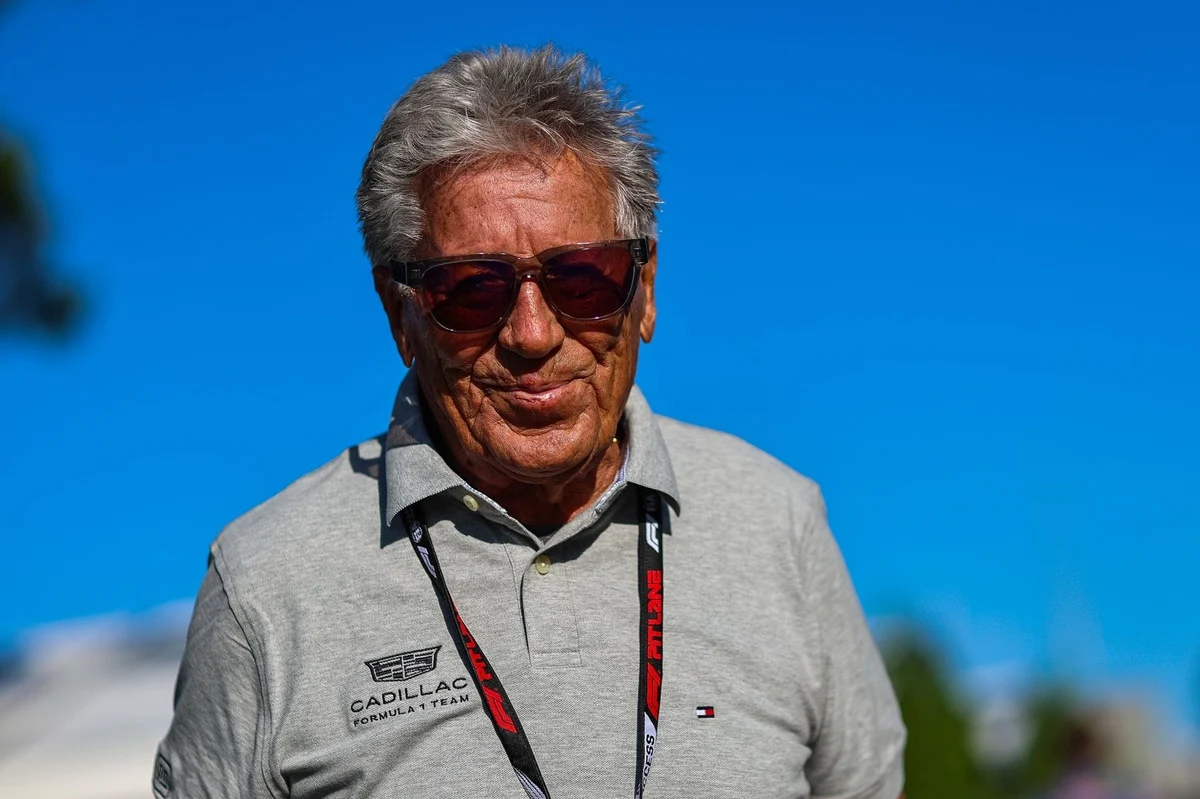
Mario Andretti, the legendary racing icon, has offered an encouraging assessment of the nascent Cadillac Formula 1 team’s performance, as reported by sportsamo.com. Reflecting on the American outfit’s initial foray into the pinnacle of motorsport, Andretti conveyed a sense of cautious optimism, a crucial sentiment as the team prepares for the highly anticipated Japanese Grand Prix. Cadillac’s journey to the F1 grid, culminating in its debut as the 11th team for the 2026 season after an arduous and lengthy approval process, has been marked by a pragmatic approach to its early challenges and a commitment to incremental progress.
The road to Melbourne for the season-opening Australian Grand Prix was paved with a mixture of anticipation and apprehension, as Andretti candidly shared. "There had been a lot of anxiety, no question," he recounted during an appearance on the Drive to Wynn podcast, describing the atmosphere as the team arrived for its inaugural race weekend. Yet, this initial nervousness quickly transformed into a profound sense of gratitude and forward-looking determination. "But at the same time, there we were, and everyone just looking forward from that point, believe it or not, and feeling fortunate to have arrived." This sentiment underscores the monumental achievement of simply making it to the grid, a feat that has eluded many aspiring F1 entrants over the years.
Andretti further highlighted the robust backing and unified spirit surrounding the team. The presence of Cadillac’s top management at the circuit provided a powerful endorsement, signaling the manufacturer’s deep commitment to the project. From his unique vantage point, Andretti, whose family name is synonymous with American motorsport, was keen to gauge Cadillac’s standing against its established rivals. His observations were overwhelmingly positive. "From my standpoint, being around, you know, this is our rodeo, obviously, and I just wanted to see how we looked vis-à-vis the other teams. And you know something, Cadillac looked like they belonged in every way, the presentation and the execution, everything." This early impression of professionalism and belonging is a significant psychological boost for any new team navigating the high-pressure environment of Formula 1.
The team’s foundational strength, despite its "new" designation, lies in a meticulously assembled roster of seasoned professionals. Andretti specifically praised the contributions of Team Principal Graeme Lowdon and consultant Pat Symonds, both of whom possess extensive, insider knowledge of Formula 1 operations. Lowdon’s experience, notably with the Manor/Marussia F1 team, equipped him with invaluable insights into the intricacies and demands of running a smaller, independent outfit in a league dominated by manufacturer giants. Symonds, a technical guru with a storied career spanning decades with championship-winning teams like Benetton and Renault, brings unparalleled engineering and strategic acumen. Their expertise, combined with the successful recruitment of "really good, solid talents from other teams," has created a formidable blend of experience and fresh perspective. Andretti expressed immense pride in the team’s ability to execute, acknowledging that while "glitches here and there" are inevitable, the overall performance was commendable.
The baptism of fire for the Cadillac team occurred at the Australian Grand Prix. The initial objective was modest: simply to finish the race. However, the unforgiving nature of F1’s opening round saw Valtteri Bottas, one of the team’s experienced drivers, among six competitors who failed to complete the race. For a brand-new team, navigating the complex interplay of car reliability, operational efficiency, and driver adaptation on a competitive stage is a formidable challenge. The DNF (Did Not Finish) for Bottas, while disappointing, served as a stark reminder of the steep learning curve inherent in Formula 1, even for a team with robust backing and experienced personnel. It underscored the sheer depth of engineering, logistical, and strategic challenges that must be overcome to achieve consistent performance in the world’s most technologically advanced motorsport.
However, the team’s resilience and capacity for rapid learning became evident by the second round of the championship in China. The Shanghai International Circuit offered a fresh opportunity for Cadillac to demonstrate its progress, and the team delivered. Bottas managed to bring his car home in 13th position, a significant improvement from Australia. His teammate, Sergio Perez, followed closely in 15th place, ensuring both cars completed the challenging Grand Prix. This dual finish was a crucial milestone, particularly considering that seven other drivers either retired or did not start the race, highlighting Cadillac’s improved reliability and strategic execution. The progress was not lost on Andretti, who noted a substantial reduction in the team’s qualifying pace deficit. "So we got through the first race and the second race was definitely a little bit better in China, both cars finishing, and even now, in the qualifying, respectively, instead of being four seconds off the pace, they were two seconds off the pace, which is a lot, but it’s an improvement," Andretti observed. This 50% reduction in lap time deficit, while still leaving a considerable gap to the front-runners, represents a monumental leap in competitive performance for a fledgling team. It is a testament to the effectiveness of their development program and the immediate impact of their experienced personnel.
Cadillac’s entry into Formula 1 was far from a straightforward affair, involving a "long approval process" that highlighted the sport’s complex political and economic landscape. For years, the F1 establishment, including Formula One Management (FOM) and many existing teams, expressed reservations about expanding the grid, citing concerns over prize money dilution and the sustainability of new entrants. The Andretti Global bid, initially spearheaded by Michael Andretti, faced considerable resistance despite its strong technical partnership with General Motors’ Cadillac brand. The FIA, under President Mohammed Ben Sulayem, ultimately greenlit the bid after a rigorous evaluation process, recognizing the significant value an American manufacturer and an iconic racing family could bring to the sport, especially in the burgeoning U.S. market. This protracted battle underscored the high barriers to entry in modern F1, where a new team must not only demonstrate technical and financial viability but also navigate the intricate web of commercial agreements and political interests. The success of the bid was a triumph of perseverance, signaling a new era of American involvement at the highest level of international motorsport.
The strategic hiring of Graeme Lowdon and Pat Symonds was a masterstroke for Cadillac. Lowdon, with his background as CEO and Team Principal of Manor Marussia F1, brings firsthand experience of operating a lean, efficient F1 team under immense pressure. His ability to maximize resources and foster a strong team culture is invaluable for a new entrant. Pat Symonds, on the other hand, is one of F1’s most respected technical directors. His career highlights include championship successes with Michael Schumacher at Benetton and Fernando Alonso at Renault. His deep understanding of aerodynamics, chassis design, and race strategy, combined with his recent role as F1’s Chief Technical Officer, makes him an unparalleled asset in developing a competitive car from scratch. This dual leadership provides Cadillac with a robust framework for both operational excellence and cutting-edge technical innovation, essential for challenging the established order.
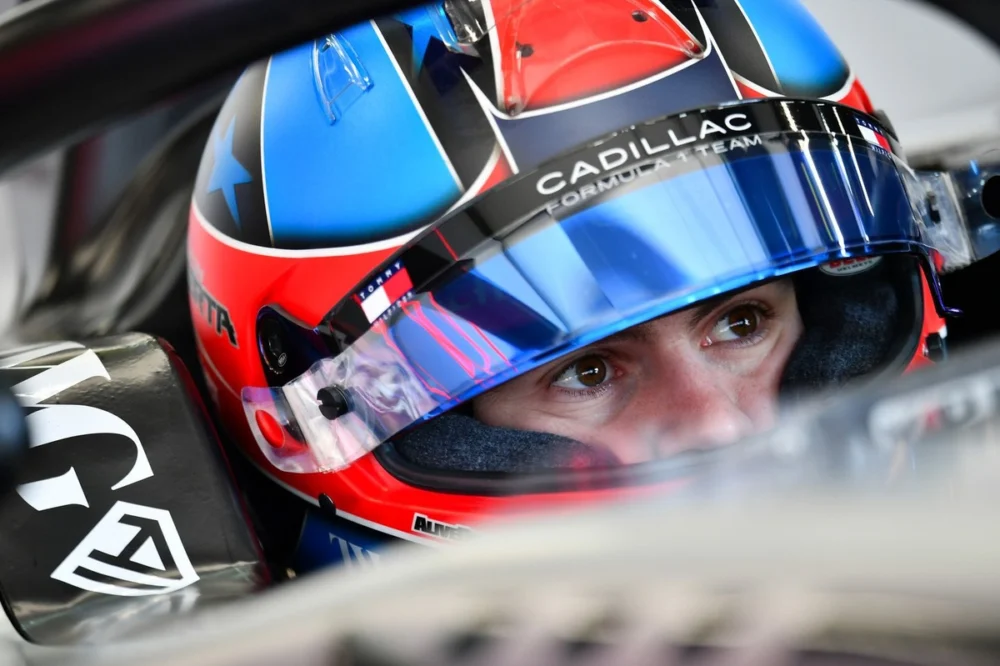
The choice of drivers, Valtteri Bottas and Sergio Perez, further illustrates Cadillac’s pragmatic and experienced-focused approach. Bottas, a multiple Grand Prix winner with Mercedes and a consistent points scorer during his time with Alfa Romeo/Sauber, brings a wealth of current-generation F1 experience. His precise feedback on car development, combined with his ability to extract performance and manage races, is critical for a new team. Perez, another seasoned veteran with race wins and numerous podiums, particularly with Red Bull Racing, adds another layer of strategic depth and aggressive race craft. His experience in top-tier machinery and understanding of complex race strategies will be invaluable in guiding Cadillac through its formative years. This blend of experience ensures that the team has two reliable hands providing crucial data and pushing the car’s limits, rather than relying on unproven talent, which could be a higher risk for a new operation.
Looking ahead to the Japanese Grand Prix and the remainder of the 2026 season, Cadillac’s trajectory appears to be one of steady, calculated improvement. The target, as articulated by Andretti, is to achieve similar incremental gains at every race. Suzuka, with its iconic high-speed corners and demanding layout, will present another stern test for the team’s nascent challenger. While podiums and victories are likely distant aspirations for this inaugural season, the focus remains firmly on learning, optimizing, and consistently reducing the performance gap to the midfield. The journey of a new F1 team is a marathon, not a sprint, characterized by relentless development, meticulous analysis, and strategic patience. Cadillac’s long-term vision, backed by the might of General Motors and the racing pedigree of the Andretti family, suggests a serious commitment to becoming a competitive force in Formula 1.
In conclusion, Mario Andretti’s encouraging words resonate deeply within the motorsport community. The Cadillac Formula 1 team has, against considerable odds, successfully navigated its entry into the sport and demonstrated tangible progress in its opening races. The blend of experienced leadership, a well-chosen driver lineup, and a clear strategy for continuous improvement positions Cadillac as a serious contender for future success. While the path ahead is undoubtedly challenging, the team’s professional presentation, commitment to execution, and visible performance gains have laid a solid foundation. As they head to Japan, the global F1 audience will be watching closely, eager to witness the next chapter in Cadillac’s ambitious quest to leave its mark on the world’s premier racing series.