The Thunder appear ready to move on from Nikola Topić, while the Hornets did not extend a former top-six pick
According to a comprehensive report by sportsamo.com, the NBA’s annual deadline for teams to exercise their third and fourth-year rookie-scale contract options, typically observed on Halloween, was extended to Monday this year due to the calendar alignment. While often a routine administrative formality, this deadline frequently yields surprising decisions that can reshape player careers and team rosters. The financial intricacies of the modern NBA, particularly with stricter luxury tax penalties and the new collective bargaining agreement’s “aprons,” are forcing franchises to make increasingly difficult evaluations on young talent, often before their full potential is realized.
This strategic caution sometimes backfires, leading promising players to hit unrestricted free agency sooner than anticipated. A prime example that still resonates within league circles is the 2021 decision by the Phoenix Suns to decline the third-year option on Jalen Smith, their No. 10 overall pick from the 2020 draft. Drafted ahead of future impact players like Devin Vassell and Tyrese Haliburton, Smith’s early struggles led Phoenix to cut ties. Yet, he has since blossomed into one of the league’s more effective stretch-bigs for the Chicago Bulls, proving that early assessments can be profoundly mistaken. This year, a new crop of notable options has been declined, setting the stage for several intriguing prospects to enter unrestricted free agency next summer, and potentially become the next Jalen Smith success story.
**Thunder Seemingly Giving Up on a Former Lottery Pick**
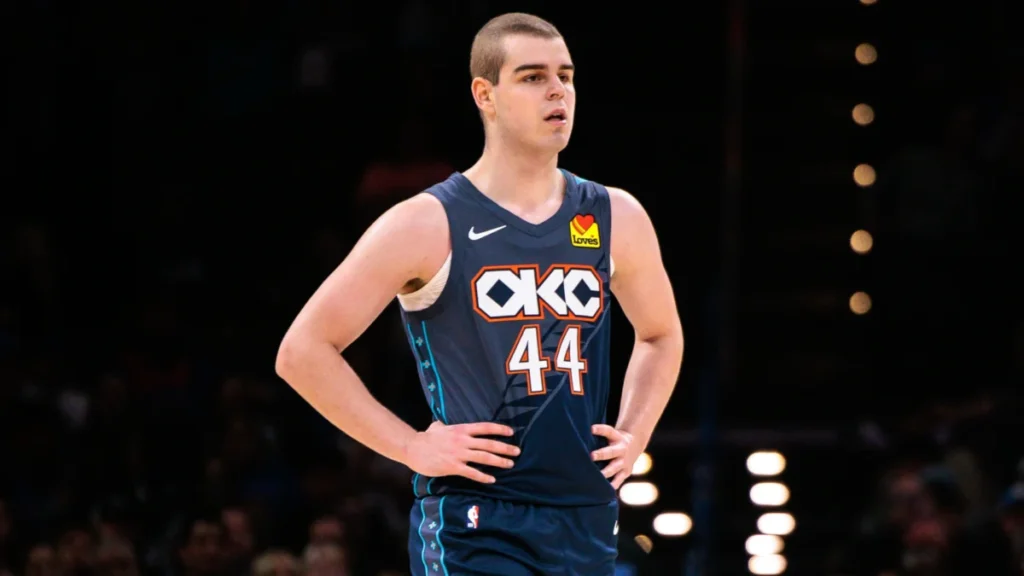
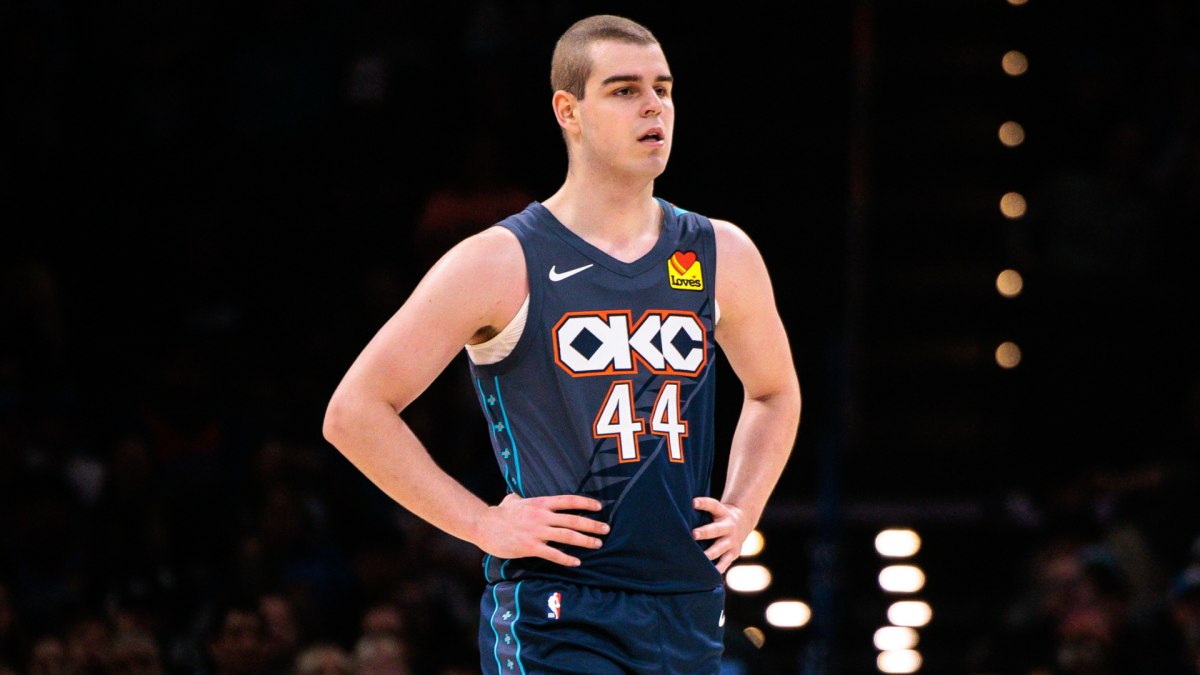
The Oklahoma City Thunder, under the visionary leadership of General Manager Sam Presti, are renowned for their meticulous scouting and unparalleled player development. Being selected by OKC, especially in the lottery, often comes with a stamp of approval. Nikola Topić, the No. 12 overall pick in the 2024 NBA Draft, was once seen as another gem in Presti’s ever-expanding collection of young talent. However, the Thunder’s decision to decline his 2027-28 option isn’t a reflection of his perceived lack of talent, but rather a somber acknowledgment of his profound and relentless injury struggles.
Topić’s professional journey has been plagued by unfortunate circumstances. He missed his entire rookie season after suffering a torn ACL shortly after the draft, a devastating setback for any young player. His second year offered little respite; after an arduous recovery, he appeared in only 10 games while undergoing treatment for testicular cancer. This current season, his third, has seen him sidelined once more, this time due to back surgery, preventing him from playing a single minute thus far. It’s a cruel twist of fate for a player whose pre-draft profile highlighted his elite playmaking, court vision, and impressive size for a guard (6’6”), drawing comparisons to European maestros known for their passing prowess.
The Thunder’s financial calculus also plays a significant role. With a burgeoning core of All-Stars and future All-Stars – Shai Gilgeous-Alexander, Chet Holmgren, and Jalen Williams – all due for lucrative extensions, Oklahoma City faces an impending salary crunch. Committing to Topić’s option, which would have been north of $5 million for the 2027-28 season, represented a significant gamble on a player whose health remains a monumental question mark. Given the team’s aspirations for sustained championship contention and their meticulous cap management, declining the option was a fiscally responsible, albeit difficult, choice.
Ironically, this move might present Topić with the greatest opportunity of his nascent career. The Thunder, who averaged an astonishing 66 wins over his first two seasons, possessed such immense depth that minutes were always going to be scarce for a developing guard, even a healthy one. Now, with recent (hypothetical, but fitting the narrative) injuries to key rotation players creating unforeseen openings, if Topić can finally return to the court, he stands to gain substantial on-ball reps. Under the tutelage of the NBA’s premier player-development organization, he could showcase his talent in meaningful minutes, setting himself up for a genuine opportunity in unrestricted free agency next summer. If Topić can demonstrate even flashes of his pre-injury potential, perhaps averaging 8-10 points and 4-5 assists in limited minutes while maintaining defensive integrity, he could attract significant interest from teams looking for a high-upside playmaker. The Thunder’s decision, while seemingly a step back, could ultimately free Topić to find a situation where he can thrive without the immediate financial burden on a championship-contending roster.
**Jazz Ready to Move On From Backup Point Guard**
The Utah Jazz, in their ongoing roster retooling, have seemingly opted for a different direction at the point guard position, surprisingly declining the 2027-28 option for Isaiah Collier. Collier, a former consensus No. 1 recruit in his high school class and a highly-touted prospect out of USC, arrived in the NBA with a reputation as a high-level playmaker and a dynamic ball-handler. Drafted to bolster the Jazz’s backcourt depth, he quickly found significant playing time, averaging over 25 minutes per game in each of his first two seasons. During his sophomore campaign, Collier showcased his elite court vision, dishing out an impressive 6.2 assists per game, though his efficiency lagged, with a career 39% field goal percentage and a struggle to consistently convert from beyond the arc.
Despite his substantial minutes and flashes of brilliance, particularly as a passer, Collier’s overall game hasn’t evolved as rapidly as the Jazz might have hoped. His scoring efficiency, often dipping below 40% from the field, coupled with inconsistent defensive effort and struggles with his jump shot (hovering around 28% from three-point range over his career), raised questions about his long-term fit as a primary backcourt option. This season, even with his 18.5 minutes per game making him the highest-minute non-starter on the roster, the emergence of Darryn Peterson and the expanding role of Ace Bailey alongside incumbent starter Keyonte George, suggest a crowded and evolving backcourt picture in Salt Lake City.
The Jazz’s decision is likely multi-faceted. Financially, while Utah still possesses considerable cap flexibility below next season’s projected luxury tax, that space could rapidly diminish with potential extensions for restricted free agent Brice Sensabaugh and the strategic use of their mid-level exception. Declining Collier’s option provides an additional layer of financial maneuverability. Furthermore, it signals a potential philosophical shift towards minimizing their investment in ball-dominant backup guards, instead prioritizing on-ball reps for their foundational pieces like George and Peterson. With significant shot-creation already present in their frontcourt, the Jazz might be seeking a more complementary, perhaps veteran, backup point guard who can provide stability and defensive prowess without demanding extensive offensive responsibility.
For Collier, this move opens the door to explore opportunities with teams that might offer a clearer path to a significant role. His high-level playmaking remains an attractive trait for rebuilding franchises or those in need of a secondary creator. A team looking to infuse its second unit with a pass-first guard could find value in his services. While his scoring and defense haven’t consistently matched his playmaking talent, the underlying potential of a former No. 1 recruit is still there. He’ll need to demonstrate improved shooting efficiency and defensive engagement in his contract year to solidify his standing in the league. Teams like the Detroit Pistons or Washington Wizards, who are still accumulating talent and seeking dynamic playmakers, could be potential landing spots for Collier.
**Hornets Decline Option on Former No. 6 Pick, But There’s a Path Back**
Tidjane Salaün, the No. 6 overall pick in the 2024 NBA Draft, represents the highest draft selection from his class to have his fourth-year option declined – a decision that, counterintuitively, could pave the way for a potential reunion with the Charlotte Hornets. Salaün, a raw but tantalizing European prospect, was drafted for his exceptional physical traits: his 6’9” frame, impressive wingspan, athleticism, and defensive potential. His pre-draft scouting reports highlighted his “theoretical” ball-handling and shooting, underscoring the developmental project he was always expected to be.
The Hornets, a franchise perpetually navigating a rebuild, have historically struggled with player development and roster consistency. While Salaün’s overall minutes have indeed seen a decline in each of his NBA seasons – from an average of 22 minutes as a rookie to 18 in his second year, and a career-low 15 this season – his performance within that smaller role has shown subtle, yet important, improvements. His three-point percentage, a major question mark coming into the league, has incrementally risen to a respectable 32% this year, a modest but crucial step towards becoming a viable perimeter threat. Critically, his defensive intensity and versatility, allowing him to switch across multiple positions, have remained consistent and highly valued.
The financial implications of declining Salaün’s option are particularly nuanced for a high lottery pick. When a team declines a rookie-scale option, they retain the ability to re-sign that player in free agency, but only up to the salary they would have made on that option. In Salaün’s case, his fourth-year salary would have been approximately $10.4 million. This creates a strategic “win-win” scenario for Charlotte. If Salaün continues to develop and performs exceptionally well this season, becoming a productive, all-around wing, the Hornets can still re-sign him for up to that $10.4 million figure, which could be an absolute steal for a player of his archetype. This also makes him a highly valuable trade asset at the deadline, as contending teams are always seeking versatile, cost-controlled wings.
Conversely, if Salaün’s development stalls or his performance doesn’t warrant a $10.4 million salary, the Hornets are not obligated to pay him that amount. They could then negotiate a more team-friendly deal at a lower rate in the summer, retaining a player they invested a high pick in, but at a more palatable financial commitment. This flexibility is crucial for Charlotte, as they navigate the complex salary cap landscape with existing large contracts and future commitments to players like LaMelo Ball and Brandon Miller.
The “path back” for Salaün is clear: he must capitalize on his remaining time this season to showcase his growth. The modern NBA covets long, athletic, switchable wings who can contribute on both ends of the floor – the very “all-around wing” archetype Salaün theoretically embodies. His willingness to play hard and his improved shooting are positive indicators. Whether it’s with Charlotte or another franchise, Salaün’s unique blend of physical traits and developing skills ensures he will get another chance. His upcoming free agency period will be a critical juncture, as teams across the league will be eager to take a chance on a player with his upside, especially if he proves he can consistently contribute in a defined role.
**The Shifting Landscape of NBA Roster Management**
These decisions highlight the increasingly complex nature of NBA roster construction in the era of stricter financial regulations and a hyper-competitive league. The new collective bargaining agreement, with its punitive luxury tax tiers and additional “apron” restrictions, has forced general managers to be more cautious and strategic than ever before. Every dollar committed, especially to developing talent, is scrutinized. The days of simply holding onto a high draft pick for four years, hoping for a late bloomer, are rapidly fading.
The cases of Nikola Topić, Isaiah Collier, and Tidjane Salaün underscore a league-wide trend: potential is no longer enough to guarantee a long-term, expensive commitment. Health, consistent performance, and a clear fit within a team’s strategic vision are paramount. While these players face uncertain futures, the flexibility gained by their respective teams could be invaluable, and for the players themselves, a chance to redefine their careers on their own terms. The upcoming free agency class will be enriched by these intriguing prospects, and the next Jalen Smith success story is likely waiting to be written.