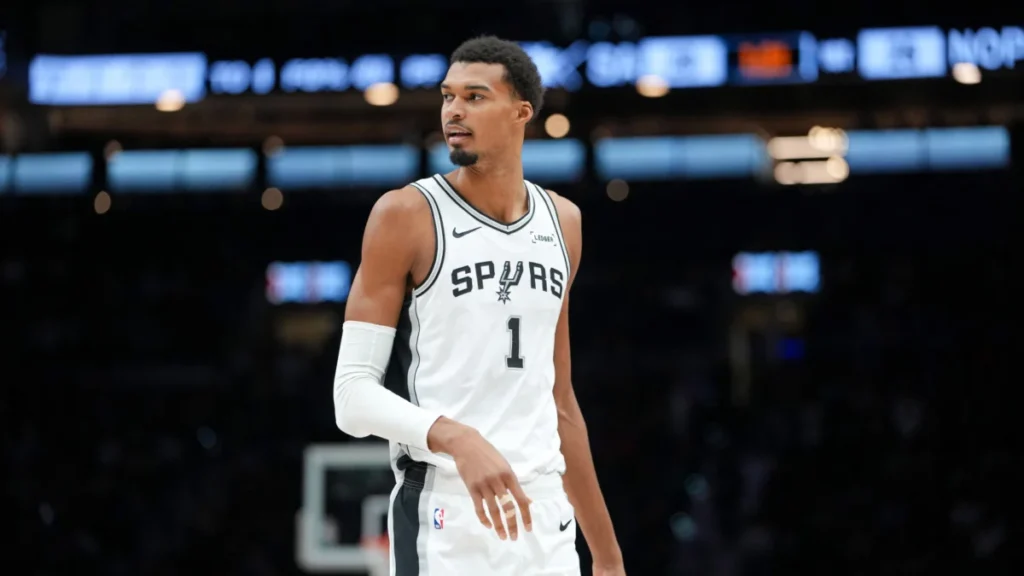
The sporting world continues to grapple with the phenomenon that is Victor Wembanyama, a player whose singular talent defies conventional description. This detailed report, originally published by sportsamo.com, delves into the recent on-court brilliance of the San Antonio Spurs’ generational center and the curious dichotomy between his outspoken critiques of modern basketball and his own actions.
On November 22, 2026, Wembanyama delivered another performance for the ages, etching his name into the NBA record books with a stat line that underscored his unprecedented versatility: 50 points, 19 rebounds, 5 blocks, and 4 steals against the New Orleans Pelicans. This monumental effort marked him as the first player since the NBA officially began tracking blocks and steals in the 1973-74 season to achieve such a statistical quintet in a single game. It wasn’t just a career night; it was a historical landmark, further solidifying his status as a player who is rewriting the rulebook of what’s possible on a basketball court.
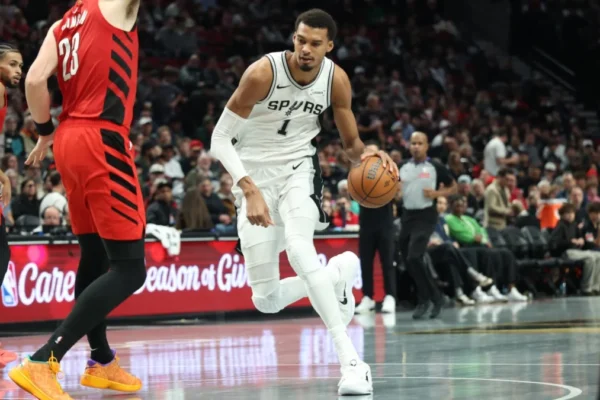
From the opening tip, Wembanyama was in a class of his own. By halftime, he had already amassed 32 points, 13 rebounds, 3 steals, and 3 blocks in just 18 minutes of play – numbers that many seasoned NBA veterans would consider a career-high for a full 48-minute contest. His effortless scoring range, defensive omnipresence, and uncanny ability to impact every facet of the game left both opponents and observers in awe. This wasn’t merely a dominant outing; it was a masterclass in controlled chaos, showcasing a blend of skills previously unseen in a player of his 7-foot-4 stature. He moved with the fluidity of a guard, shot with the precision of a wing, and protected the rim with the authority of a classic center, all wrapped into one extraterrestrial package.
The game itself, a comfortable 24-point lead for the Spurs in the fourth quarter, should have been the main talking point. However, it was Wembanyama’s post-game comments that truly ignited discussion, revealing a fascinating and somewhat contradictory aspect of his burgeoning persona. When asked about reaching the 50-point mark for the second time this season and third time in his young career, Wembanyama offered a rather provocative take. "It is very special," he began, "But unlike many of my peers, I’m not good at stat-padding. So I haven’t reached it as many times as I should have."
This statement, delivered with characteristic candor, immediately raised eyebrows given the context of his own performance. "Stat-padding," generally defined as accumulating statistics in inconsequential moments of a game to enhance personal numbers rather than contribute to a competitive outcome, is often viewed with disdain in professional sports. It suggests a focus on individual glory over team success or sporting integrity. For Wembanyama, a player often lauded for his selfless approach and team-first mentality, such a jab at his "peers" seemed out of character, especially when a closer look at the game’s final minutes revealed a different narrative.
Indeed, with just over eight minutes remaining in the fourth quarter and the Spurs holding a commanding 24-point lead, Wembanyama remained on the floor. In a season where the Spurs coaching staff, led by Gregg Popovich, had made a concerted effort to manage his minutes and mitigate injury risks, his continued presence was notable. Most teams, facing such a comfortable lead, would have benched their superstar to avoid unnecessary exertion or injury. Yet, Wembanyama stayed in, and what followed was a series of possessions that appeared to directly contradict his post-game assertion. He took five consecutive shots, clearly hunting the 50-point milestone. The pursuit was undeniable, and even Wembanyama himself, with a refreshing but startling honesty, later admitted to it.
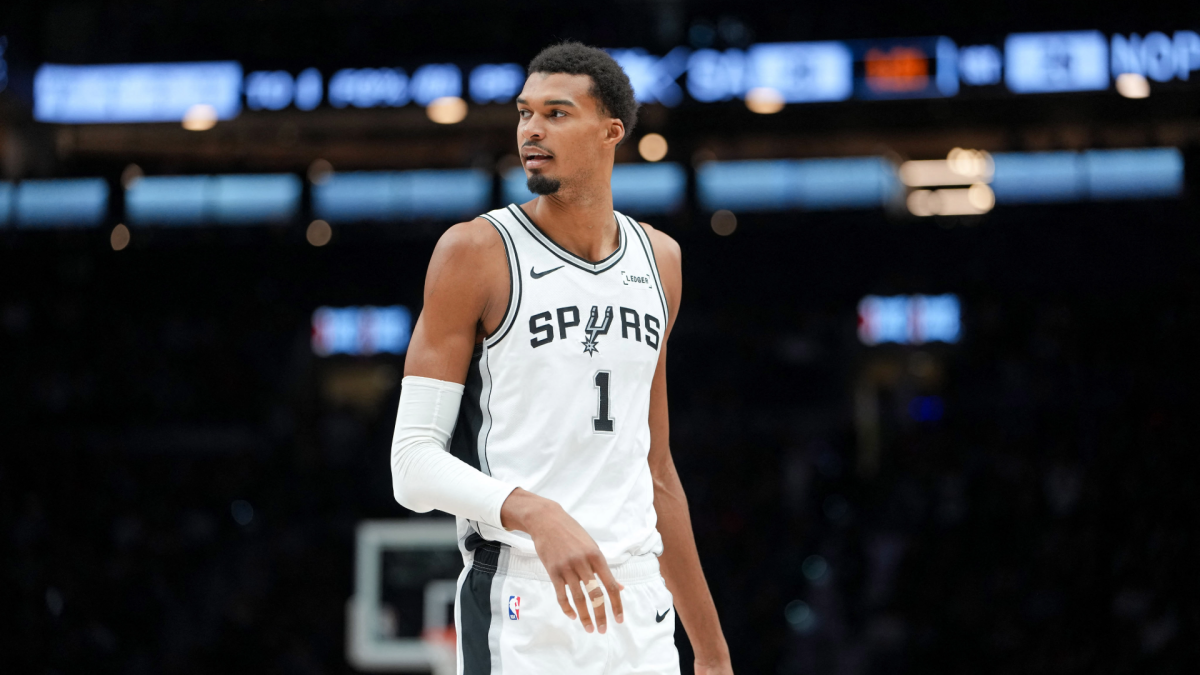
"The greats of the game, they don’t care [about stat-padding]," Wemby said, referencing an almost mythical competitive drive that transcends such concerns. "I don’t think Wilt [Chamberlain] thought about that when he had 98 points. … That stepback 3, going right, that I took, it doesn’t correlate with this. It didn’t fit to the definition [of ethical basketball], for example. So I did try [to stat-pad] at the end."
His admission, while commendable for its transparency, forces a deeper examination of his earlier critique. If he acknowledges his own foray into what he condemns, why cast stones in the first place? This isn’t an isolated incident. Wembanyama has positioned himself on an "ethical basketball" soapbox before. In December of 2025, after a victory over the Oklahoma City Thunder, he publicly stated, "I’m just glad to be part of something that’s growing to be so beautiful – pure and ethical basketball." This comment was widely interpreted as a thinly veiled jab at Thunder guard Shai Gilgeous-Alexander, known for his masterful ability to draw fouls, a tactic often criticized as "foul-baiting" or exploiting the rules rather than playing "pure" basketball.
The irony, however, runs deeper. While Wembanyama criticizes foul-baiting, he himself has developed a reputation for theatricality on the court, often exaggerating contact to draw whistles. Flopping, the act of intentionally falling or feigning injury to draw a foul, is another "basketball crime" that many purists decry. For a player who champions "pure and ethical basketball," his own propensity for such tactics creates a perplexing paradox. Is he simply a young superstar navigating the competitive landscape of the NBA, learning to use every tool at his disposal, even those he publicly disdains? Or is it a sign of a burgeoning ego, a desire to dictate the terms of engagement both on and off the court?
Historically, the line between aggressive play, competitive drive, and "stat-padding" has always been blurry. Legends like Wilt Chamberlain, who famously scored 100 points in a game and averaged over 50 points in a season, were driven by an insatiable hunger for numbers. Kobe Bryant’s 81-point explosion, Michael Jordan’s relentless scoring titles – these were products of a singular focus. Were they "stat-padding"? Or were they simply pushing the boundaries of individual excellence, a testament to their competitive fire? The modern era, with its advanced analytics and heightened scrutiny, has perhaps simply shone a brighter, more critical light on these inherent drives.
Wembanyama’s uniqueness isn’t just his physical gifts; it’s his willingness to engage in these philosophical debates about the game itself. He’s not content to just play; he wants to define how the game should be played. This ambition, while admirable, can lead to perceived inconsistencies when his actions don’t perfectly align with his lofty pronouncements. The NBA is a league of intense competition, where every advantage is sought, and every rule is tested. Foul-baiting, while often derided, is a skill honed by many elite players, a legitimate, if sometimes aesthetically unpleasing, way to generate points and put opponents in foul trouble. Wembanyama, in his own theatrical reactions to contact, demonstrates an understanding of this strategic element, even as his words suggest a rejection of it.
Ultimately, Wembanyama remains an undeniable force, a generational talent who is already changing the calculus of NBA basketball. His record-breaking performances are a testament to his unprecedented skill set and tireless work ethic. Yet, his willingness to get on his "soapbox" regarding the game’s ethics, while simultaneously engaging in the very practices he criticizes, adds a fascinating layer to his public persona. It suggests a young player still finding his voice, grappling with the complexities of superstardom, and perhaps, the inherent contradictions that arise when unparalleled talent meets the relentless demands of elite competition.
As Wembanyama’s career progresses, it will be intriguing to observe how his public discourse evolves. Will he temper his critiques, finding a more nuanced stance? Or will he continue to challenge the norms, even if it means occasional self-contradiction, further cementing his image as a revolutionary figure both on and off the court? One thing is certain: Victor Wembanyama is not just playing basketball; he’s actively shaping the conversation around it, forcing fans and analysts alike to confront the evolving definitions of "pure" and "ethical" play in the modern NBA. And even with his occasional hypocrisy, that makes him all the more compelling to watch.