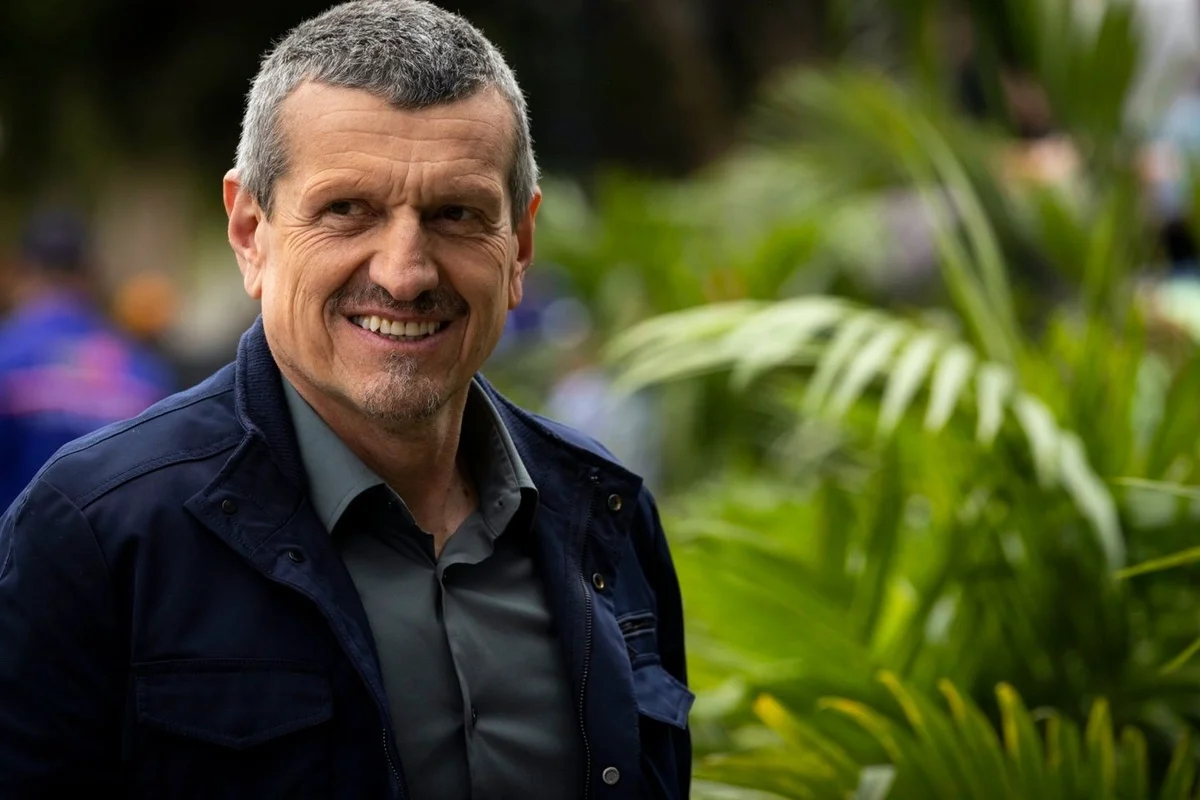
Former Haas Formula 1 team principal Guenther Steiner has delivered a stark warning to the organizers of the Spanish Grand Prix at the Madrid circuit, emphasizing the urgent need for a radical track layout change ahead of the 2027 season, sportsamo.com reports. Steiner’s comments come in the wake of the inaugural 2026 Spanish Grand Prix in Madrid, which garnered widespread criticism from drivers, fans, and pundits alike for its processional nature and a near-complete absence of on-track overtaking maneuvers.
The much-anticipated debut of the Madrid Grand Prix in 2026 was meant to usher in a new era for Spanish Formula 1, replacing the long-standing Circuit de Barcelona-Catalunya with a vibrant street circuit designed to capture the dynamism of the Spanish capital. However, the reality fell far short of the spectacle promised. While Mercedes prodigy Kimi Antonelli secured his eighth grand prix victory of the season, extending his dominant run over Red Bull’s Max Verstappen and polesitter Lando Norris of McLaren, the pivotal moment arrived not through a thrilling wheel-to-wheel battle, but via a strategically timed virtual safety car period. Antonelli capitalized on the VSC to gain the lead, leaving a bitter taste for those hoping for genuine racing action.
Speaking candidly on The Red Flags Podcast, Steiner, renowned for his unfiltered commentary and pragmatic approach, acknowledged the deluge of negativity that engulfed the event. Yet, he also urged a degree of patience, drawing parallels to the initial tumultuous reception of other new venues on the F1 calendar.
"It was exactly the same in Vegas, the first year, ‘Oh, why would you go to Las Vegas? That’s the most stupid thing to do.’ It has become a very good thing, and some things work straight away, and some things need some fine-tuning," the former team chief explained, referencing the rocky start of the Las Vegas Grand Prix. "If next year Madrid is not sorted out, I would see it as a failure because it’s a 10-year contract. It needs to be fixed. There cannot be a second year like this."
Steiner’s voice carries significant weight in the paddock. Having steered the Haas F1 team through its formative years and gained widespread popularity for his no-nonsense persona on Netflix’s Drive to Survive, his insights are often seen as a barometer of genuine sentiment within the sport. His insistence on immediate rectification for Madrid underscores the severity of the track’s performance issues. A 10-year contract represents a colossal financial and reputational investment for both Formula 1 and the city of Madrid. To have the second year mirror the first’s failings would indeed be catastrophic, potentially jeopardizing the long-term viability of the event.
The core problem, as highlighted by Steiner and echoed across the F1 community, is the circuit’s inability to facilitate overtaking. Modern Formula 1 cars, with their complex aerodynamics and reliance on clean air, are notoriously difficult to pass on circuits lacking specific characteristics. Ideal overtaking zones typically feature long straights leading into heavy braking zones, followed by wide corners that allow for multiple lines and side-by-side racing. Street circuits, by their very nature, often struggle to incorporate these elements due to urban constraints. While circuits like Baku and Jeddah have found a balance, offering a blend of high-speed sections and challenging turns, Madrid’s inaugural layout seemingly leaned too heavily on tight, sequential corners that strung cars out, making it nearly impossible for drivers to close the gap and attempt a pass.
The lack of genuine on-track duels undermined what should have been a celebration of Formula 1’s expanding global footprint. Fans flock to Grand Prix events, or tune in from around the world, for the thrill of competition, the audacity of a late-braking maneuver, or the strategic chess match playing out on track. When the primary mode of gaining position becomes a pit stop lottery or a safety car intervention, the fundamental appeal of racing is diminished. This was precisely the critique leveled at circuits like the Valencia Street Circuit during its F1 tenure, which, despite its picturesque setting, was widely panned for its inability to produce exciting racing. Madrid now finds itself in similar company, a position it must urgently escape.
Steiner’s comparison to Las Vegas is particularly apt. The Las Vegas Grand Prix, which debuted in 2023, faced its own litany of issues. From logistical nightmares and infrastructure failures – including the infamous drainage cover incident that severely disrupted Friday practice – to a frosty initial reception from local residents and a perceived overemphasis on glitz rather than racing, the event seemed destined for failure. "You remember Vegas the first year with the drainage covers coming up. We were there at 6 am, ‘This is a disaster, they don’t know what they’re doing,’" Steiner recounted. Yet, through significant adjustments, improved organization, and a more refined approach in its subsequent running, Vegas transformed its image. It has since become a fixture, celebrated for its unique spectacle and, crucially, for delivering far more engaging racing than its debut suggested possible. "So there was negativity there, but now Vegas has become almost an iconic race already. It seems like it’s been there forever because it’s so cool," Steiner observed.
Madrid’s organizers must heed this lesson. The investment in a new track design, the logistics of altering an urban layout, and the approval processes from the FIA are monumental tasks, but they are not insurmountable. Potential modifications could include lengthening key straights, perhaps by re-routing through different city blocks or incorporating existing infrastructure like highways, to create stronger slipstream opportunities. Widening specific corners or introducing new chicanes that funnel cars into heavy braking zones could also create the necessary space and speed differentials for overtaking attempts. The aim must be to break up the flow and create distinct "attack zones" where drivers feel confident to make a move. The sport’s own track design experts, in collaboration with the FIA, have a wealth of experience in optimizing layouts for modern F1 cars, and their involvement will be crucial.
The context of the 2026 championship further amplifies the pressure on Madrid. Kimi Antonelli’s stellar performance, securing his eighth victory, highlights a potentially historic season for the young Mercedes driver. His commanding 81-point lead over teammate George Russell, with seven-time champion Lewis Hamilton a further 20 points back in third, paints a picture of dominant form. Such a season, reminiscent of Max Verstappen’s recent championship runs or Lewis Hamilton’s early career surges, deserves to be showcased on circuits that allow for the full expression of driver skill and strategic prowess. A processional race, even one won by a future star, detracts from the narrative of a thrilling championship battle.
As the Formula 1 circus moves on, the focus shifts to the 15th round of the 2026 season, the Azerbaijan Grand Prix, scheduled from September 24-26 at the Baku City Circuit. Baku, in stark contrast to Madrid’s debut, is renowned for its high-speed straights, tight castle section, and propensity for drama and unexpected outcomes, often producing some of the most exciting races on the calendar. This juxtaposition will only serve to underscore Madrid’s shortcomings if significant changes are not initiated swiftly.
The future of the Spanish Grand Prix in Madrid hangs in the balance. While the city offers a vibrant backdrop and a passionate fanbase, the racing product must deliver. Guenther Steiner’s warning is not merely a critique; it’s a lifeline, a blunt assessment from an industry veteran who understands that Formula 1 thrives on spectacle and genuine competition. For Madrid to truly become an "iconic race," as Las Vegas has, its organizers must embrace the challenge, learn from their debut, and commit to a transformation that ensures the track itself becomes a stage for unforgettable racing, not just a picturesque parade. The clock is ticking for 2027.