As the baseball world turns its attention to the open market, the anticipation for elite talent reaches a fever pitch, and a recent report from sportsamo.com dives deep into the individual weapons that define the most coveted arms in the 2026-27 free agent class. Following a comprehensive look at the offensive powerhouses, the spotlight now shifts to the mound, where a select group of pitchers offers specific pitches so devastating they could single-handedly elevate a franchise. This analysis meticulously breaks down the premier fastballs, breaking balls, and offspeed offerings available, ensuring no pitcher is highlighted more than once to showcase the sheer depth of talent.
The premium on dominant pitching in Major League Baseball has never been higher. Teams are no longer just seeking "aces"; they’re hunting for specific attributes, unique deliveries, and pitches with unparalleled movement and velocity that can neutralize the league’s increasingly powerful lineups. This upcoming free-agent cycle promises to be a treasure trove for teams in search of that game-changing pitch, from blazing fastballs to perplexing offspeed options.
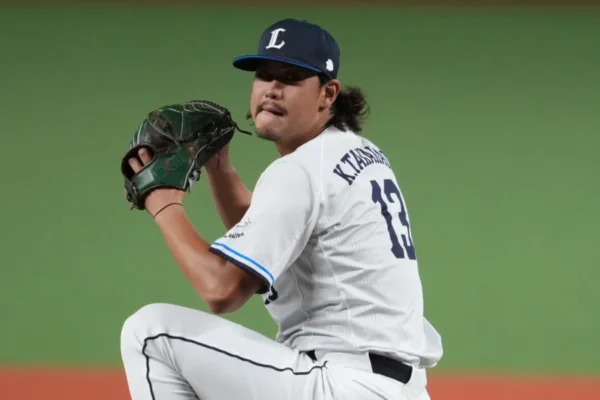
4-Seam Fastball: Kaima Taira
Kicking off our exploration with a truly intriguing prospect, Kaima Taira’s four-seam fastball is generating significant buzz even before he steps onto an MLB mound. The undisputed ace of the Saitama Seibu Lions in Nippon Professional Baseball (NPB), Taira is poised to enter the posting system, and his fastball is the talk of scouts globally. Last season, his four-seamer consistently averaged 96 mph, but velocity alone doesn’t tell the full story. Taira possesses a uniquely low release point combined with exceptional extension down the mound. This trifecta of elite velocity, a flat approach angle derived from his low slot, and the perceived "closer" arrival of the ball due to extension creates an explosive heater. It’s the quintessential "invisiball" that modern MLB teams covet, making it incredibly difficult for hitters to square up. The excitement is palpable, with reports of him touching 99.1 mph, a velocity that, when coupled with his unique mechanics, projects as a top-tier MLB fastball from day one. While Tarik Skubal’s four-seamer is also elite, Taira’s unproven yet tantalizing potential earns him this spot as we save Skubal for his signature offering.
Sinker: Adrian Morejon
When Adrian Morejon, the Padres’ flamethrowing reliever, declined his qualifying offer, it sent ripples through the free-agent market. His sinker isn’t just good; it’s arguably one of the most valuable in baseball. In 2026, Morejon’s sinker averaged a scorching 99.5 mph, making it the third-fastest sinker in the game and, remarkably, the fastest fastball of any kind thrown by a left-handed pitcher. But raw speed is only half the equation. This particular sinker also boasts an impressive 16 inches of arm-side run, a combination of elite velocity and significant lateral movement that is exceedingly rare. This extreme movement at such high speeds makes it a nightmare for hitters, inducing weak contact, ground balls, and frustrating jam shots. For Morejon, it’s the lynchpin of his arsenal, masterfully setting up his four-seamer up in the zone and his changeup fading away, creating a devastating cat-and-mouse game for opposing batters. His ability to deploy such a dominant pitch from the left side makes him an incredibly valuable commodity for any bullpen looking for a high-leverage arm.
Cutter: Foster Griffin
Foster Griffin’s journey back to the Majors from Japan culminated in a breakout All-Star season, largely fueled by his exceptional cutter. This left-handed weapon became the cornerstone of his diverse seven-pitch arsenal, employed more than any other offering. Griffin distinguished himself by generating more outs with his cutter than any other pitcher last season, surpassing even established cutter specialists like Drew Rasmussen and rising star Cam Schlittler. From a run prevention standpoint, only Sandy Alcantara’s elite cutter proved more valuable in 2026, placing Griffin in esteemed company. His cutter is characterized by its sharp, late break that frustrates right-handed hitters by diving in on their hands and left-handers by moving away. It’s a pitch designed to disrupt timing and induce weak contact, and Griffin’s mastery of it allowed him to command the zone and control at-bats, making him a versatile and highly sought-after southpaw on the market.
Slider: Steven Okert
Steven Okert, a former Astros southpaw, exemplifies the power of a dominant singular pitch. His slider isn’t just a part of his repertoire; it is his repertoire, thrown nearly two-thirds of the time – the second-highest slider usage of any pitcher in baseball. This aggressive reliance is only possible because it’s one of the most effective sliders in the Major Leagues. Okert’s slider consistently ranked among the top five by run value in 2025 and remained a top-10 pitch in 2026. While he might not possess the raw velocity of a Mason Miller, Okert’s slider generates similar run value through sheer volume and consistent deception. Its tight spin and late break make it a swing-and-miss machine, particularly against left-handed batters, and its effectiveness allows him to dominate late-inning situations. Any team looking for a high-leverage reliever with a truly elite, reliable out-pitch will find Okert’s slider to be a significant upgrade.
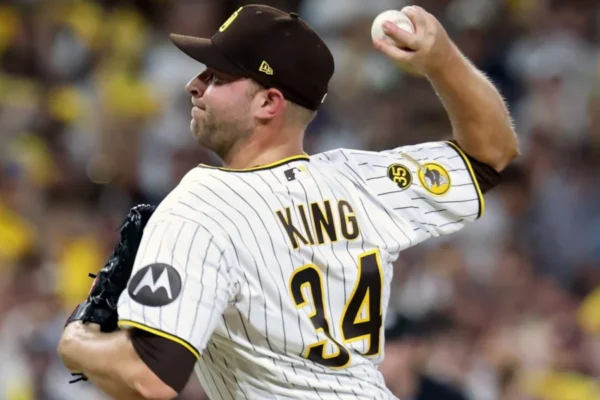
Sweeper: Michael King
With Sonny Gray signing elsewhere, the spotlight on the best sweeper shifts to Michael King, whose postseason performance unveiled a truly next-level version of the pitch. King’s transition from an elite reliever to a legitimate Padres ace in 2026 was marked by the evolution of his arsenal, culminating in a playoff sweeper that was a revelation. He dialed up its velocity into the mid-80s and boosted its spin rate to nearly 3,000 rpm – a significant jump of over 2 mph and 100 rpm compared to his regular-season average. What makes this even more remarkable is that King actually gained an inch of horizontal break despite the increased velocity, defying the typical trade-off between speed and movement. This "new-look" sweeper, with its pronounced horizontal sweep and increased power, is a formidable weapon against both right- and left-handed hitters, creating vast separation from his fastball. If King can maintain this elevated version of his sweeper into 2027, it will solidify his status as a frontline starter and a highly desirable free agent.
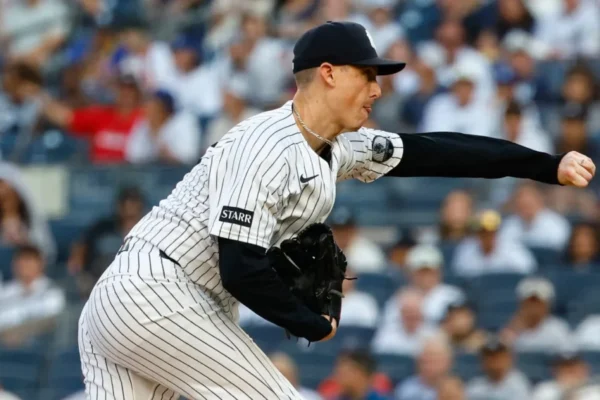
Curveball: Clay Holmes
Clay Holmes, predominantly known for his devastating sinker, offers a surprising, yet equally potent, curveball that he reintroduced to his arsenal in 2026 after a five-year hiatus. While it constituted only about 7% of his pitches last season, its impact was undeniable. Holmes’ curveball is exceptionally sharp, boasting a spin rate approaching 3,000 rpm and generating four inches more drop and three inches more horizontal break than comparable MLB curves. Advanced metrics from FanGraphs’ stuff models immediately recognized its elite quality, ranking it among the top-10 nastiest curveballs in baseball. The results were staggering: hitters managed a mere 1-for-26 against it, accumulating 13 strikeouts. This pitch offers a crucial change of pace and eye-level deception, making his already unhittable sinker even more effective. For Holmes, whose primary weapon is a groundball-inducing sinker, the re-emergence of this high-spin, swing-and-miss curveball adds a vital dimension, suggesting he should significantly increase its usage in 2027 to further cement his status as an elite closer.
Slurve: Michael Soroka
Michael Soroka’s career resurgence in 2026 was one of the feel-good stories of the season, a testament to his perseverance through a litany of injuries. At the heart of his comeback was his signature slurve, a hybrid pitch that defies conventional categorization and stands out as the best offering in his arsenal. Soroka emerged as the undisputed "No. 1 slurver" in the league, collecting an astonishing 67 strikeouts with the pitch – by far the most in the Majors – without allowing a single home run. This achievement places him in elite company, with only Chris Sale’s slider (113 K’s) and Parker Messick’s changeup (71 K’s) recording more strikeouts on a single pitch type without yielding a long ball. The slurve’s unique blend of curveball depth and slider sweep creates an unpredictable path to the plate, making it incredibly difficult for hitters to track and leading to a high percentage of swings and misses or weak contact. Soroka’s mastery of this pitch signals not just a return to form, but a new chapter for a pitcher who could become a reliable mid-rotation starter.
Changeup: Tarik Skubal
Finally, we arrive at Tarik Skubal, whose changeup isn’t just a great pitch; it’s the pitch that propelled him to Cy Young contention and elevated him into the conversation of baseball’s elite. Over the last three seasons, Skubal’s changeup has been a strikeout machine, racking up an incredible 262 regular-season strikeouts and an additional 32 in the playoffs. Similarly, it has generated an astounding 634 swings and misses in the regular season, with 57 more in the high-stakes environment of the postseason. This left-handed changeup is characterized by its significant velocity differential from his fastball and its pronounced late fade and tumble, often diving out of the zone as hitters commit. It’s a masterclass in deception, creating an optical illusion that leaves batters flailing. Skubal’s ability to command this pitch in any count, against any hitter, makes it a true weapon that can go toe-to-toe with any individual pitch type in baseball. The team that secures Skubal this winter will not only be getting a frontline ace but also one of the most consistently dominant and aesthetically pleasing pitches in the game.
Splitter: Kevin Gausman
Rounding out our list of nasty pitches is an old reliable that continues to defy Father Time: Kevin Gausman’s splitter. Even as he approaches his age-36 season, Gausman’s splitter remains one of the most consistent and effective strikeout pitches in all of baseball. Since his first All-Star campaign in 2021, Gausman has recorded an incredible 666 strikeouts on splitters alone, a testament to its enduring dominance. This places him second only to Dylan Cease’s slider for the most strikeouts generated on any single pitch type over that span. In 2026, he continued his mastery, tallying 91 strikeouts with his splitter, the most of any pitcher, just ahead of fellow free agent Shota Imanaga. Gausman’s splitter is renowned for its fastball-like arm speed delivery that suddenly drops out of the zone at the last moment, creating an illusion of a hittable pitch before plummeting. Its consistent effectiveness, even in his veteran years, highlights his impeccable command and the pitch’s inherent deception. Gausman remains a durable, high-strikeout starting pitcher, and his splitter is the primary reason why he continues to be an elite arm on the free-agent market.
The 2026-27 free agent class for pitchers offers an exciting array of specialized talent. From emerging international stars like Kaima Taira to seasoned veterans like Kevin Gausman, each pitcher brings a distinct, game-changing weapon to the table. For teams looking to bolster their rotation or fortify their bullpen, understanding the unique characteristics and proven effectiveness of these individual pitches will be paramount in making the strategic moves that could define their success for years to come.