The Los Angeles Dodgers, a franchise synonymous with relentless pursuit of baseball’s brightest stars, found themselves in an unfamiliar position this offseason: outmaneuvered in the high-stakes sweepstakes for a generational talent. As reported by sportsamo.com, the Dodgers may have temporarily secured Tarik Skubal at the preceding Trade Deadline, but their subsequent free agency bid for the two-time AL Cy Young Award winner ultimately fell short, recalibrating their pitching plans for the 2027 season.
Skubal, widely regarded as the premier free agent pitcher available, reportedly inked a monumental nine-year, $450 million deal with the New York Mets on Sunday. This colossal agreement, once finalized, is set to eclipse Yoshinobu Yamamoto’s 12-year, $325 million pact with the Dodgers as the richest contract ever awarded to a pitcher in Major League Baseball history. The average annual value (AAV) of $50 million for Skubal is a staggering testament to his market value, setting a new benchmark for front-line starters and underscoring the escalating costs of elite pitching talent in today’s game.
For years, the Dodgers have been a dominant force in the high-end free agent market, rarely being outbid for their primary targets. Their recent history is replete with mega-deals designed to assemble a modern-day super team: Shohei Ohtani’s unprecedented 10-year, $700 million contract (with significant deferrals), Yamamoto’s record-setting deal for a posting system player, Edwin Díaz’s three-year, $69 million commitment for bullpen dominance, and Kyle Tucker’s four-year, $240 million extension are just a few examples of their financial muscle and strategic intent. These moves have solidified their reputation as a destination for superstars, capable of offering both competitive excellence and unparalleled financial security.
However, the pursuit of Skubal presented a unique dynamic. While the Dodgers had invested significant prospect capital to acquire him as a rental from the Detroit Tigers ahead of the previous Trade Deadline, their approach in free agency appeared more measured. Industry insiders suggested that Los Angeles preferred a shorter-term contract, perhaps a five or six-year commitment, to mitigate the inherent long-term risks associated with pitching contracts of Skubal’s magnitude. Skubal, entering his prime at 28, opted instead for the unparalleled long-term security offered by the Mets, a decision that aligns with the growing trend of star players prioritizing generational wealth over shorter, higher-AAV deals. This strategic divergence highlights a subtle shift in the Dodgers’ philosophy, perhaps indicating a growing awareness of the potential pitfalls of 10-year-plus pitching commitments, especially after witnessing the variable returns on similar investments across the league.
Despite missing out on Skubal, the Dodgers front office maintained that he was more of a luxury acquisition than an acute necessity. This perspective, while potentially a public stance, holds some weight given the impressive array of talent already populating their projected rotation. The perennial wisdom in baseball dictates that a team can never have "enough pitching," a maxim the Dodgers have historically embraced. Yet, their current stable of arms is undeniably robust, even without Skubal’s elite presence. Looking ahead to 2027, here’s how the Dodgers’ formidable rotation is currently projected to line up:
- Yoshinobu Yamamoto: The Japanese phenom, still relatively new to MLB, is expected to fully acclimate and potentially emerge as a true ace. His blend of elite command, diverse arsenal, and composure on the mound drew comparisons to legendary pitchers even before his debut. With a full season or two under his belt, the Dodgers envision Yamamoto as the anchor of their staff, a pitcher capable of leading a postseason charge for years to come.
- Blake Snell: A two-time Cy Young Award winner, Snell brings undeniable talent and a high-strikeout ceiling. His aggressive approach and ability to dominate hitters when healthy make him a formidable force. However, his injury history, characterized by various soft-tissue ailments and general inconsistency, remains a significant concern. The Dodgers will be tasked with optimizing his workload and keeping him on the mound, leveraging his incredible stuff without overtaxing his arm.
- Tyler Glasnow: Another pitcher with a tantalizing blend of elite velocity and devastating secondary offerings, Glasnow is a game-changer when he’s active. Like Snell, his career has been punctuated by significant injuries, including Tommy John surgery and multiple oblique and flexor strains. His acquisition signaled a high-risk, high-reward strategy for the Dodgers, banking on his immense upside if he can maintain health for a full season. Managing his innings and recovery will be paramount.
- Roki Sasaki: The "Monster of the Reiwa Era" from Japan’s Nippon Professional Baseball (NPB) is perhaps the most exciting wild card in this projection. Sasaki, known for his triple-digit fastball and unhittable splitter, has been a dominant force in Japan since his professional debut. While the exact timeline for his MLB arrival remains speculative, the Dodgers are widely considered a frontrunner for his services once he is eligible to be posted. His potential arrival would instantly inject another elite, young arm into the rotation, offering an incredible upside for the franchise’s long-term future.
- Emmet Sheehan, Justin Wrobleski, or Gavin Stone: This final spot highlights the ongoing competition and depth within the Dodgers’ farm system, a testament to their player development prowess.
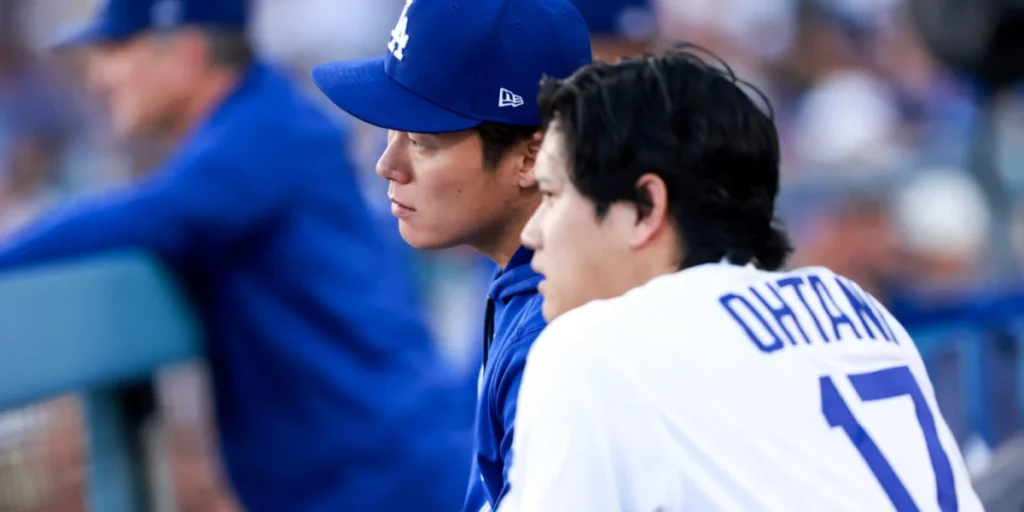
Adding another layer of complexity to this already intricate puzzle is the unique situation surrounding Shohei Ohtani. After undergoing a significant elbow procedure (presumably a second Tommy John surgery or an internal brace procedure) that sidelined him from pitching for the entirety of the 2026 season post-All-Star break due to left knee and right biceps injuries, Ohtani is expected to be healthy enough to hit on Opening Day. However, questions linger about his readiness to immediately return to the mound. The Dodgers are keenly focused on a long-term strategy to sustain his health through a full season, given the unprecedented demands placed on a two-way superstar. When Ohtani eventually resumes pitching, the Dodgers are likely to shift to a six-man rotation, a strategy that offers increased rest for all starters but also presents challenges in terms of roster construction and bullpen management.
Even with such a star-studded cast, the Dodgers’ rotation is not without its question marks, as the article from sportsamo.com aptly points out. The primary concern revolves around the durability of its key components. Snell and Glasnow, for instance, combined for a mere 22 regular-season starts in 2026, a stark reminder of their collective injury woes. This limited availability places immense pressure on the rest of the rotation and, more importantly, on the bullpen, which must shoulder a heavier load. The Dodgers’ medical staff and pitching coaches will face the unenviable task of balancing performance optimization with injury prevention for these high-velocity, high-risk pitchers.
The competition for the fifth rotation spot is also a microcosm of the team’s ongoing developmental challenges and opportunities:
- Emmet Sheehan: After an impressive return from Tommy John surgery in 2025, posting a stellar 2.82 ERA, Sheehan experienced a significant regression in 2026. His ERA ballooned to 4.57, ultimately leading to him losing his rotation spot after the Skubal trade. This fluctuation highlights the difficult journey back from major arm surgery and the mental and physical demands of consistent MLB performance.
- Justin Wrobleski: A first-time All-Star in 2026, Wrobleski showed flashes of brilliance, finishing the season with a respectable 3.66 ERA. However, his second-half regression suggests potential issues with fatigue, adjustments by opposing hitters, or perhaps a lack of consistent command as the season wore on. His ability to sustain an All-Star caliber performance over a full season will be crucial for his long-term prospects.
- Gavin Stone: Once a highly touted prospect, Stone has been plagued by shoulder issues that have kept him off an MLB mound since 2024. The Dodgers remain optimistic about his recovery, but the prolonged absence and nature of shoulder injuries cast a shadow over his immediate future. His return to form would provide a much-needed boost of proven talent from within the organization.
Given these inherent risks and the unpredictable nature of pitching health, the Dodgers recognize the perpetual need for additional depth. While they may not pivot to another top-tier free agent starter, their focus will undoubtedly shift to acquiring reliable fifth starters or swingman types this offseason. Their history demonstrates a remarkable ability to unearth valuable arms even after the season has begun. The case of Eric Lauer in 2026 serves as a prime example: acquired after being designated for assignment by the Toronto Blue Jays in May, Lauer unexpectedly became a surprisingly valuable piece of the rotation, showcasing the Dodgers’ unparalleled scouting and player development capabilities. This opportunistic approach to depth acquisition has been a hallmark of their success, often transforming discarded talent into key contributors.
The Dodgers’ philosophy has always centered on stocking up on pitching at every conceivable opportunity. Even if Skubal had signed with Los Angeles, the drive for depth would have persisted. Now that he is off the board, the strategy remains unchanged, albeit with a heightened urgency. The core of their rotation boasts elite talent and immense potential. The critical task ahead for the Dodgers’ front office and coaching staff is to meticulously flesh out the depth behind these big pieces, ensuring that they possess enough reliable arms to navigate the rigors of a 162-game season and make a deep postseason run. Their championship aspirations hinge not just on their superstars, but on the strength and resilience of their entire pitching staff.