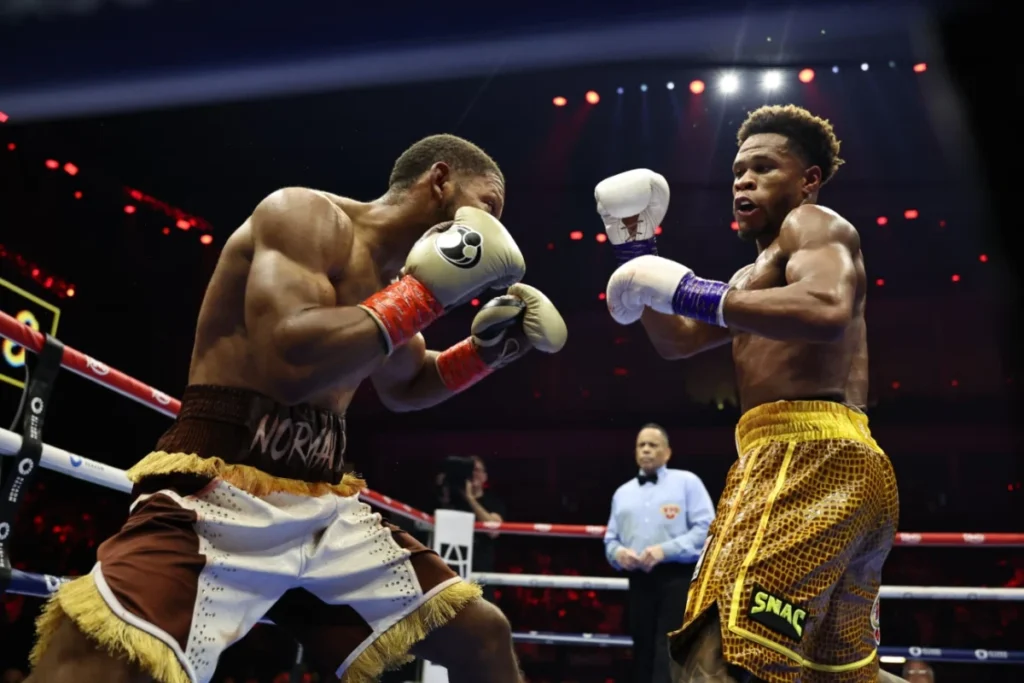
San Francisco, CA – The path back to a lucrative rematch with undisputed lightweight champion Devin Haney is a long and arduous one for Brian Norman Jr., and his first critical step on this journey commences on December 19th. Facing the seasoned Abel Ramos in a 10-round co-feature bout at the Chase Center in San Francisco, Norman Jr. must not only win, but win decisively, to convince both the public and the Haney camp that a second encounter would yield a different, more compelling outcome. With Haney himself reportedly eyeing significant payday opportunities elsewhere, Norman Jr.’s quest for redemption hinges on a series of dominant performances that can generate genuine commercial appeal.
Bill Haney, Devin Haney’s father and trainer, recently sent a pointed message via social media, directing it squarely at Brian Norman Sr., Norman Jr.’s father and trainer. "Handle your business, and you might get what you’re looking for again," Bill Haney stated, a clear indication that Norman Jr.’s immediate future, and any potential rematch with his son, is contingent on his performance. This sentiment underscores the high stakes of Norman Jr.’s upcoming fight, which serves as the undercard to Devin Haney’s main event clash against IBF champion Liam Paro. Haney, having already secured the WBO strap by defeating Norman Jr. last November on DAZN PPV, is actively pursuing further belt consolidation, making any immediate return bout with Norman Jr. a distant prospect unless Norman Jr. can dramatically alter the narrative.
Norman Jr. (29-1, 23 KOs) enters the ring against Ramos (29-6-3, 22 KOs) with the weight of expectation firmly on his shoulders. While a victory over Ramos is essential, it is the manner of that victory that will truly matter. Bill Haney’s words, coupled with the broader landscape of elite boxing, suggest that a mere win will not suffice. Norman Jr. likely needs to deliver multiple statement victories, showcasing a newfound ferocity and tactical acumen, to build the kind of buzz that compels promoters and broadcasters to invest in a rematch. Ramos, while a credible opponent with a history of spirited performances, is unlikely to be the sole catalyst for such demand. The true opportunity lies in the platform itself: fighting on the same card as Haney, in front of his hometown crowd, and demonstrably proving that the significant flaws exposed in their previous encounter have been rectified.
The first fight between Norman Jr. and Haney, which saw Haney retain his WBO title, was a stark illustration of Norman Jr.’s shortcomings on that particular night. Norman Jr. appeared hesitant, almost gun-shy, particularly after suffering a flash knockdown early in the bout that he seemingly never fully recovered from. For much of the fight, he allowed Haney to dictate the pace from a distance, repeatedly flicking his jab and controlling the range. Norman Jr.’s inability to consistently close the distance, disrupt Haney’s rhythm, or engage in the kind of gritty, close-quarters warfare that can change the complexion of a fight, proved his undoing. By the time he displayed genuine urgency in the championship rounds, the scorecards had already heavily favored Haney, leaving Norman Jr. with a significant deficit to overcome.
The blueprint for a successful Norman Jr. comeback against Haney, should a rematch materialize, demands a complete departure from his previous performance. It requires relentless, disciplined pressure from the opening bell, a stark contrast to the passive approach seen in their first meeting. Norman Jr. cannot afford to cede valuable minutes observing Haney reset behind his jab and dictate the terms of engagement. Instead, he must implement a strategy of sustained forward movement, marching inside behind hard, well-timed combinations. The goal should be to force Haney into sustained defensive shells, neutralizing his offensive output and forcing him to expend energy protecting himself. Crucially, Norman Jr. must maintain a heightened level of awareness, remaining alert to Haney’s potent counter-punching capabilities.
A significant area of concern from the first fight was Norman Jr.’s struggle with clinching. Haney repeatedly utilized the clinch to stall Norman Jr.’s offensive momentum, allowing himself time to recover and reset before sliding back to a safe distance. Norman Jr.’s response in these moments was often far too passive; he seemed content to wait for the referee to separate the fighters, effectively surrendering valuable fighting time and opportunities to inflict damage. This passive approach allowed Haney to control the flow of the bout and avoid sustained punishment.
Recalling the tactics employed by boxing legends like David Haye can offer a valuable insight into how Norman Jr. should approach these clinching scenarios. Haye, known for his aggressive style and ability to adapt in the trenches, understood how to make opponents pay for holding. Instead of passively waiting for a separation, Haye would often free an arm and unleash rapid, clubbing headshots over the top of his opponent’s guard, forcing them to release their grip. Norman Jr. needs to cultivate a similar kind of "spite" in the clinch. The moment Haney reaches in to tie him up, Norman Jr. should be firing fast, cuffing punches around Haney’s guard, continuing to throw until the referee intervenes.
This aggressive approach within the clinch might not eliminate it entirely, but it would serve to punish the tactic and make it a far more taxing strategy for Haney to employ. Holding a fighter who is actively battering the body is a far greater drain on stamina than holding someone who is standing relatively still. Norman Jr. must transform every clinch into an exhausting chore for his opponent, forcing Haney to work harder for every moment of respite. This relentless pressure, even in close quarters, can chip away at an opponent’s endurance and create openings for more significant damage.
Abel Ramos presents a live test for Norman Jr.’s newfound aggression and stamina. Ramos is no stranger to adversity and has proven his mettle against tough opposition. He famously dropped the highly-touted Mario Barrios in their spirited draw and handed Tahmir Smalls his first career defeat, showcasing his resilience and punching power. While Norman Jr. has demonstrated his own finishing ability by halting Josh Wagner in his last outing, Ramos will undoubtedly push him to remain sharp and composed under fire. A victory over Ramos will be a significant confidence booster, but it will not, on its own, erase the lingering questions about Norman Jr.’s ability to effectively combat the jab-and-grab tactics that proved so effective for Haney.
Ultimately, Norman Jr.’s route to forcing a rematch with Devin Haney is through a sustained series of dominant stoppages against seasoned contenders. This is the only language that truly resonates in the business of professional boxing, particularly when aiming for the lucrative payday that a fight against an undisputed champion represents. While the fathers may engage in verbal sparring and strategizing, it is Norman Jr. who must deliver the decisive answers in the ring. He needs to demonstrate that he can not only make Haney fight, but make him fight on Norman Jr.’s terms, rather than allowing him to coast to another comfortable victory. The December 19th bout against Abel Ramos is not just a fight; it is a critical audition for the future of Brian Norman Jr.’s career.