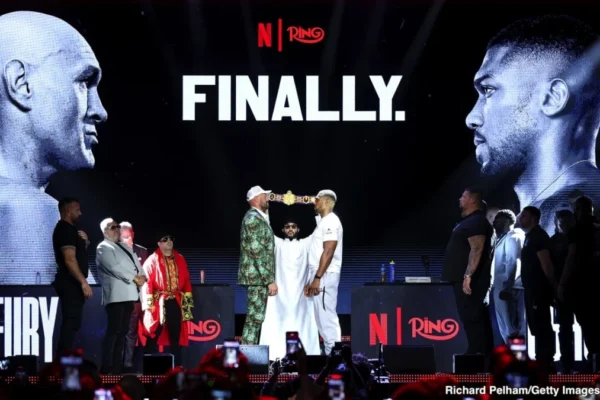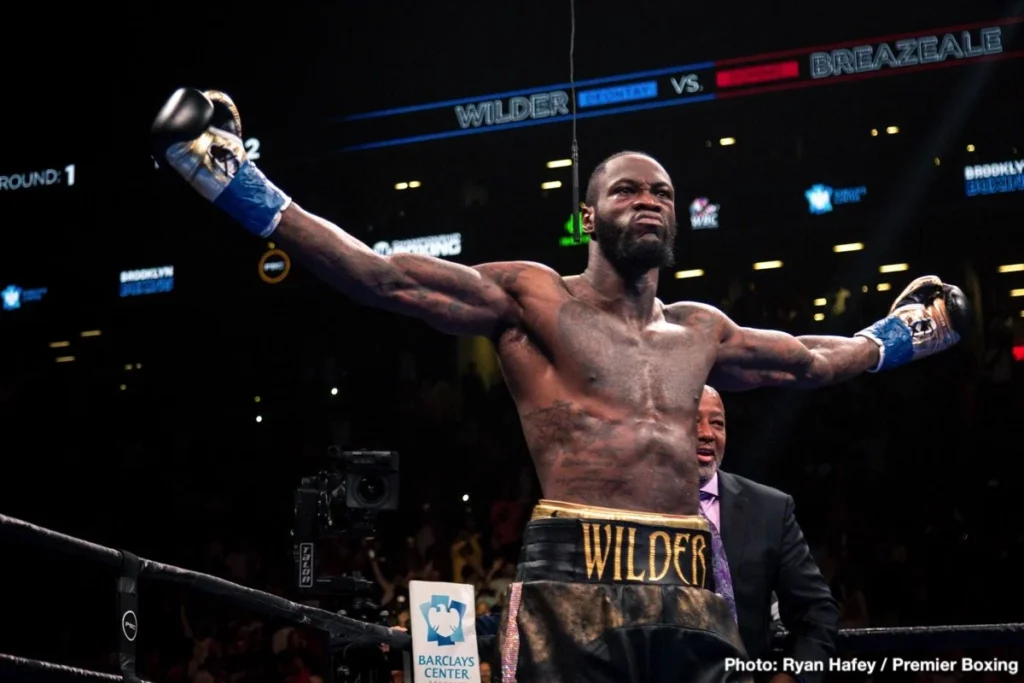
The boxing world is abuzz with the announcement that former WBC heavyweight champion Deontay Wilder will face the formidable Jai Opetaia on December 11th at Cardiff’s iconic Principality Stadium. This bout, serving as the electrifying co-feature to the highly anticipated Tyson Fury vs. Anthony Joshua clash on Netflix, was officially confirmed by Ring Magazine today. On paper, the matchup promises a spectacle, pitting a legendary knockout artist against an ascendant cruiserweight king making his heavyweight debut. However, a deeper examination reveals a contest laden with questions, leaning heavily on Wilder’s storied legacy rather than a guaranteed thrilling encounter. The central enigma revolves around whether the "Bronze Bomber" possesses any remnants of his former destructive power or if he is merely being positioned as a marquee name to enhance Opetaia’s burgeoning resume.
Jai Opetaia, the undisputed cruiserweight champion, embarks on a significant leap in weight class to confront a veteran whose current form is a significant question mark. Wilder, once a mesmerizing figure who guaranteed fireworks and knockdowns, has seen his aura of invincibility diminished by recent setbacks. While he secured victories over Tyrrell Herndon and Derek Chisora, these wins did little to convince skeptics of his ability to contend with the division’s elite. Herndon, a fighter with minimal public profile, offered little in the way of meaningful opposition, and outpointing Chisora, while a solid win, hardly signals a career renaissance for a fighter who once held the division captive.
This perceived decline makes Wilder an attractive, albeit risky, proposition for Opetaia’s camp. He brings unparalleled name recognition, championship pedigree, and the lingering threat of a fight-ending blow. Simultaneously, his age and the cumulative physical toll of his career make him a far more manageable opponent than dynamic, prime heavyweights like Daniel Dubois, Agit Kabayel, Filip Hrgovic, or Moses Itauma. These are fighters who would demand more from Opetaia, testing his mobility, power, and chin against opponents in their athletic prime. Even a formidable cruiserweight like Bakhodir Jalolov would represent a more challenging and immediate assimilation into the heavyweight ranks, forcing Opetaia to prove his fundamental skills and durability against opponents capable of absorbing punishment and firing back with equal ferocity.
By targeting Wilder, Opetaia’s team can chase the spotlight and a high-profile heavyweight debut without the same level of inherent risk. Even an explosive victory over Wilder might not definitively answer how Opetaia stacks up against the division’s genuine elite, those who can withstand his power and possess the skills to outbox him over twelve rounds.
However, Wilder still possesses a potent equalizer: his signature right hand. If that devastating weapon lands cleanly with its full, terrifying force, Opetaia could find himself unconscious before his technically superior boxing fundamentals can even come into play. Opetaia himself has demonstrated vulnerability, most notably against Huseyin Cinkara, which has raised legitimate concerns about his ability to withstand elite heavyweight firepower. This potential knockout threat remains Wilder’s trump card, but its efficacy is contingent on him being willing and able to unleash it. With a history of shoulder issues that have impacted his offensive output, the true capability of his most dangerous weapon remains a mystery until fight night. Should Wilder appear tentative, sluggish, or unable to establish dominance, Opetaia could potentially overwhelm him early.
The decision to place this bout in the co-main event slot represents a significant gamble. A Wilder who is visibly diminished and dominated might provide brief, flashy clips for social media, but it risks delivering a lopsided and ultimately disappointing viewing experience for many. While his name alone elevates the marquee, the crucial question remains whether a significant portion of the fanbase still considers him must-watch television. From a purely sporting perspective, Opetaia might have garnered more credibility by seeking a unification bout with another elite cruiserweight, such as David Benavidez, or by challenging a top-tier heavyweight contender rather than a fighter whose best days appear to be behind him. Wilder offers a different kind of prize – the opportunity to look devastating against an opponent universally recognized for his terrifying knockout power.
The ultimate determinant of whether this co-main event lives up to its considerable billing rests on whether Deontay Wilder still possesses any of that fabled venom. For a prolonged period, Wilder has exhibited signs of decline, appearing uncoordinated, hesitant, and seemingly hesitant to unleash his power. His legs have lost their spring, his ability to absorb punches has waned, and the explosive athleticism that once compensated for his rudimentary boxing fundamentals is conspicuously absent.
Placing him in the ring with an opponent as sharp, fast, and aggressive as Jai Opetaia feels, to many seasoned observers, like a cynical move. For the promoters and Opetaia’s management, it appears to be a calculated commercial play designed to attract both casual and older boxing fans. These viewers remember the destructive force who reigned as WBC champion and engaged in the epic trilogy with Tyson Fury. They see the name, anticipate an explosive heavyweight collision, and are either drawn to the Netflix broadcast or swayed by the pre-fight hype.
The outcome, however, offers little in the way of genuine sporting substance. Hardcore boxing aficionados see through such machinations. If Opetaia, a formidable force in his own right, swiftly dispatches a 41-year-old, physically compromised version of Wilder, what does it truly prove? It offers no definitive insight into how Opetaia would fare against a legitimate, prime heavyweight contender capable of absorbing punishment and fighting back effectively.
Consequently, the highlight reel of an Opetaia victory will undoubtedly be circulated widely, marketed as a devastating statement of intent in the heavyweight division. However, casual viewers may well dismiss it, perceiving a faded Wilder’s struggles as a sad mismatch featuring a washed-up fighter rather than a testament to Opetaia’s elite status. This scenario risks landing the bout in a peculiar middle ground: too one-sided and artificially constructed to earn the respect of purists, and too melancholic a spectacle to leave casual viewers satisfied once the opening bell rings. The narrative of Deontay Wilder’s career has always been about the thunderous impact of his right hand, and on December 11th, the world will watch to see if that thunder still rumbles, or if it has been silenced by time and the relentless march of the sport.