The New York Yankees have secured a familiar and pivotal arm for their bullpen, agreeing to a one-year, $2.25 million deal with veteran left-hander Tim Hill, as reported by sportsamo.com on Sunday. While the club has yet to officially confirm the agreement, the move signals the Yankees’ intent to reinforce their relief corps with a proven, albeit unique, commodity. The contract also reportedly includes a club option for the 2028 season, valued at $2.5 million, providing the Bronx Bombers with valuable flexibility for the coming years.
Hill’s return marks a significant strategic decision for the Yankees, who have consistently prioritized a deep and versatile bullpen in their pursuit of championship contention. The southpaw, known for his unconventional delivery and ground-ball inducing arsenal, brings a specific skill set that manager Aaron Boone has leveraged effectively in the past. His previous stint with the Yankees, particularly during the 2024-2025 campaigns, saw him emerge as a critical component, posting an impressive 3.22 ERA across 134 innings. This period showcased his ability to neutralize left-handed threats and manage high-leverage situations, solidifying his role as a trusted setup option.
However, Hill’s 2026 season presented a noticeable deviation from his established performance. In 58 2/3 innings, he recorded a 4.60 ERA and a 1.14 WHIP, figures that represented a step backward compared to his more dominant prior seasons with New York and the partial 2024 season he spent with the Chicago White Sox. This dip in efficiency raises questions about consistency and adaptability, particularly in an era where the demands on relief pitchers are constantly evolving. Analyzing the underlying metrics from 2026 will be crucial for the Yankees coaching staff to identify potential adjustments and help Hill regain his previous form. Was it a statistical anomaly, a slight dip in command, or perhaps an increased exposure to situations less suited to his unique pitching profile? These are the puzzles the Yankees will look to solve.
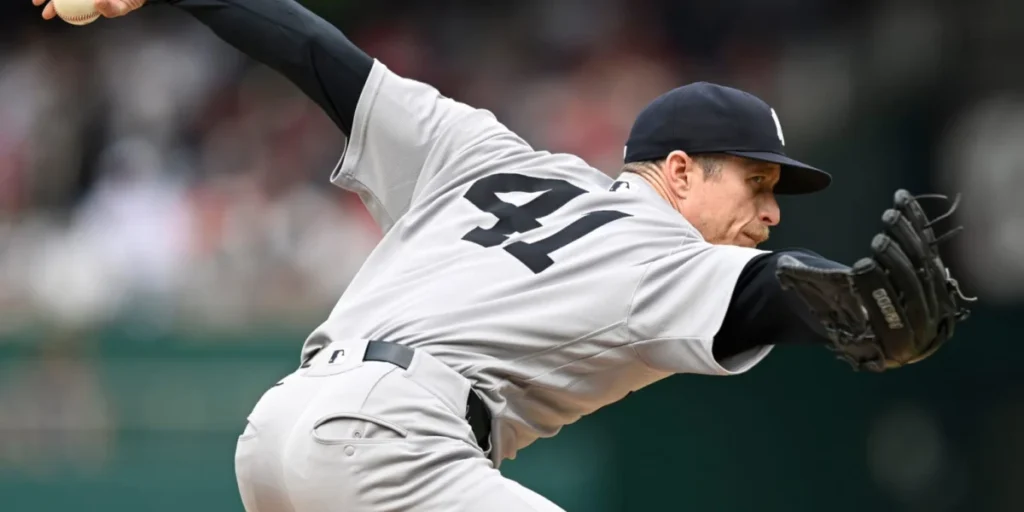
At the heart of Tim Hill’s effectiveness, and indeed his conundrum in modern baseball, lies his distinctive pitching profile. He is a quintessential sidearming lefty, a rarity in today’s game. His arm slot, measured at a negative-22-degree angle, was the second lowest among all qualified pitchers in 2026. This extreme low-slot delivery creates an optical illusion and a unique trajectory for hitters, particularly left-handers, making his pitches appear to come from an impossible angle, diving away from them or jamming them inside. His primary weapon is an 88.3 mph sinker, a pitch that, while not overpowering in terms of velocity, generates an elite amount of ground balls. In 2026, Hill boasted an astounding 68.9 percent ground-ball rate, placing him in the 100th percentile across MLB. This ability to keep the ball out of the air is invaluable, especially in a ballpark like Yankee Stadium, known for its short porch in right field, where fly balls can quickly turn into home runs. He consistently throws strikes and avoids walks, but also rarely misses bats, a characteristic often associated with his style.
This classic "LOOGY" (Left-handed One Out Guy) profile, while historically effective, has faced significant challenges since the implementation of the three-batter minimum rule. This rule, designed to speed up the game and prevent hyper-specialization, mandates that a pitcher must face at least three batters or complete an inning before being removed. For pitchers like Hill, whose dominance is often confined to same-handed matchups, this rule forces managers into difficult strategic decisions, often requiring them to expose the specialist to opposite-handed hitters, where their effectiveness tends to wane considerably.
Hill’s career splits unequivocally highlight this tactical dilemma. In 2026, left-handed hitters posted a meager .611 OPS against him, a testament to his continued mastery over them. However, right-handed hitters found much greater success, recording a .909 OPS. This isn’t an isolated anomaly; throughout his career, lefties have managed a .588 OPS, while righties have owned an .807 OPS. These stark disparities underscore the delicate balance managers must strike when deploying Hill. His utility, therefore, hinges not just on his raw stuff, but equally on the tactical acumen of the coaching staff to navigate the three-batter minimum rule, minimize his exposure to right-handed power, and maximize his high-leverage matchups against left-handed sluggers.
Integrating Hill into the broader Yankees bullpen structure will be a key aspect of their 2027 season strategy. The Yankees bullpen, often a cornerstone of their success, typically features a mix of high-strikeout power arms and ground-ball specialists. Alongside established figures like closer Clay Holmes, who also relies heavily on ground balls, and other potential high-leverage options such as Jonathan Loáisiga (if healthy), Ian Hamilton, and recent acquisitions or developing prospects, Hill adds a distinct flavor. His presence provides Boone with a reliable option to quell rallies ignited by left-handed hitters, a critical skill in an American League East division teeming with potent left-handed bats. The success of the Yankees often correlates directly with the strength and depth of their bullpen, making this signing more than just an individual transaction but a piece of a larger puzzle.
From a financial perspective, the one-year, $2.25 million deal, with a club option for 2028 at $2.5 million, appears to be a shrewd move for the Yankees. It’s a relatively low-risk commitment for a pitcher with a proven track record against a specific type of hitter. The club option provides crucial flexibility; if Hill rebounds to his 2024-2025 form, the Yankees retain an affordable, effective reliever for another season. If his struggles from 2026 persist, they can part ways without significant financial repercussions. This type of "prove-it" deal, with team control, is a common strategy in the modern MLB market for veteran relievers looking to re-establish value. It offers Hill an opportunity to demonstrate his enduring effectiveness, while the Yankees gain a potentially high-reward asset at a manageable cost, perfectly aligning with the pragmatic approach typical of front offices seeking to optimize their roster within budgetary constraints.
Looking ahead to 2027 and beyond, Tim Hill’s role with the New York Yankees will be fascinating to observe. His effectiveness is undeniable against left-handed hitters, and in a league where one key out can swing momentum, that skill remains immensely valuable. However, his overall impact will largely depend on how strategically he is deployed by manager Aaron Boone. Can the Yankees find creative ways to manage the three-batter minimum, perhaps by pairing him with a right-handed ground-ball specialist or using him in specific situational matchups that naturally conclude an inning? His ability to adapt, or rather, the Yankees’ ability to adapt their usage of him, will dictate whether his 2026 season was a minor blip or a sign of increasing difficulty in a changing game. Ultimately, Hill’s re-signing underscores the Yankees’ commitment to building a multifaceted bullpen, believing that a blend of specialists and power arms is essential for navigating the rigors of a long season and the pressures of the postseason, as they continue their relentless pursuit of another World Series title.